Budget 2026 launches India’s next big semiconductor leap
FM Sitharaman accelerates India’s semiconductor ambition with ISM 2.0, major electronics funding, and a push for skilled talent
By Naini Thaker
Last Updated: Feb 01, 2026, 17:38 IST3 min
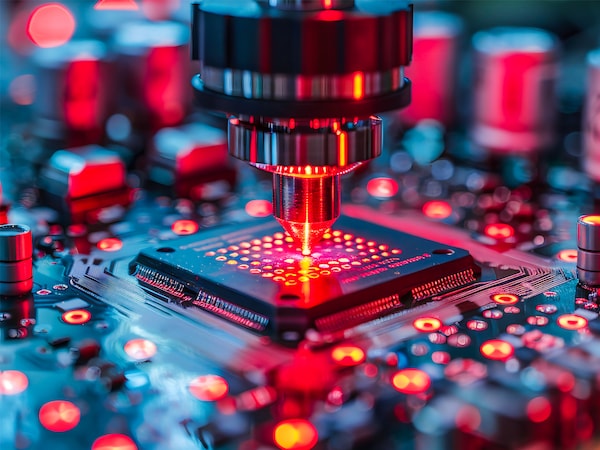
With India’s ambition to become a global semiconductor powerhouse, Finance Minister Nirmala Sitharaman, during her Budget 2026 speech, announced the India Semiconductor Mission (ISM) 2.0, marking a deeper pivot into core chip‑making infrastructure, materials, and domestic IP creation.
“ISM 1.0 expanded India’s semiconductor sector capabilities. Building on this, we will launch ISM 2.0 to produce equipment and materials, design full‑stack Indian IP, and fortify supply chains. We will also focus on industry‑led research and training centres to develop technology and skilled workforce,” she said.
In numbers: Budget 2026: Complete snapshot at your fingertips
“This [ISM 2.0] positions India as a design and IP-led innovation hub. This will require advanced manufacturing execution systems, digital twins, predictive maintenance, and secure AI deployments that can optimise yield without exposing proprietary designs to external infrastructure,” says Nikhil Ambekar, co-founder & CEO, Turinton AI.
“ISM 1.0 helped kickstart participation, while ISM 2.0 is focussed on building capability where it matters most. The focus now has to be on execution. Industry-led R&D, support for advanced materials and manufacturing-linked design, and close integration between research centres and companies are essential to shorten development cycles and reduce external dependencies,” adds Hareesh Chandrasekar, CEO & co-founder AGNIT Semiconductors Private Limited.
One of the Budget’s most striking signals came from the massive jump in annual allocation for the Electronics Components Manufacturing Scheme (ECMS/EMS). While, the Finance Minister reiterated that the scheme—launched in April 2025 with an outlay of Rs22,919 crore—had already attracted investment commitments nearly double its target, prompting the government to raise its overall scheme outlay to Rs40,000 crore to sustain the momentum.
This follows the huge success achieved in the mobile phones PLI scheme, wherein significant incremental production was achieved in India, with exports rising to almost $35 billion and total domestic production increasing to nearly $80 billion. “The ECMS scheme announced earlier by MeitY provided momentum for the success achieved in the mobile phone PLI, with a promise of creating a robust component ecosystem that would make Indian exports competitive globally. The response to the ECMS scheme was highly encouraging, and the government received investment proposals far exceeding expectations,” Sunil Vachani, founder and chairman of Dixon Technologies, told Forbes India.
Vachani adds that the increased outlay for the ECMS scheme will provide further momentum to the electronics manufacturing industry, ensuring that a strong and vibrant component ecosystem is created in the coming years. He says, “At Dixon, we have already commenced production of camera modules at our Greater Noida plant, and, in the next few months, we will begin trial production of display modules. This will raise value addition in mobile phones to nearly 35 percent, up from the current level of 15 percent.”
Financial markets responded positively to the Budget’s semiconductor push, with stocks like CG Power, Dixon Technologies, Kaynes Technology and SPEL Semiconductor gaining between 4–5 percent during the special session, reflecting investor alignment with the government’s long‑term strategy.
The Ministry of Electronics and IT has previously indicated that pilot production at three semiconductor plants began in 2025, and India remains on track for commercial chip manufacturing by 2026—a milestone that ISM 2.0 is expected to accelerate.
The FM also proposed exempting basic customs duty on specified parts used in microwave oven manufacturing, a move expected to deepen value addition and strengthen domestic competitiveness in the white‑goods segment.
India’s sharp focus on talent development and localisation is being reinforced through industry‑led research and training centres, a shift experts say is crucial for the country’s semiconductor ambitions. As Shantanu Rooj, founder and CEO of TeamLease Edtech, points out, “Investment in high-tech areas like semiconductor, rare earth magnets, public labs and creating full stack IP will boost the much-needed focus on R&D… Industry academia partnerships for these initiatives linked with skill development and employability will mean creation of thousands of jobs.” He adds, “Industry will also need to develop the talent supply chain by partnering with universities to bring the much needed skills for these industries.”
First Published: Feb 01, 2026, 17:38
Subscribe Now