We’re ready for EVs but uncertainties stopping us: Skoda India head
Ashish Gupta on why it’s difficult for the carmaker to break into the top six in India
Last Updated: Jan 21, 2026, 11:41 IST5 min
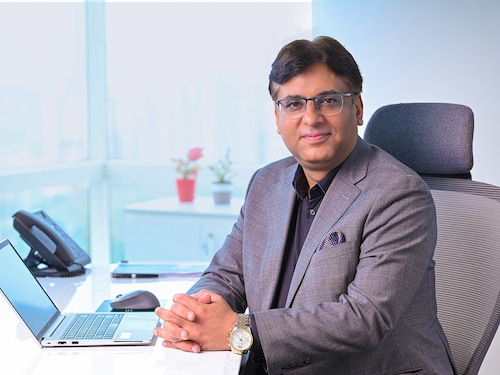
For Skoda Auto India, 2025 was its strongest year on record in terms of sales. As the company marked 25 years in the country, it sold 72,665 cars, more than double the 35,166 units delivered in 2024. The 107 percent year-on-year growth underscores a turnaround anchored in the India 2.0 strategy, which focussed on localised products, tighter costs and a sharper focus on Indian buyers.
For 2026, Skoda plans 10 product actions, spanning new launches, refreshes, trims and feature upgrades across its portfolio. The updated Kushaq, unveiled on Tuesday, is the first of those. In an interview with Forbes India, Ashish Gupta, brand director, Skoda Auto India, explains how the company plans to convert the gains of India 2.0 into sustained growth. Edited excerpts:
Q. It’s been six months into the new job (Gupta was the brand director of Volkswagen Passenger Cars earlier). What was the mandate you came in with?
I’m a sales and marketing person, so the mandate is simple: Sell as many cars as possible at the lowest possible cost.
Q. And that’s been happening...
Yes. It’s been a successful year. We stabilised the team, stabilised the dealer network, brought cohesiveness to the brand strategy, and ensured the brand is heard and seen by customers. Those boxes are ticked.
Q. Apart from this, what helped Skoda clock 107 percent growth last year?
Clear direction and consistent execution. Short-term wins don’t last without a long-term strategy. I believe in playing the long game, consistent success builds momentum. A stable team and a stable dealer network are critical because dealers are the ones selling cars and interacting with customers. Embedding the brand ethos across the dealer network is what really works.
Q. And what are you still trying to fix?
There are always hundreds of things that don’t work. But, at the end of the day, if 80 percent of what you planned works, the machine keeps moving.
Q. India 2.0 was an ambitious strategy and it clearly worked. What were the key learnings?
The main learning was that you have to make in India, for India. Once that philosophy is clear, everything else follows. India 2.0 proved this was the right approach. We’ve been in India for 25 years now. We’re older but we’re also wiser.
Q. What’s the current level of localisation across the brand?
The Kylaq is our most heavily localised product, with over 90 percent localisation. That level is now flowing into our India 2.0 cars as well—the Kushaq and Slavia—which started at over 75 percent localisation and are now close to 90 percent.
Q. Can localisation go even higher?
The last 10 percent doesn’t make sense economically and commercially just because of the efforts required. As a global brand, we have to look at economies of scale and, sometimes, it’s better to source certain components internationally.
Q. Despite all the localisation, Skoda still carries the perception of being a “high-maintenance” brand. But that also plays into your premium positioning. How do you look at that?
To some extent, it’s a fact. Historically, our portfolio in India consisted largely of premium cars. That meant imported parts and higher skill requirements. With India 2.0 and the Kylaq, that has changed. Localisation is high, cars are simpler, skill levels in the market have improved, and we’ve worked hard to reduce maintenance costs. Today, our maintenance costs are lower than some cars in lower segments.
That said, perception management is important. And we're working on that. From January, we’ve made Skoda Super Care standard across the portfolio, which has four years of warranty, four years of roadside assistance, and four labour-free services. With a wider network across over 180 cities, we are more accessible and affordable, and we’re communicating in a way that connects better with customers.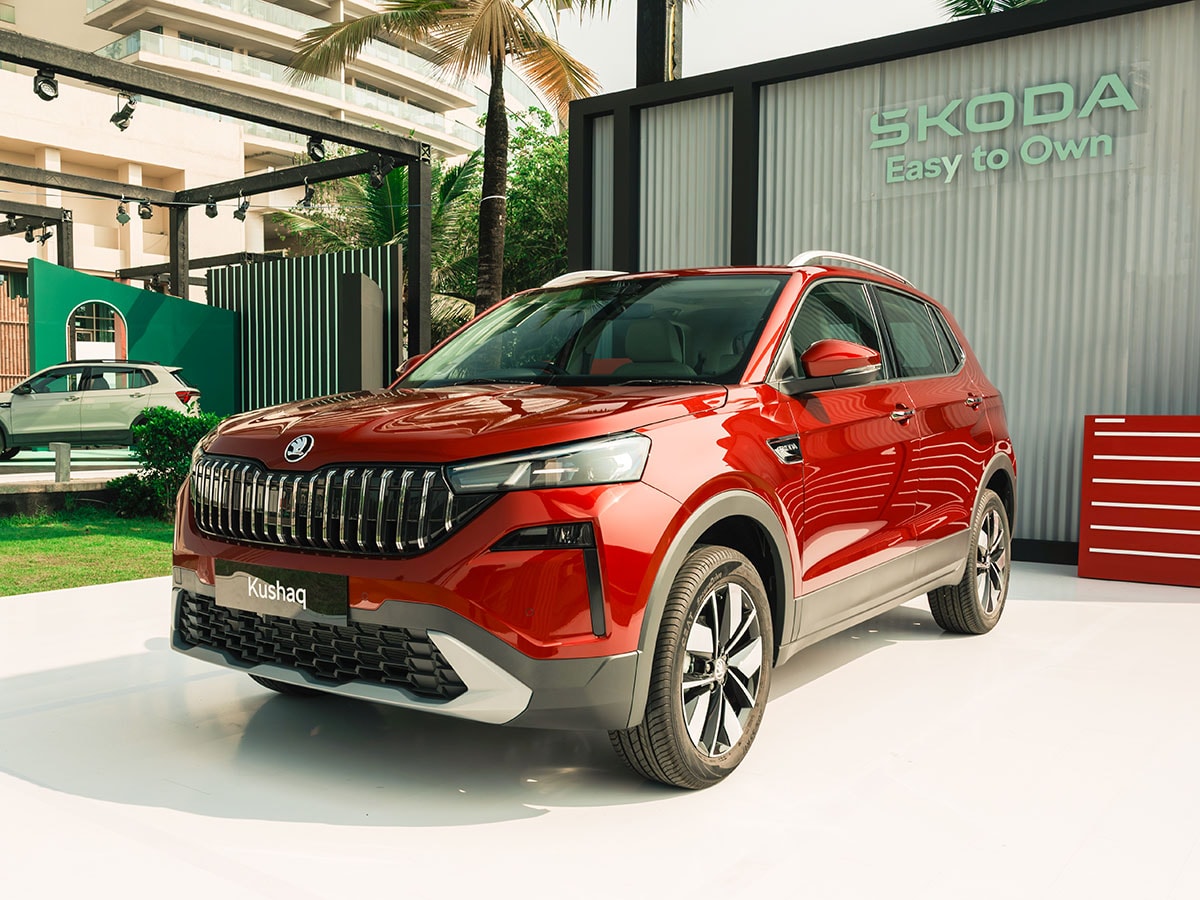
Q. Is GST cut a structural change for the industry?
Absolutely. And not just for automobiles, but for the entire economy. In the last quarter of 2025, growth was about 10-12 percent compared to Q4 of 2024, translating into roughly 4.5-5 percent growth for the full year. It helped arrest the stagnation we were seeing, and I believe this momentum will continue into 2026 and beyond.
Q. You expect the post-GST cut growth rate to sustain?
Not at 10-12 percent on such a high base. But it will definitely be better than what was anticipated six months ago.
Q. And what about Skoda?
We aim to at least match market growth. That won’t happen by chance, but by design. We are broadbasing our portfolio across segments to capture this growth.
Q. There’s a lot of focus on Tier-2 and -3 cities. Can you give me a break-up of how much of sales are now coming from there?
About 60 percent of our sales come from Tier-2 and Tier-3 cities. By the way, these are not small towns. A Tier-2 city in India has population of over five million. So these are not small towns by any measure. In many parts of the world, a population of 5 million would be a country.
Q. And what kind of growth are you seeing there?
Growth there has been tremendous, partly because we weren’t present in many of these markets earlier. So it’s a pure 100 percent growth.
Q. Can this growth continue to outpace metros?
Of course not. We’re growing from a low base, especially since we didn’t have products like the Kylaq and the new Kushaq. But that kind of growth every year isn’t realistic.
Q. What’s the EV plan?
Our EV credentials are undoubted globally. We have a large EV portfolio. The Elroq, which was launched in Europe last year, is the best-selling EV there. We’ve been ready to bring the Enyaq to India for over two years, but there are many uncertainties—regarding free-trade agreements, EV policy, geopolitics.
Cars that have come in as fully built units (imported as finished cars instead of assembled here) at those price points haven’t worked well.
Any EV introduction has to be part of a larger plan involving local production. That’s the strategy we’re working on.
Q. Will EV decisions be made globally or locally?
We’re a global brand. Inputs come from local markets, but final decisions are made at global headquarters.
Q. What about hybrids and CNG?
CNG is very attractive, especially in the Kylaq segment, where around 20 percent of demand is CNG. We’re evaluating CNG for the 1.0 TSI engine, which could then extend to the Kushaq and Slavia. Other powertrains are always under discussion, but right now my focus is on fully utilising the portfolio we have.
Q. Is Volkswagen a competitor?
A little bit of competition, yes. The kind that exists between siblings in a family. But we support each other and move forward together.
Q. Skoda is currently ranked seventh. Are you looking at breaking into the top six anytime soon?
I’m ambitious but realistic. With our current portfolio, moving from seven to six is difficult. As we add more products, our ambition will be to get there.
Q. So what’s the game plan?
The Kylaq is less than a year old, the Kodiaq is six months old, and we’ve just introduced the new Kushaq. We’ve announced 10 product actions this year. Customers see new variants and trims as new cars. I’m focussed on what customers want, not vanity launches.
First Published: Jan 21, 2026, 11:56
Subscribe Now