Air India on Monday grounded one of its Boeing 787 Dreamliner aircraft after a pilot reported abnormal behaviour involving an engine fuel control switch during a scheduled long haul flight from London to Bengaluru.
The aircraft, a Boeing 787-8 with registration VT-ANX, was operating the London–Bengaluru sector on February 2 when the pilot reported that one of the fuel control switches did not appear to remain firmly locked in position. Citing sources, Reuters reported that the switch seemed to move if pushed down slightly, raising concerns about the integrity of its locking mechanism.
Following the report, Air India withdrew the aircraft from service and informed the Directorate General of Civil Aviation (DGCA). The airline said it had also initiated discussions with the aircraft manufacturer on an urgent basis.
“We are aware that one of our pilots has reported a possible defect on the fuel control switch of a Boeing 787-8 aircraft. After receiving this initial information, we have grounded the aircraft and are involving the OEM to get the pilot’s concerns checked on a priority basis. The matter has been communicated to the aviation regulator, DGCA,” an Air India spokesperson said.
The spokesperson added that Air India had earlier checked fuel control switches across its Boeing 787 fleet after a directive from the regulator and had not identified any issues at that time.
A Boeing spokesperson said Boeing was in contact with Air India and was “supporting their review of this matter”. Boeing manufactures the 787 Dreamliner.
The grounding comes as Air India announced an expansion of its commercial relationship with Boeing. On January 29, the airline said it had placed an additional order for 30 Boeing 737 aircraft, taking its total Boeing orderbook to 250 jets. It also entered into a multi-year agreement with Boeing Global Services covering the 787 Component Services Program for its entire Boeing 787 fleet.
The fuel control switch
Fuel control switches regulate the flow of fuel to an aircraft’s engines and allow pilots to start or shut down engines on the ground. In flight, they can be used to shut down or restart an engine in the event of an abnormal condition.
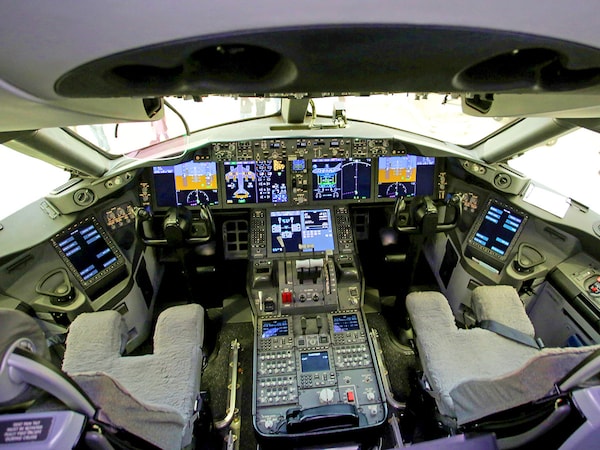
On Boeing 787 aircraft, the switches are located below the thrust levers on the central console, with one dedicated switch for each engine. They are spring loaded and designed to remain firmly in position. To move a switch between the two available modes, 'RUN' and 'CUTOFF', a pilot must first pull the switch upward before changing its position.
According to accident investigation findings referenced by regulators and pilot bodies, the fuel control switches are spring loaded and designed to prevent inadvertent movement, making the locking mechanism a critical safety component.
AI 171 Ahmedabad crash
The grounding follows the June 12, 2025, crash of Air India flight AI171, a Boeing 787-8 Dreamliner that went down shortly after take-off from Ahmedabad, killing 260 people.
A 15-page preliminary report released by the Aircraft Accident Investigation Bureau (AAIB) in July 2025 stated that both engine fuel control switches on the aircraft involved in the crash transitioned from RUN to CUTOFF within one second of each other shortly after lift-off, leading to a loss of thrust.
In its report, AAIB stated that the cause of the switch movement had not yet been established, and the inquiry remains ongoing.
The AAIB report also referred to a 2018 advisory issued by the US Federal Aviation Administration (FAA), Safety Alert for Operators NM-18-33, which warned of the potential disengagement of the fuel control switch locking feature on certain Boeing aircraft. The advisory was not mandatory and did not result in an airworthiness directive.
Safety group and pilot body raise concerns
The Safety Matters Foundation, a non-profit aviation safety advocacy group, called for a transparent investigation into the latest incident involving VT-ANX. In a statement issued on February 2, the foundation said the reported behaviour of the fuel control switch mirrored issues highlighted in the earlier FAA advisory.
“What makes this event deeply troubling is not only that it happened, but that it occurred after Air India publicly stated it had conducted precautionary checks across its 787 fleet and found no issues,” said Capt. Amit Singh, founder of the Safety Matters Foundation. He added that the group was not implying any connection between the recent incident and the Ahmedabad crash but said repeated reports involving a critical system warranted closer examination.
The Federation of Indian Pilots (FIP) reiterated its long standing demand for comprehensive checks of Boeing 787 aircraft, particularly their electrical systems.
“From day one after the AI171 crash we have been insisting on checking all B787s for their electrical systems,” said federation president CS Randhawa. “We have written to the Ministry of Civil Aviation and the DGCA that the fuel control switches could have moved due to an electrical malfunction. The aircraft is also prone to water seepage into the main electronic bay, which can cause electrical failures.”
Randhawa also cited earlier global incidents involving the Boeing 787, including a 2019 serious incident involving an All Nippon Airways Boeing 787-8, which was forced to make an emergency descent after a systems malfunction, according to a Japanese safety investigation report.
The FIP has also raised concerns about the conduct of the investigation into the Ahmedabad crash. In a legal notice issued in January 2026, the federation questioned the summoning of family members of the deceased pilots by investigators, arguing that accident investigations under international norms are intended to be technical and safety oriented rather than fault finding. The matter is currently pending before the Supreme Court.