Union Budget 2026: On the wings of resilience
Against a fragmented global economy, Budget 2026 places its bets on capacity, competitiveness, and fiscal prudence to anchor India’s growth and global stature
Last Updated: Feb 02, 2026, 11:38 IST5 min
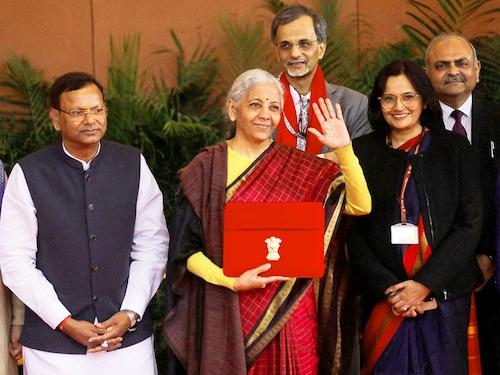
The macroeconomic backdrop against which the Union Budget 2026 was presented on Sunday stands in stark contrast to that of earlier years. Global geopolitical dynamics have shifted sharply, with the world today in the midst of renewed hostilities. Ongoing conflicts, the rise of China, large trade imbalances, the significant debt burden of the US, and the resurgence of protectionist politics resulting in tariff tensions continue to cloud the global economic outlook and undermine policy certainty.
Paradoxically, against this turbulent global backdrop, India’s domestic economic fundamentals remain robust. The economy continues to be among the fastest-growing major economies in the world, with a healthy growth rate of 7 percent, supported by tempered inflation, strong foreign exchange reserves, and a resilient financial system. The primary areas of concern remain the external value of the domestic currency amid volatile global capital flows, as well as domestic employment and incomes. Buttressed by this economic resilience and shifting geopolitical dynamics, the Finance Minister presented the Union Budget 2026.
The recently concluded trade agreement with the European Union, the “mother of all deals”, which expands market access for Indian exporters, has further reinforced the need for domestic capacity enhancement. Accordingly, capacity building and backward linkages form a central pillar of the Union Budget. Export-oriented sectors such as textiles, chemicals, and pharmaceuticals have been prioritised through targeted incentives and infrastructure support to improve scale, efficiency, and global competitiveness, as well as greater substitution of inputs primarily from China. This policy strategy allows India to play out its stated geopolitical stance of multipolarity, instead of being ensconced in a single superpower camp of either the US or China.
The emphasis on capacity building rests on the edifice of Atmanirbhar Bharat (import substitution), with a renewed focus on the indigenisation of critical export inputs rather than continued import dependence. This emerges as one of the most important takeaways of the Union Budget.
In pharmaceuticals, where 70 percent of the inputs are sourced primarily from China, this translates into strengthening domestic production of active pharmaceutical ingredients (APIs) and bulk drugs by firms. In textiles, integrated players and exporters are being encouraged to deepen domestic sourcing and move up the value chain.
In electronics and semiconductors, companies are being positioned as central to India’s manufacturing ambitions, supported by investments in chip fabrication, assembly, and testing facilities. The Budget also reinforces domestic capabilities in critical minerals and battery materials, benefitting players involved in lithium, rare earths, and recycling ecosystems. This sector was dependent on inputs from China to the extent of 35-40 percent.
India is already the China+3 manufacturing power of the world, with ASEAN (Association of South East Asian Nations) and Latin America leading the way. Together, these measures create a clear corridor of opportunity for Indian firms to scale up, improve competitiveness, and integrate more deeply into global supply chains, while at the same time emerging as the least dependent on Chinese inputs—a dependence that drew the ire of the Trump administration via transhipment rules and levies on Latin America and ASEAN.
Another key takeaway of this Union Budget is its focus on youth, skills, and inclusion. To scale up employability and bridge education-to-jobs gaps, the Budget proposes content-creator and AVGC labs in 15,000 schools and 500 colleges, five university townships near industrial corridors, and one girls’ hostel in every district to improve access and retention in higher education and STEM fields. These initiatives aim to build future-ready human capital and broaden opportunities for disadvantaged groups—a further expression of the government’s sense of responsible duty, or kartavya.
What distinguishes this Budget is its renewed commitment to inclusiveness and capacity building, while keeping public finances firmly under control.
Fiscal prudence continues to be a defining feature of this government’s economic strategy. For the financial year 2026-27, the fiscal deficit has been pegged at 4.3 percent of GDP, reinforcing the government’s calibrated approach to consolidation while supporting growth. At the same time, the Budget raises the capital expenditure outlay to ₹12.2 lakh crore, signalling an ongoing emphasis on infrastructure and asset creation without loosening fiscal restraints. This marks the fifth year of the government stepping in for capital and investment creation, substituting for the slowly growing private sector capex and investments, thereby maintaining growth momentum and a thrust on capacity building and competitiveness. By accelerating public investment and keeping the fiscal tap under control, the government has reinforced its credibility on both growth and sustainability.
The Budget gives a small but meaningful nod to NRIs by easing certain tax burdens, encouraging investment and engagement with the domestic economy. Beyond this, the real stimulus lies in customs duty reforms aimed at making Indian exports more competitive. By rationalising tariffs on critical inputs and lowering costs for sectors such as textiles, leather, and seafood, the government is signalling its intent to strengthen India’s presence in global markets. These measures are precisely targeted at sectors most hurt by high US tariffs under the Trump administration. Complementing this, targeted tax holidays for strategic sectors such as data centres are expected to lure foreign direct investment, while reinforcing India’s broader ambition of becoming a manufacturing hub under the Make in India initiative, or its current status as China+3. Together, these measures demonstrate a clear strategy: building domestic capacity, boosting exports, and attracting global capital.
As India continues on a higher growth trajectory, the Union Budget seeks to ensure that vulnerable and sensitive sectors receive targeted support. Industries such as leather and textiles, which were previously buffeted by tariff shocks and global uncertainties, now benefit from measures to deepen value chains and enhance competitiveness. Initiatives like textile parks, infrastructure upgrades, and export facilitation measures provide a launching pad for these sectors to scale higher. While domestic consumption remains strong, the Budget’s key strokes are strategically focused on boosting manufacturing and exports.
Even amid global hostilities and geopolitical uncertainties, these reforms lift the economy on the wings of carefully calibrated measures, enabling industries to expand capacity, strengthen competitiveness, and soar towards new heights. From a geopolitical perspective, India is carefully balancing between the competing superpowers—the US and China—while strategically giving concessions to one or the other (strategic autonomy), based on its calibrated self-interest requirements.
(The authors are Founder, Infisum and former Head, Trade, NITI Aayog; Faculty Member, ICFAI Business School, Mumbai, respectively)
Read Forbes India's complete Budget 2026-27 coverage here
First Published: Feb 02, 2026, 11:38
Subscribe Now