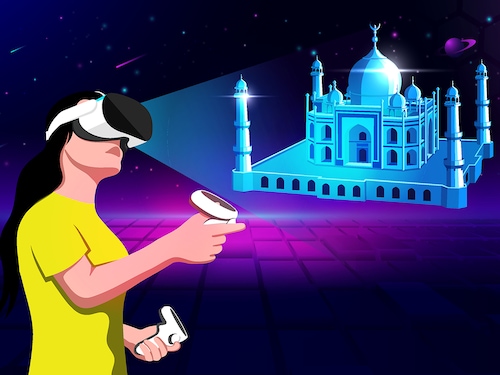
India’s 5,000-year history is written into its forts, textiles, temples, and traditions. Yet despite this abundance, India’s share of global tourism continues to hover at just under 2%. The paradox is evident: India is a cultural leader, but its systems and visitor experience have not kept pace with its heritage. For perhaps the first time, a digital renaissance may be able to bridge this gap. A convergence of technology, entrepreneurship, and cultural stewardship can transform India’s past into economic opportunity—generating employment, protecting traditions, and positioning tourism as a driver of sustainable development.
India’s GDP is projected to grow fourfold over the next 15 years, and rising incomes and demographic shifts are reshaping how Indians travel. Yet, interactions with heritage remain largely one-dimensional—reduced to a ticket, a photograph, a souvenir. Many heritage sites still rely on outdated infrastructure, limited interpretive content, and fragmented experiences.
Government platforms tend to focus on logistics rather than engagement, offering little appeal to a generation seeking meaning and immersion, not distant observation.
“India’s cultural wealth is staggering, but without innovation it’s like a diamond locked away,” says a senior tourism strategist in New Delhi. “The way forward is to unlock heritage using smart ecosystems that combine culture and technology.”
For younger travellers, exploration is an extension of identity and learning. Yet India’s heritage tourism ecosystem often fails to create that emotional connection because it is rooted in traditional, passive visitation. Low footfall, minimal community involvement, and shrinking demand for artisan crafts threaten livelihoods and authenticity.
Digital technologies offer an answer.
Augmented and virtual reality (AR/VR) can transform monuments into interactive classrooms, while digital twins recreate inaccessible ruins for global audiences. AI enables personalised storytelling and visit management, and blockchain adds transparency and authenticity to artisan markets. Real-time, multilingual, AI-driven crowd management and seamless 5G/6G-enabled assistance can elevate the experience end-to-end.
Picture walking through the ruins of Hampi guided by a simulated Vijayanagara merchant, or using an app in Varanasi to trace exactly which loom produced the handwoven sari you admire. When data, design, and storytelling intersect, India’s heritage becomes not merely visible—but alive.
The Blueprint: A Multi-Dimensional Digital Strategy
To make this shift permanent, the visitor experience must be underpinned by robust digital systems. This includes creating a unified national virtual reception area where tourists can explore cultural sites, plan virtual tours, meet local artisans, and engage with communities.
Seamless ticketing, predictive analytics, and coordinated crowd management across a single AI-driven network can enhance security and ease movement across sites.
Augmented reality experience centres can turn monuments into immersive storytelling spaces. Online marketplaces can showcase artisanal products authenticated through blockchain. A centralised AI backbone can support data-driven decision-making across ministries, tourism operators, and communities.
The end goal is a seamless physical-digital continuum in which on-site engagement is complemented by digital immersion, creating an inclusive and data-intelligent tourism ecosystem. International examples—Japan’s smart heritage circuits and Italy’s digitally reconstructed cathedrals—demonstrate the feasibility. With its unmatched diversity, India is primed to lead in fusing heritage with high-tech innovation.
The Bansilalpet Stepwell: A Living Case Study
The restoration of the Bansilalpet Stepwell in Hyderabad illustrates what is possible. Through community action, local enterprise, and architectural vision, a once-neglected structure has been revived, becoming a symbol of civic pride.
The project revealed that reimagining heritage requires not just conservation but curating experiences before, during, and after the visit. Pre-visit digital engagement builds curiosity; on-site interaction deepens immersion; and post-visit digital conversations sustain connection. These insights informed a replicable digital model to drive footfall, appreciation, and long-term sustainability across similar initiatives.
Building a Sustainable Business Model
A world-class heritage ecosystem must be economically viable. Containing costs and diversifying revenue are critical. Investments in platforms, content, and partnerships can generate returns through smart ticketing, AR/VR experiences, digital collectibles, and specialised memorabilia—providing recurring support while empowering artisans and small businesses.
Success will be measured not only by tourist numbers but by quality of engagement, artisan participation, reductions in queue times, and conversion from online interest to on-ground presence. With greater operational efficiency and predictive capabilities, heritage destinations can evolve into self-sustaining systems balancing conservation with commercial viability.
Cultural Preservation Meets Economic Empowerment
At its core, digital heritage transformation is a human story. It brings artisans, educators, technologists, and communities into a shared value chain. It democratises culture and decentralises opportunity by connecting creators directly with audiences.
Craft villages can become micro-destinations, and women-led clusters can access markets and visibility previously out of reach. Folk performances, local cuisine, oral histories, and festivals—at risk of fading—can be preserved and revitalised through digital platforms.
The fusion of digital frameworks with cultural preservation ensures growth that is regenerative, not extractive—benefiting local livelihoods, reinforcing identity, and strengthening national cultural capital.
The Road to Realization
Achieving this vision requires coordinated action. The Archaeological Survey of India and state tourism boards, in partnership with local entrepreneurs, can anchor public–private collaborations. Incentive-driven policies and funding for AR/VR storytelling, multilingual apps, and sustainable visitor management systems are essential.
Equally important is cultivating specialised expertise through collaboration with universities and advanced technology institutions. Integrated payment gateways can widen access, while community training programmes can help locals engage digitally with visitors. A strong branding and digital marketing strategy can attract investors committed to sustainable, culture-led solutions.
This aligns with national initiatives such as Digital India, Vocal for Local, and Incredible India 2.0—platforms that set the foundation for a digitally empowered heritage revolution.
A New Dawn for Heritage Tourism
The future of Indian heritage tourism lies not in preserving culture behind glass but in creating immersive, participatory experiences. In the coming decade, travellers may not only “see” monuments but converse with historical figures via AR, attend virtual craft workshops hosted from rural villages, or enjoy AI-curated culinary trails. Every trip becomes a co-created cultural experience, not passive observation.
Digital technologies can also improve tourism quality, reducing congestion and enhancing benefits to local artisans, guides, and businesses. As mindsets shift from exploitation to stewardship, pride takes root.
Such a model can reshape how India’s youth understand their heritage—strengthening cultural identity while fostering innovation. In the dynamic space between history and technology lies India’s next major opportunity: transforming ancient heritage into a living industry that enriches both people and place.
Anjal Prakash is Clinical Associate Professor and Research Director at Bharti Institute of Public Policy, Indian School of Business. He teaches sustainability at ISB.
Dharmaseelan S is a seasoned engineering leader in construction and General Manager, driving innovation and excellence at K Raheja Corp.
Divya Gururajan Sumangala, FRM (GARP) and IIM Bangalore alumnus, held positions in State Government of Western Australia across various roles in investments & risk consulting in the.
Naga Myneedu is a Technology Leader at Toll Holdings Ltd, responsible for the stability, resilience and digitalization of Business through a strong tech backbone.
Ravikanth Lolla is an Analytics & AI leader at Oracle guiding a group of solution architects, product advisors to help global customers successfully adopt an AI based SaaS product.
Suchendra Ragala, Vice President at Outamation Technologies, is a progressive leader driving innovative technology solutions across Banking & Financial Services and AI-enabled patient care within the U.S. healthcare ecosystem.
Vijay Chintam, is a multicultural management professional having expertise in Strategy with execution panache and Value Chain creation.
This piece originally appeared in ISB Discover from the Indian School of Business. To receive business ideas and insights from ISB Discover, click here:
ISB Discover