AI for all: How India will shape the physical AI era
By Fabio Violante, CEO, Arduino
Last Updated: Feb 19, 2026, 14:55 IST9 min
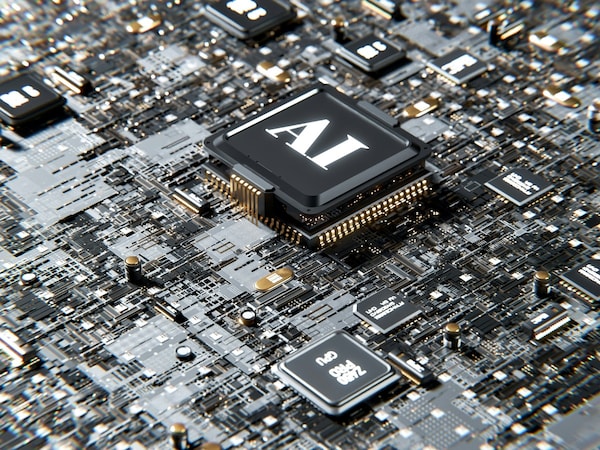
Artificial intelligence is moving from the abstract to the tangible. It is leaving reports, dashboards and call centers and entering the physical world, into machines, classrooms, farms, hospitals, and public infrastructure, where software meets sensors and actuators, and where decisions create motion, light, sound, and safety. This is the dawn of Physical AI: intelligence that senses locally, reasons locally, and acts locally.
Physical AI is not merely a product feature. It is an architectural shift. When intelligence lives next to the phenomenon it observes, we gain what the cloud alone cannot consistently provide: low latency, predictable reliability, better privacy, and a lower total cost of operation in bandwidth‑constrained environments. Just as importantly, we lower the barrier to entry. With the right tools, learners and first‑time builders can do meaningful work without hyperscale infrastructure.
India is very well positioned to define this era. India brings an uncommon combination of scale, constraints, and creativity. Scale, because tens of millions of young people are entering the workforce, and the developer community is now among the largest on earth. Constraints, because power, connectivity, and cost are real everyday variables, and therefore design parameters. Creativity, because Indian builders have long perfected the art of making things work everywhere, not just in perfect conditions. Build under constraints, and you do not create fragile prototypes; you create robust systems patterns that can be exported.
The question before us is simple: Will the world of Physical AI be built by a few thousand engineers, or by millions of builders? If it is the latter, and it must be,the platforms, pedagogy, and policies we choose in 2026 will shape the decade.
For a decade, headlines celebrated model sizes and benchmark scores. In the decade ahead, the questions that matter are different: Where does intelligence live? How reliably does it act? How quickly can we iterate in the real world? When decisions happen on‑device, a camera can recognize a hazard without a round trip to a server; a motor can respond within milliseconds; a classroom project can run without broadband. Physical AI is AI that shows up on time, every time.
On‑device inference transforms latency into responsiveness and turns privacy from a promise into an architecture. When sensitive data does not leave the device, we reduce risk by design. And when systems continue to function offline, we minimize downtime and recurring connectivity costs. These practicalities are not footnotes. They are the difference between impressive demos and dependable deployments.
Technology ecosystems flourish when they align with the strengths of their builders. India’s developer base is already one of the world’s largest and fastest‑growing, and it is increasingly fluent in AI tools and open‑source collaboration. That scale matters, but scale alone is not sufficient. What makes India singular is that everyday constraints are embraced as design inputs. That is how you produce affordable, efficient systems that work the first time, every time, in the real world.
For Physical AI, those instincts are decisive. Edge systems must balance compute with power, responsiveness with thermal limits, and functionality with cost. The Indian engineering habit of optimizing for enough, rather than chasing excess, creates solutions that are not only elegant but also economically viable at scale.
As intelligence moves to the edge, hardware matters again. But this is not a return to closed and specialized stacks available only to elite teams. The Physical AI era will be won by open, accessible platforms that compress the distance from idea to impact. Advanced silicon must meet approachable development environments so that students, teachers, startups, and enterprises share a common toolchain and vocabulary.
This is precisely why we built platforms like Arduino UNO Q in partnership with Qualcomm: to combine Linux‑class “compute” and on‑device AI with real‑time microcontroller control, in a familiar form factor and with open libraries. You should think about it as a combination of brain, sensing and actuation. Complex becomes buildable. Elite becomes accessible. A student’s first AI project and a startup’s first deployable prototype can live on the same board, using the same abstractions and many of the same examples.
If Physical AI is to be for everyone, the north‑star metric is not units shipped or funds raised, it is developer velocity. How quickly can a student complete a first AI project? How rapidly can a teacher turn theory into a lab? How fast can a startup move from prototype to repeatable product? When velocity rises, experimentation multiplies, failure becomes cheaper, and confidence compounds.
Think about the new developer arc. It no longer begins with a computer‑science degree; it might begin with curiosity, a sensor, and a small board. First, you explore by blinking an LED or reading a sensor. Then you build by adding a camera or microphone and a local AI model. Then you deploy by solving a real problem in a lab or community. Finally, you scale by turning your solution into a product or platform. Our responsibility is to make every step of that journey seamless and fast.
India prototypes at extraordinary speed. Hackathons and capstones can solve in a weekend once required months. The opportunity now is to industrialize velocity, to master the middle mile between a compelling demo and a dependable product. That middle mile has hard edges: certification, manufacturability, software updates, security, supply chains. It is also where value accrues, because prototypes impress, but platforms endure.
We need accessible manufacturing pathways for small runs and scale‑up, capital that understands hardware cadences, and education that teaches productization, not just invention. When students learn the difference between a great demo and a great product, they graduate with a builder’s realism and an entrepreneur’s optimism.
As a non-Indian, learning about the policy in India; it is amazing to see the tilt toward hands‑on innovation. The National Education Policy (NEP 2020) calls for experiential learning, technology integration, and 21st‑century skills from the earliest grades. Its spirit is already visible in thousands of Atal Tinkering Labs (ATLs) across the country, makerspaces that normalize sensors, microcontrollers, and problem‑solving. The plan to dramatically expand this network signals a generational commitment to learning by building.
But Physical AI requires more than access to equipment. It requires teacher enablement, aligned assessment, and open reference projects that can be copied, remixed, and improved. When a teacher can download a proven lab and run it without internet, when a student can see local inference control a motor in real‑time, confidence grows. Confidence turns learners into builders.
For years, we lacked the ingredients to make on‑device intelligence truly practical for everyone. That is no longer true. Energy‑efficient processors now run surprisingly capable models at the edge. Development environments unify real‑time control, Linux applications, Python, and AI workflows. And the open‑source community has matured from code snippets to production‑grade frameworks, examples, and learning paths.
On the demand side, the use‑cases are everywhere. A camera that detects unsafe behavior near a machine. A meter that learns patterns to save energy. A classroom that measures air quality and alerts locally. A vehicle that perceives and responds even when the network is congested. In each case, Physical AI is not a bonus; it is the only way to meet the requirements of latency, privacy, and cost.
Double down on open, accessible platforms. Favor ecosystems with approachable tools and large communities. Provide a clear path from school projects to startup deployments to learn from hands-on experience to productization.
Modernize labs into capability centers. Upgrade ATLs and university labs into certification‑ready spaces with modular curricula, verified rubrics, and micro‑credentials recognized by employers. Measure usage and outcomes, not just equipment.
Fund the middle mile. Create financing vehicles and procurement models tuned to hardware realities, inventory, certification, compliance, and link them to domestic supply chains so that Make in India becomes Deploy in India. Think and invest with a long-term horizon and a patient mindset.
Build public reference designs. Publish open projects for agriculture, healthcare, safety, and energy, with bill-of-materials, code, and deployment guides. Let districts, startups, and communities replicate quickly, then localize.
Measure developer velocity. Track 'time to first project', 'time to classroom lab', 'time to first deploy', and 'prototype‑to‑platform conversion' as policy KPIs. What we measure, we multiply
Agriculture. On‑device vision can detect crop stress, pests, or irrigation leaks without connectivity. Multi‑sensor fusion predicts soil conditions and drives precision inputs. Farmers get insights in seconds, not hours, with no data leaving the field.
Healthcare. Portable diagnostics and remote monitoring systems perform initial analysis locally, preserving privacy and enabling triage even with poor networks. In telemedicine, local perception stabilizes experiences for clinicians and patients.
Manufacturing. Real‑time anomaly detection on audio or vibration reduces downtime and improves safety. Because models live on the line, updates can be staged and rolled out without dependency on the wide‑area network.
Mobility and public safety. Computer vision at intersections, stations, and worksites detects risk and orchestrates responses locally. Latency is measured in milliseconds, not round trips.
Education and civic tech. Students build environmental dashboards and accessibility aides with local inference. Cities deploy edge sensors that operate within strict data‑governance norms. In both cases, Physical AI builds trust because the system is understandable and inspectable.
Every era has a platform that makes the complex simple. Two decades ago, Arduino helped millions of people join the maker movement by lowering the barrier to embedded development. Today, as we enter the Physical AI era, we are again lowering the barrier, this time to on‑device intelligence, by combining approachable hardware with unified software and a global community. In the last 12 months alone, downloads of our development tools have been measured in the tens of millions, a signal that curiosity is compounding into capability.
Crucially, Physical AI is not a solo act. It requires collaboration between silicon, software, curriculum, and community. That is why we work with technology leaders to bring advanced “compute” into accessible form factors, and with educators and partners to translate platforms into classroom and lab impact. The result is a ladder that starts with a first project and leads to a career, or a company.
India’s trajectory is unmistakable: a surging developer base, a policy push for experiential learning, and a semiconductor strategy moving from policy to production. With Physical AI, these strands converge. If we choose openness, invest in the middle mile, and measure velocity, India won’t just participate in the AI era, it will shape it.
This is not about replicating Silicon Valley. It is about building an Indian model of Physical AI: built at scale, under constraints, for real‑world complexity. It is about capability, not just innovation; platforms, not just prototypes; builders, not just users. And it starts with a simple invitation to every student, teacher, startup, and policymaker: start building, now.
Fabio Violante is a builder‑first technology leader who helped evolve Arduino from a spark of the maker movement into a globally trusted platform. Fabio Violante as CEO of Arduino and Vice President and General Manager at Qualcomm, leads the strategic development of the Arduino platform for intelligent edge, connectivity, and embedded AI applications.
As CEO of Arduino, he championed openness, hands‑on learning, and developer velocity, guiding the company’s expansion into AI‑ready hardware, unified toolchains, and programs that turn curiosity into capability. Earlier, he was CTO for the Performance and Availability Business Unit at BMC Software following the acquisition of Neptuny, a company he co-founded. Violante holds a Ph.D. in Computer Engineering from Politecnico di Milano and is a co-founder and Board Member of the Moviri Group.
The pages slugged ‘Brand Connect’ are equivalent to advertisements and are not written and produced by Forbes India journalists.
First Published: Feb 19, 2026, 14:58
Subscribe Now