From Haryanaʼs fields to global tables
How Double Chabi builds trust in the basmati rice trade
Last Updated: Feb 13, 2026, 18:55 IST3 min

Global food trade today is shaped by efficiency. Faster sourcing, shorter cycles, and aggressive scaling have become the norm. Yet in certain categories, speed does not translate into value. Basmati rice is one of them.
Unlike most staples, basmati carries expectations that extend beyond price. Aroma, grain integrity, aging, and consistency define its worth. For importers and consumers alike, a single compromised batch can erode years of confidence. In this environment, trust is not a soft value—it is the operating system.
That reality has shaped the basmati rice trade for decades, and it explains why legacy players from Indiaʼs rice belt continue to matter in a rapidly modernizing market.
Haryana sits at the heart of Indiaʼs basmati-growing regions, where soil composition, climate, and farming knowledge converge to produce rice that improves with time. Unlike commodities optimized for rapid turnover, basmati requires deliberate aging. Its fragrance deepens, grains lengthen, and cooking behavior stabilizes only after months of rest.
This biological truth imposes business discipline. Producers cannot rush inventory without risking quality. Exporters cannot promise consistency unless their processes respect time.
For Double Chabi, founded in 1959 by Brij Bhushan Goyal, this understanding became foundational early on. Aging was never treated as a delay—it was built directly into planning. Supply decisions were aligned with readiness, not demand spikes.
“Legacy isnʼt about how long youʼve existed,ˮ Goyal reflects. “Itʼs about how responsibly you carry forward what youʼve built. In food, every generation is only a caretaker.ˮ
That philosophy shaped the companyʼs early years: steady farmer relationships, careful inventory cycles, and an insistence on grain maturity— even when markets encouraged faster movement.
As basmati rice expanded into global markets, expectations intensified. Importers began looking beyond price to reliability. Restaurants and retailers demanded uniformity across shipments. Consumers expected the same experience every time they cooked a familiar brand.
In response, many players focused on scale. Double Chabi focused on systems.
Layered quality checks, disciplined sourcing, and a balance of modern sorting technology with human oversight ensured standards didnʼt shift with geography. Whether rice was destined for domestic kitchens or international buyers, the process remained unchanged.
Over time, this consistency became currency—reducing friction in trade relationships and lowering the cost of credibility.
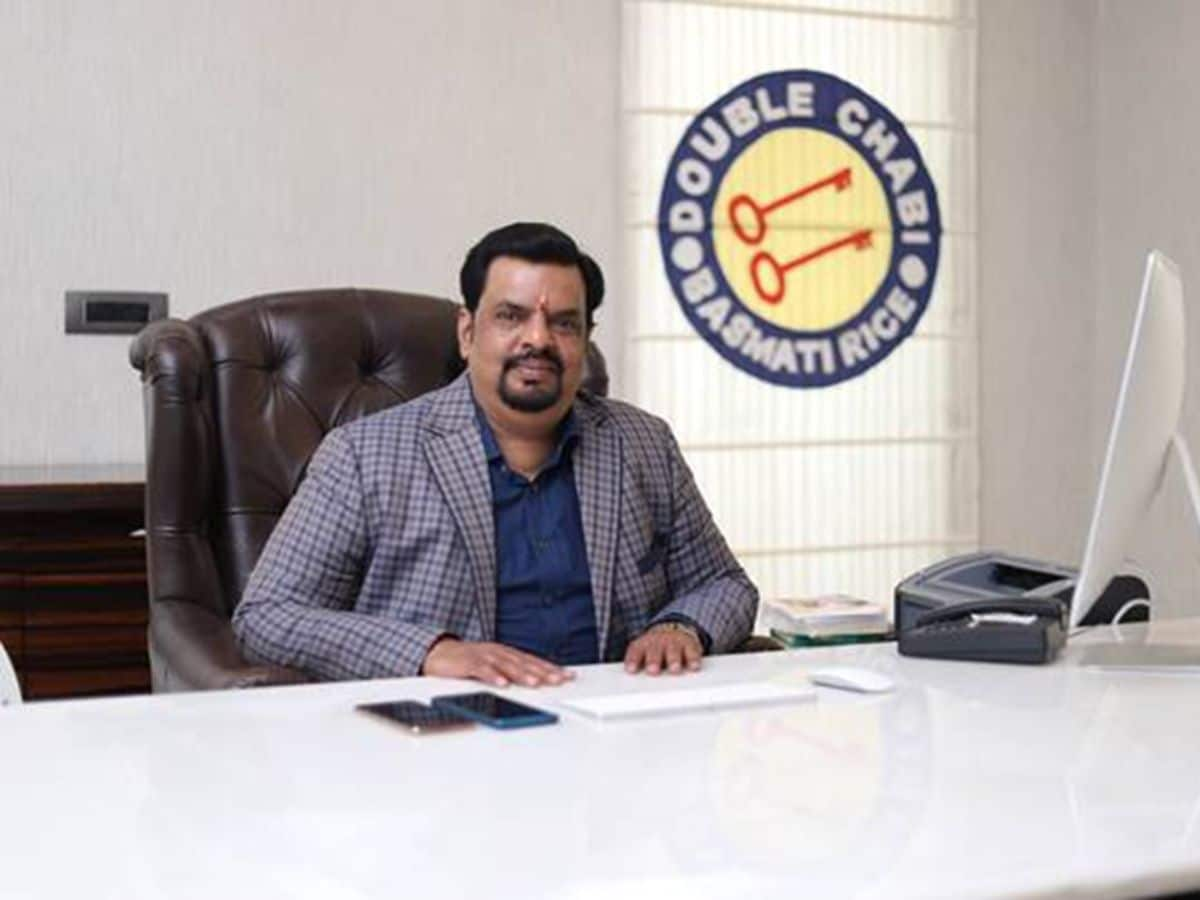
Today, that foundation is being carried forward by Jatinder Goyal, who represents Double Chabiʼs next phase—global expansion paired with operational modernization.
While Brij Bhushan Goyal built the companyʼs cultural core, Jatinder has focused on strengthening export networks, upgrading processing infrastructure, and expanding Double Chabiʼs international footprint. His
approach emphasizes evolution over disruption: preserving what works while preparing the business for a more demanding global supply chain.
Together, this generational transition reflects a broader pattern seen in enduring legacy brands—where continuity of values meets contemporary execution.
One lesson proved especially important along the way: quality alone does not guarantee understanding.
“We believed good rice would speak for itself,ˮ Goyal notes. “What we learned is that quality also needs clarity.ˮ
That realization led to greater transparency—explaining why rice is aged, how it is processed, and what standards define readiness. Not as marketing, but as education. In global trade, clarity reduces risk. It also deepens trust.
While basmati rice is often grouped under agricultural commodities, its market behavior suggests otherwise. Preferences are shaped by sensory experience and memory, not just price. A well-aged grain carries cultural weight— particularly in cuisines where rice anchors celebration and daily ritual alike.
Double Chabiʼs strategy has been to honor this distinction. Technology is adopted to improve precision, not compress timelines. Expansion is paced to avoid dilution. Process is explained, not hidden.
As consumers globally grow more discerning about provenance and quality, brands that can articulate their journey—not just their product—gain a durable edge.
What the Basmati Trade Teaches Business Leaders
The basmati rice business offers lessons far beyond agriculture.
Not all markets reward speed. In trust-sensitive categories, patience compounds value.
Systems matter more than slogans. Businesses built on operational discipline scale more sustainably than those reliant on perception alone.
And legacy, when aligned with modern execution, becomes a stabilizing force
—especially in industries where consistency defines success.
As global supply chains face increasing scrutiny, basmati rice quietly demonstrates an enduring truth: trust travels farther than volume.
From Haryanaʼs fields to tables around the world, that principle continues to define who endures—and who fades.
“Legacy isnʼt about how long youʼve existed. Itʼs about how responsibly you carry forward what youʼve built. In food, every generation is only a caretaker.ˮ
— Brij Bhushan Goyal, Founder, Double Chabi
The pages slugged ‘Brand Connect’ are equivalent to advertisements and are not written and produced by Forbes India journalists.
First Published: Feb 13, 2026, 18:57
Subscribe Now