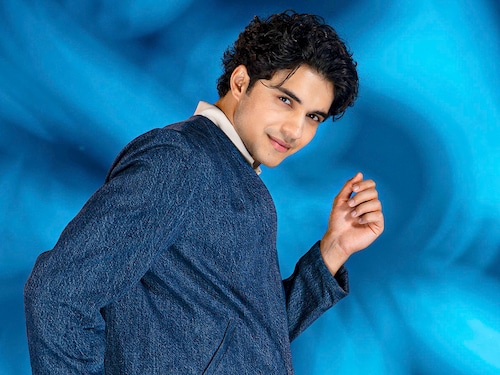
I don’t really see roles as small or big. Coming from where I do, choosing acting itself meant stepping out of safety and certainty. Every ad, every short film, every role was part of the process. Work is work and that has always made me, me. What you see in Munjya wouldn’t have been possible if I had skipped even one of those experiences.
View full list: Forbes India 30 Under 30 2026: Meet our young groundbreakers and trendsetters
Q. Your performances often feel grounded. How has your personal journey shaped your choices?
Who you are off-screen always reflects on the screen. I used to watch interviews as my acting school, but I realised something important: My journey can only be mine. If I don’t live my own life fully, I can’t live a character honestly. So, live your life fully and maybe god has given you the light which he's not given anyone else. Authenticity only comes from honesty.
Q. How do you approach new roles today? Has that process evolved over time?
I’m still learning and growing. Right now, everything feels like an answer rather than a question. Like, the questions are in, and I believe my god just answers it for me. So whatever characters I get, whatever roles I get to play are all answers for my prayers.
Q. Do OTT and theatrical platforms demand different approaches from actors today?
Not at all. Audiences want good performances and honest characters—whether it’s OTT or cinema. Acting doesn’t change. Differentiating between platforms can actually poison the process for an actor. I think it's very poisonous if you differ being on camera like you're on an OTT set or you're on a theatrical set. For actors, acting remains acting.
Q. If you could keep one quality from a character you’ve played, what would it be?
From Munjya, I’d take Bittu’s ability to let love go. Like in the end, my character says to Sharvari‘s [Sharvari Wagh, who played Bela opposite Verma] character: It's okay... Aap jao aapki zindagi jiyo, sab karo, main yahi milunga, humari dosti waise hi rahegi (go and live your life, I’ll be here and our friendship will stay as it is). Letting someone grow, even if it means stepping back. That’s a powerful form of love.
Q. Recognition often follows success. How do you personally process it? Does it motivate you, pressure you, or ground you?
I’ll be honest—I work for recognition. Not money. I want people to remember my characters, not necessarily my name. If someone calls me by a character I played, that’s success for me. That's what I really live for.
Q. What’s the biggest creative risk you’ve taken so far?
Time. After shooting Munjya, I waited for almost a year without taking up other work. For a new actor in Mumbai, time is the biggest gamble—you just can’t get it back.
Q. How conscious are you about building a ‘brand’ as an actor?
I don’t think about it. It's like if you're acting, you should be known as an actor first and rest will follow is what I believe. Become a better actor first, and ultimately people will love you and they will want you. They'll let you touch the sky.
Q. What’s one ordinary thing you do that might surprise people?
I do household chores, buy groceries, sit with my mother over tea and biscuits. My life is very ordinary—and I like it that way. With that, I think, I'm just being myself.
Q. Which filmmakers are on your dream collaboration list?
Sanjay Leela Bhansali, Imtiaz Ali, and Rakeysh Omprakash Mehra. I want to work with directors who can make me forget myself for a while and live another life completely. My journey makes me realise a beautiful path that I am one step closer to at least meeting my idols.
Q. There’s a growing talk about responsibility in storytelling, especially amongst youngsters. How do you see it?
Artistes need freedom. An artiste should be free to show… because if you don't show, people won't realise that. Our job is to reflect life, not sanitise it. If art becomes overly responsible, it becomes dishonest and boring. Humans are angry, joyful, flawed—that’s what makes stories real.
Q. What’s a common misconception about actors you’d like to debunk?
That we’re the most important people in the world. We’re not. My brother serves in the army. When I think of that, I know how small my role really is. If my work can entertain someone for half an hour, that’s enough, a small part I play.
Q. What have been the biggest emotional or mental shifts you’ve undergone while navigating fame, expectation, and the unpredictability of the film world?
A lot has changed. Mumbai takes a lot from you. What really shapes an actor here isn’t the time spent on set, but everything that happens before you reach it. The struggle, the waiting, the uncertainty—that’s the real process.
The behind-the-scenes journey is what makes the story come alive. If you skip that, you lose the hunger. And that hunger is what pushes you to give your best when you finally are on set. Acting isn’t just about showing up—it’s about everything that makes you worthy of being there.
Q. And what grounds you when things feel overwhelming?
Home. My mother. My family. They remind me of who I am beyond the roles.
Q. Finally, what kind of voice do you want to be for young India?
I want to stand for creation—for making people feel something. I want to be proof that if someone from Panipat can follow this path, others can too. I want parents to believe in their children’s dreams, and for young people to just go out and live them.