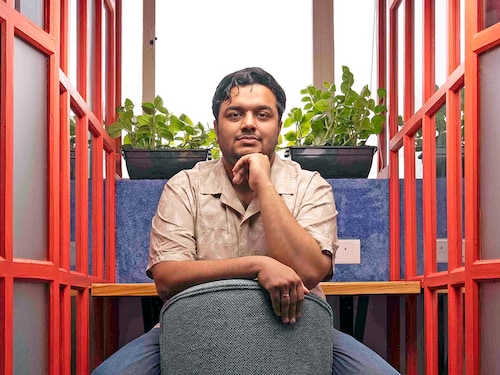
As the push to build reliable AI (artificial intelligence) agents accelerates, capital matters. But Soham Ganatra, co-founder of AI startup Composio, feels that something more old-fashioned may ultimately decide which companies endure: People. In an interview with Forbes India, he explains what Composio does and why profitability isn’t the near-term goal. Edited excerpts:
Composio started with a simple observation: Software-to-software communication is painfully hard and consumes an enormous amount of engineering time. In my previous startup (where he was the first employee), we were collecting risk and fraud data from many different sources. At any given point, nearly half the team was working just on integrations.
Nobody enjoys building integrations. It’s not intellectually rewarding, it takes months, and yet it’s unavoidable. When you zoom out, probably 30 to 40 percent of engineering time across the industry goes into integrations of, like, internal systems, external SaaS tools, everything.
Around the same time, we were seeing rapid improvements in code generation models. Even early versions weren’t great, but the trajectory was clear. It became obvious that good code generation could fundamentally change how software talks to software. That’s when Composio made sense to start, in 2023.
Q. Tell us a little more about the startup where you first came across this problem…
I was the first employee at a startup called Bureau, which worked in the risk and fraud space. I spent about three years there and saw the company grow from early stages through Series B. That’s where I experienced how painful integrations are at scale.
Q. You’d already founded a company before that, right?
Yes. I’ve been in startups pretty much throughout. My first company was started right out of IIT-Bombay around 2016-17. We built AI-powered customer support chatbots for banks. We sold to large Indian banks, but I realised fairly quickly that enterprise sales in India weren’t what I enjoyed.
Q. Why’s that? What’s different about enterprise sales in India?
It’s far more relationship-driven than product-driven. Sales cycles are long, product iteration is slow, and the best product doesn’t always win. Often, the company with the most persistence wins. That creates different incentives compared with a market like the US, where competition tends to reward better products faster.
Q. What does Composio do today?
We started with agent integrations. If you’re building an AI agent today, it needs to connect to business-critical systems—Salesforce, Outlook, SharePoint, Workday. Developers spend a huge amount of time on authentication, permissions, governance, tool setup and maintenance.
Composio eliminates all that. We’ve built a large integration platform that handles these problems. Today, more than 200,000 developers use Composio.
Q. You’ve also spoken about reliability being a major problem with AI agents…
That’s the next big challenge. Agents today aren’t reliable enough for production because they don’t learn. Humans learn continuously from mistakes. Agents don’t.
What we’re building is infrastructure that allows agents to learn over time. We call it a ‘skill layer’. If millions of agents are built on Composio, every interaction with a tool—say Salesforce—creates learnings. Those learnings get shared across all agents using that tool.
Salesforce APIs are incredibly complex. We dynamically modify tools, reduce unnecessary parameters, merge functions and remember failure patterns. So, if one agent makes a mistake, the platform remembers it and all other agents improve. With every developer using Composio, accuracy improves.
Q. Can you explain this idea more simply?
Think of the difference between a contractor and an employee. A contractor starts from zero every time—you explain everything. An employee learns over time, understands the environment and becomes more autonomous. We’re trying to turn agents into employees, not contractors.
Q. Do you see foundational model companies like Anthropic as competitors?
Foundational model companies will inevitably move into adjacent infrastructure spaces that we are into. The differentiating factor is that we are very focussed on business-critical agents, and we have already built a strong base.
Q. But these companies have deep pockets. When they get into your field, how do you differentiate yourself or, how do you survive?
This used to be a big concern four or five months ago: What happens if foundation labs move into our space. It feels less top of mind now.
The thinking has flipped. Earlier, it seemed like software would get commoditised before large language models (LLMs). Today, it’s the opposite. LLMs are commoditising faster than software. If Anthropic moves into this area, that’s fine. There are already more than 10 foundation labs, and customers switch models all the time. So yes, foundation labs are competitors, but not in an existential way. They’ll win some areas and lose others. OpenAI has entered many markets, and yet entire ecosystems continue to exist around it. At this point, outcomes depend far more on execution than on who has the deepest pockets.
Click here for Forbes India 30 Under 30 2026 list
Q. What have been Composio’s biggest milestones so far?
Technically, building large-scale infrastructure with autonomous skills and context management across tools was a major milestone. Some of our largest customers run on it today. From a usage perspective, we’re seeing over 100 million tool calls per month. That’s a crazy number.
Q. How much funding have you raised?
About $30 million across two rounds. We raised a $25 million in Series A from Lightspeed in February.
Q. What’s the revenue?
It’s $1 million+ in annualised recurring revenue, but we can’t disclose more than that.
Q. Are you profitable?
No, and we’re not trying to be anytime soon. We’re in the middle of the biggest innovation cycle in decades. If a company is profitable right now, it often signals that it doesn’t have enough places to invest for growth or product innovation. We see too many opportunities to reinvest.
Q. How large is the team?
We’re about 25 people. We plan to add four or five more.
Q. Are small teams becoming the norm in AI?
Yes. Hiring is significantly lower than it would be in any other software cycle. AI reduces the need for scale in many functions. Our hiring needs are probably a third of what they would have been historically.
Q. Do you think people—or hiring the right people—is what will eventually decide which AI company makes it big?
It’s increasingly feeling like that, yes.
Q. Mark Zuckerberg is famously paying $100 million+ for top AI talent...
The way I think about that is he’s trying to buy industry knowledge. It’s not just about hiring great engineers, it’s about bringing in people who’ve worked at places like Anthropic and done some of this work before, and he’s using that to kick-start things internally.
Of course, they’re amazing people. But it’s also about scale. The cost of infrastructure is so high that if you’re spending $50 billion on GPUs, spending a billion or two on hiring doesn’t really matter. In the grand scheme of things, that $100 million doesn’t move the needle, because there’s just so much other money being spent.
Q. What does the next year look like for Composio?
The next year feels especially important. The industry is settling into shape. For us, it’s about execution. It’s about capturing the attention of the right customers and becoming deeply embedded in how business-critical agents are built.