Repair, Reuse, Reconstruct
Ritwik Khanna’s designs follow the garment-to-garment approach, creatively managing textile waste and putting it back in the supply chain
Last Updated: Jan 19, 2026, 12:07 IST3 min
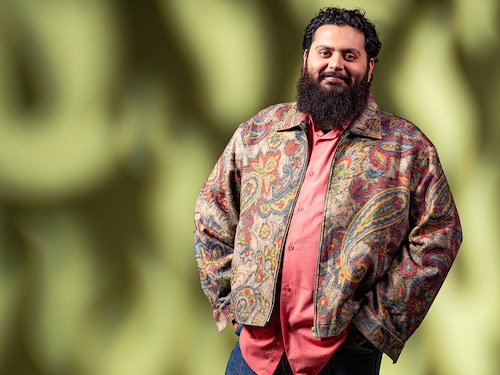
Ritwik Khanna (26)
Creative director, Rkive City
In November 2025, the runway show celebrating 150 years of Mayo College in Ajmer was distinctly different. Conceived by alumnus Ritwik Khanna’s research and design house Rkive City, which specialises in the revival of post-consumer textile waste, it reimagined discarded school uniforms and archival materials into new garments: Pachranga double-pleated shorts were reimagined from end-of-life sun -faded tents sourced from the school storerooms. Reworked patina coins served as buttons on jackets and trench coats, and reclaimed brass keys were repurposed as bow tie pins. Additionally, old sweatshirts were reconstructed as sports blazers, featuring back embroidery in zari threads representing the Mayo College crest.
The pieces, which blended heritage with reconstruction, evoked nostalgia among alumni, students, teachers, and parents. Amid loud cheers, the show received a standing ovation and rave reviews.
Khanna has always known and valued what it takes to be a maker. He traces his origins to Amritsar, an industrial textile town, where his grandfather was in the dyeing business and his father owned a weaving unit creating special blends of cashmere and wool for scarves and shawls. His early life, though, included exposure to the darker side of manufacturing: “As a child, while visiting the dyeing unit with masks on, I would always question why the workers were knee-deep in chemicals, which clearly was not good for them.”
During his Fashion Business studies at FIT, New York—which he discontinued during Covid—he observed how making is not looked at as top priority. Selling is. And how minor deviations, like when “the colour was off by one notch on a pantone shade”, triggered wasteful order cancellations. He worked as a trader and entrepreneur in New York’s second-hand and archival markets, buying and selling vintage clothing, in the process, discovering that well-made clothes had inherent resale value.
Click here for Forbes India 30 Under 30 2026 list
After returning to India, Khanna spent time in Kandla in Gujarat that has a special economic zone with licence holders specialising in textile waste management. He realised the country is one of the largest importers of second-hand waste textiles—such as used clothes, bedding, and other fabric items discarded by households or businesses—as it possesses the human resources necessary to sort and sift through global textile waste for upcycling, or recycling into new fibres. “We are one of the largest players in the post-consumer textile waste management space,” he says.
This insight led him to build a garment-to-garment solution by deconstructing a garment back into its textile form and then creatively waste managing it and rebuilding a new silhouette out of that and putting it back in the supply chain.
Around mid-2020, he set up an atelier in his Delhi apartment and began building the first collection out of denim, noted as “the most versatile and democratic fabric”. Rkive City’s methodology—developed by Khanna—doesn’t involve heavy machinery or high-tech processes. “Our approach takes many hours and many hands, and is a low energy consumption process.”
Along with his younger brother Aarav—who handles operations—Khanna collects post-consumer clothing, deconstructs each piece, and rebuilds it into new garments using panels, trims, and fabrics that would otherwise be discarded. “By prioritising repair, reuse, and reconstruction over virgin production, we extend the lifespan of textiles, reduce waste, and lower the resource intensity of fashion,” says Khanna.
The company has successfully diverted over 30,000 post-consumer garments from landfills. “Our process creates unique, high-value pieces that embrace the patina and memory of aged materials, while proving that circularity can be both scalable and desirable,” Khanna says. Rkive City has garnered attention, winning the Circular Design Challenge at Lakme Fashion Week in 2024, and showcasing internationally at Milan Fashion Week. In January 2026, his latest collection that was shown at Mayo College, will be showcased for the Autumn-Winter season at Paris Fashion Week.
Arkivum, Rkive City’s specialised, artisanal line, and Rkive’s unisex garments are highly coveted, garnering a cult following from figures like the Maharaja of Jaipur Sawai Padmanabh Singh, singer Diljit Dosanjh and actors Sonam Kapoor and Farhan Akhtar. With a retail presence in New Delhi’s Dhan Mill, Rkive City is opening in Mumbai soon. Khanna is also one of the few Indian designers to be stocked at the recently-opened Mumbai outpost of Galeries Lafayette, the French luxury departmental store.

Sara Sozzani Maino, creative director Fondazione Sozzani, met Khanna in 2024 during the Circular Fashion Challenge, where she served on the jury. “I was immediately fascinated by his passion and his vision, not simply to build a brand, but to develop a project grounded in responsibility, creating collections with purpose while raising awareness among the new generation.” She adds that she was confident that “Khanna, with his strong aesthetic and visual clarity, will be able to evolve the identity of the brand by bringing culture, heritage, and awareness—elements that are essential in today’s fashion landscape”.
First Published: Jan 19, 2026, 12:15
Subscribe Now(This story appears in the Jan 09, 2026 issue of Forbes India. To visit our Archives, Click here.)