The scarcity of computing power in the world of increasingly complex generative AI models opened the doors for AI service clouds, also called neocloud providers offering GPU-as-a-Service (GUPaaS). GPU or Graphic Processing Units are critical for AI training and inference and data analytics.
GPUaaS offers an on-demand, pay-as-you-go model for access to high performance GPUs and enables businesses to train AI models, handle data-intensive tasks and scale faster without the upfront investment in hardware.
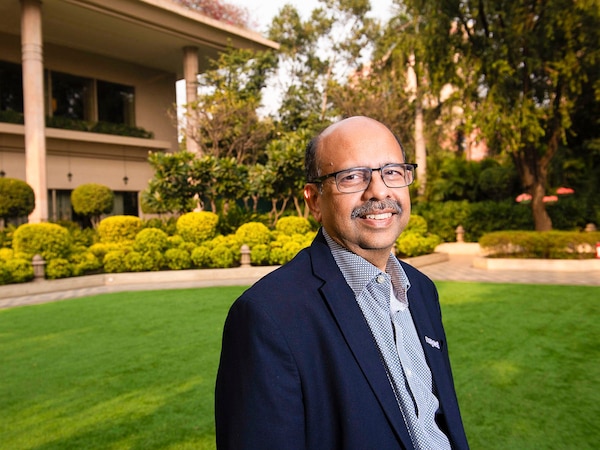
For veteran entrepreneur Sharad Sanghi, the opportunity presented itself in 2023 as he moved out of NTT from his role as CEO of Global Data Centres and Cloud Infrastructure (India) to start over again with Neysa. Sanghi’s previous venture, data centre provider Netmagic was acquired by Japanese telco, NTT.
The Mumbai-based AI acceleration cloud platform recently announced raising $1.2 billion from private equity firm Blackstone and co-investors at a valuation of $1.4 billion. Of this, $600 million was raised as equity capital, with the remaining $600 million in debt financing.
Capital will be key for Neysa to meet the backlog of demands and to be prepared to serve AI hyperscalers (large cloud service providers offering computing power, hardware and infrastructure to train and deploy AI models) and AI frontier labs (research and development companies creating large scale foundation models and AI systems) in India. Apart from infrastructure spending, the capital will also help Neysa offer differentiated services to its clients, as well as close in on strategic acquisitions.
By the time the capital is deployed fully by Neysa, Blackstone will hold a majority stake in the company, which does not bother Sanghi at all. “Even in the NTT-Netmagic case, I was running the company with a minority stake. I believe you need the right partner to build business; I am not fussed about a majority stake,” says Sanghi, co-founder and CEO of Neysa.
Despite being the third player to start up in India’s AI compute space, Neysa has carved a niche for itself and its offerings. Sanghi seems unbothered by domestic competition. However, global cloud-based GPU infrastructure providers and hyperscalers will be the real force to reckon with, Sanghi tells Forbes India. Edited excerpts from an interview:
Q. How did you zero in on Blackstone as an investor?
The reason we went with Blackstone is there is no one better than them in this space. If you look at the data centre sector, their portfolio includes QTS in the US and AirTrunk in the Asia-Pacific and Middle East. In the neocloud space where we fit in, they have backed CoreWeave in the US which has a market cap of nearly $50 billion; they have also invested in Firmus Technologies in Australia. Among foundational models, they have invested in both Anthropic and OpenAI. So, they have invested in core infrastructure, cloud platforms, and the entire value chain.
Apart from capital, this brings us supply chain resilience because I need to make sure that I have enough data centre space for my servers. Since Nvidia is an investor in CoreWeave, they can also help us get allocations.
Also, they have the experience and relationship to help us get debt for acquiring GPUs which is not easy.
Q. How are you looking to deploy the capital? Will it all go mainly towards acquiring GPUs?
We will also look beyond GPUaaS which is a single layer. We will do software layer on the top and the underlying infrastructure layer—we would like to own the entire stack.
However, most of the funds will go towards building infrastructure or the GPU compute. For example, one Nvidia Blackwell server (B300) with eight GPUs costs Rs4.5 crore, and we deploy thousands of these, and the cost of deployment is huge.
We also want to differentiate ourselves from other neocloud providers, in addition to offering nimble and flexible offerings. We already have an orchestration platform, and we are in the process of the first release of our observability platform for customers who use a cluster of GPUs and would like to have visibility on the infrastructure. Further, we are also building a security platform; the first one called Aegis is already live. We are building more tools and services around this. The software business might be small in revenue share, but it drives customers to the core GPUaaS business since it is not sold separately.
I was also reading an interview with Michael Intrator, CEO of CoreWeave, where he started with GPUs, tried acquiring Core Scientific for data centre layer which did not go through, and acquired Monolith AI for services, and wants to control the entire stack. We are thinking of the same things ourselves—where we control the entire stack and if one portion gets commoditised, we will have a package.
Right now, there is a lot to do in terms of building scale. However, if something comes our way opportunistically, we are open to it.
Q. Where is the greatest demand for your service coming from, in India?
We are getting demand from enterprises, startups, research and education companies in India, AI Mission and other government departments such as MeitY (Ministry of Electronics and Information Technology) and Department of Science and Technology which are funding some of the projects. We are also talking to hyperscalers and frontier labs which want to set up their own clusters in India due to the large developer based in the country.
Q. What are your offerings for hyperscalers coming to India?
The compute infrastructure. For example, they provide a public cloud offering to their clients such as banks which need some infrastructure on the public cloud and some on private GPUs. We provide private GPUs to them. The other example is when they want to set up a large GPU cluster, and the availability of GPUs is constrained. So, the hyperscaler will offer some GPUs themselves and the rest they can get from the neocloud provider. Another opportunity is that the hyperscalers need GPUs for their own products. Though each of them is building their own chips, some customers don’t know how to use them. So, they fulfil some of that demand through us.
The advantage of working with hyperscalers is that the investment for the requirement of, say 8000 GPUs, is high and the entity needs to give me at least four to five years of commitment. You need creditworthiness for a large-scale investment of this nature.
Q. Who is your primary competition and how do you see the market playing out?
I think the main competitors are not the Indian players, but hyperscalers themselves. A lot of customers use them for their non-GPU workload and the hyperscalers can always cross-subsidise GPUs as part of enterprise license agreements. So, they are our biggest competition.
The other competition comes from customers who decide not to deploy any infrastructure and just use the foundational models—for example, when someone says they will use the paid version of OpenAI or Anthropic.
Industry players like banks and financial institutions will always need GPU infrastructure in India and they would not want multi-tenant GPUs—that gives us an advantage.
For global neocloud players, India is not on their priority list yet as the backlog of demand from the US or their home country is huge, and there is time till they enter the market.