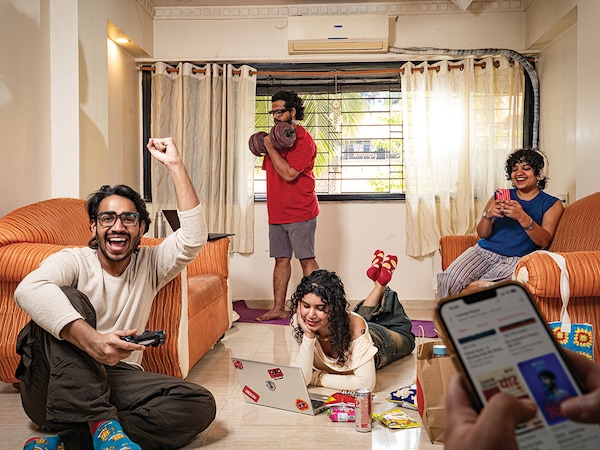
If I’m home, I’m watching something.
If I’m not watching something, I’m doomscrolling
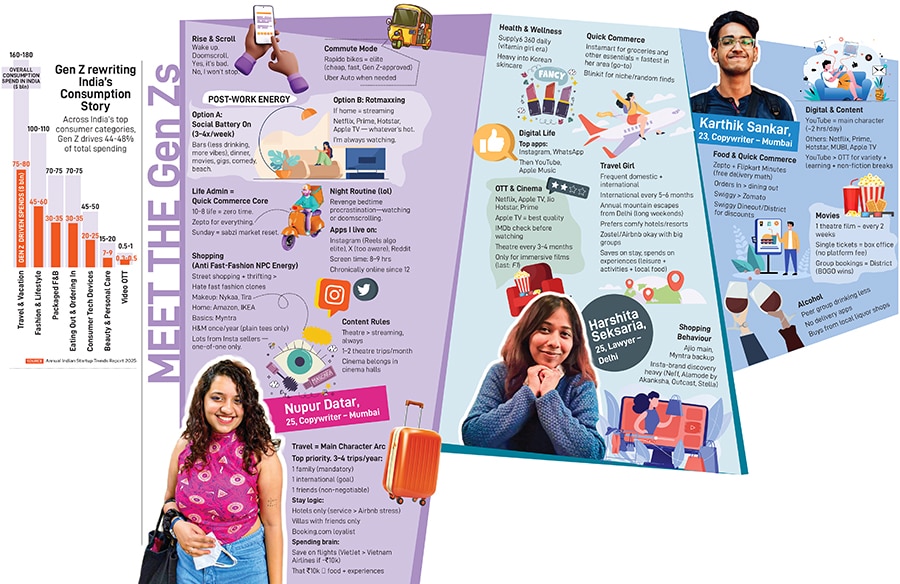
From wake-up time and the commute to unwinding and shopping, a day in the life of 25-year-old Gen Z copywriter Nupur Datar from Mumbai, by her own admission, involves at least 8-9 hours of being online, living through apps.
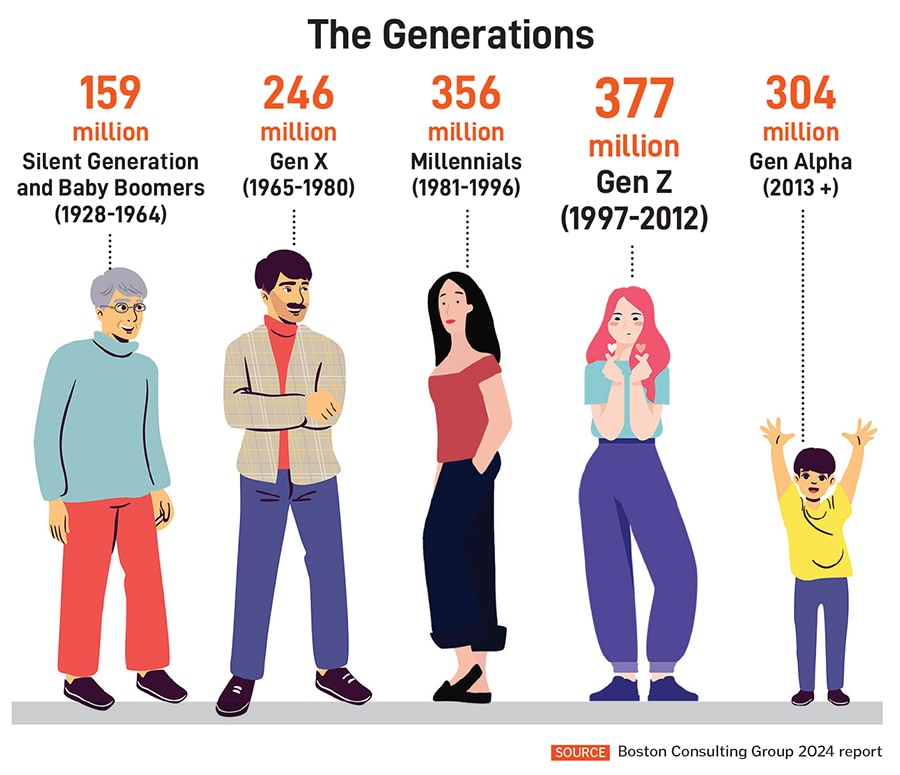
Gen Zs, those born between 1997 and 2012, were brought up on the internet and currently make up the biggest group of consumers. According to an October 2024 report by Boston Consulting Group (BCG) titled ‘How Gen Z is shaping the New India’ Gen Zs made for a cohort of 377 million, driving $860 billion of consumer spends in India, which is projected to rise to $2 trillion by 2035.
Because of their size they are also fast emerging as the most influential in shaping India’s consumption patterns, well before their peak earning years, driving 44-48 percent of total spending, according to the Annual Indian Startup Trends Report 2025. They are expected to drive close to 50 percent of India’s consumption by FY30, and are reshaping how brands think about demand, pricing and engagement.
![]()
How Gen Zs buy
From clothing and accessories to footwear and perfume, Gen Zs are heavily into discovery-led shopping and more than willing to experiment with emerging Instagram-first brands.
“My go-to brands for online shopping are on Instagram, like Neff, Alamode by Akanksha, Outcast etc. I discover these brands on reels and like to experiment and try Instagram pages that are growing,” says Harshita Seksaria (25), a Delhi-based lawyer.
According to a 2024 KPMG report ‘Navigating the future of seamless commerce in Asia Pacific’, a majority of Gen Z rank social commerce (63 percent) and livestreaming (57 percent) as important to their shopping experience.
“There is a structural shift in Gen Z consumption: Digital-first discovery, strong community and creator influence, a bias for convenience, and a growing expectation that brands stand for something beyond price and product,” says Puneet Mansukhani, national sector head-retail, global retail head-digital & technology transformation, KPMG in India. “In India, these patterns are amplified by the scale of mobile commerce, social platforms, and real-time payments, making the path to purchase increasingly compressed,” he adds.
Arushi Chawla, senior analyst at market research firm Counterpoint, agrees. “A lot of Gen Z behaviour is influenced by social media and AI-led recommendation systems, which guide discovery, validation, and decision-making,” she says, adding that Gen Z actively develop preferences across categories, being loyal where ecosystems, habits, or performance matter (such as smartphones or primary OTT platforms), while being flexible and experimental in low-risk, trend-driven categories like fashion, beauty, and quick commerce.
The KPMG report adds that the fast-paced nature of social commerce platforms such as Instagram and YouTube, where not just regional, but international trends rapidly come and go, is impacting Gen Z’s purchasing behaviour and forcing brands to reassess their supply chain strategy. “This demographic [Gen Z] is causing unprecedented change in the retail space, driven by their distinct attitudes towards lifestyle and their strong affinity for social commerce,” the report says.
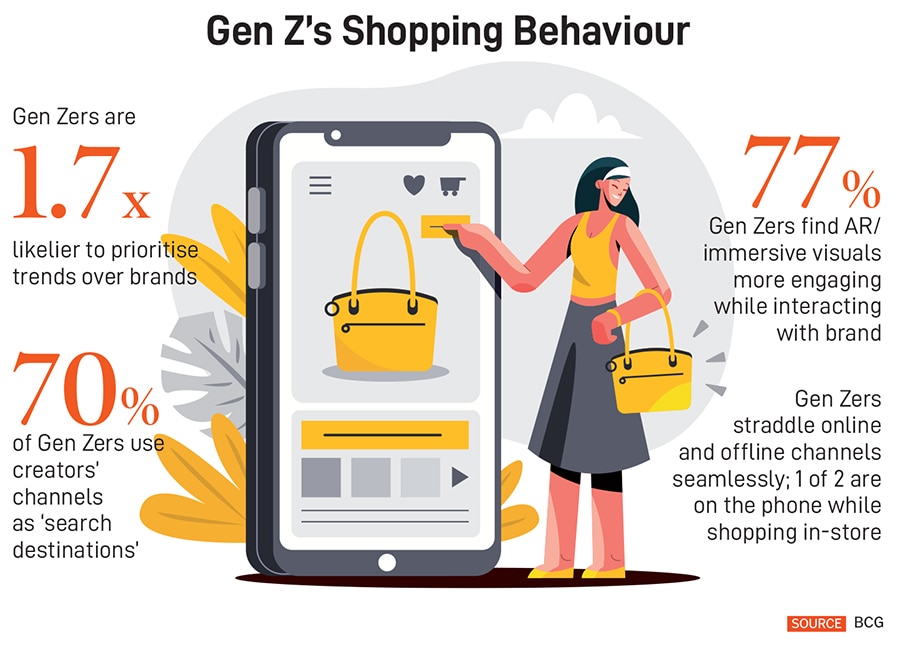
Given that only 1 in 4 Gen Zs are part of the workforce, their spends are a mix of direct and influenced (dependent on parents) spends. Which is perhaps why they are smart about their spends. “Gen Zers buy as frequently as millennials but they are 1.5x likelier to spend more effort on expert opinions, product reviews or blogs and vlogs about the topic,” the BCG report points out.
For the generation that lives on the internet, for whom travel and experiences are as valuable as the gadgets, here are some of the ways in which they are consuming and how brands are responding.
![]()
Social media and dream scrolling
While other age groups might scroll, read and passively watch videos, Gen Zers “prefer actively engaging instead of scrolling passively,” says Neha Jolly Sawhney, head of ad revenue, India, Snap Inc, the parent company of Snapchat. According to a 2024 Snapchat and BCG report, 72 percent Gen Z shoppers turn to social media for shopping inspiration.
On top of the inspiration list is Pinterest, although there is no direct shopping on the platform. The website allows youngsters to look for references for clothes, decor, lifestyle, and make mood boards. Gen Z is Pinterest’s largest and fastest-growing demographic globally, and in India they represent 53 percent of its users.
“Gen Zs are curating niche identities with hyper-specific tastes built entirely around moods and values, not mass appeal,” says Ayumi Nakajima, senior director, content partnerships, APAC, Pinterest.
![]()
Shopping: More online, but also offline
In addition to discovery-led shopping, Gen Zers are also regulars on ecommerce websites, with their shopping behaviour influenced by social media content. Taking note of this, websites are setting up discovery-first storefronts.
For example, Amazon’s Serve, launched in April 2023, is a storefront that reflects a discovery-first approach. Demand on Serve is driven by aesthetics such as Y2K, Mob Wife and Gothcore, oversized silhouettes, sculpting fits, wide-leg pants, and statement footwear, alongside beauty categories like Korean beauty, French pharmacy and clean beauty.
According to Amazon India, Gen Z shops more frequently, and expects shopping to be deeply personalised. “Their preferences span both accessible and premium offerings, with a strong pull towards globally inspired fashion, high-utility beauty, and brands that feel authentic,” says Siddharth Bhagat, director, fashion and beauty, Amazon India.
Flipkart’s approach to engaging Gen Z is built on two focus areas: Discovery and cultural alignment. “We have designed experiences and platforms that reflect how this generation shops. To enable discovery, we have a dedicated app, Spoyl, that offers assortments across streetwear, fusion wear, and gender-inclusive fashion,” says Priyanka Bhargav, senior director, brand strategy & group insights head, Flipkart.
Skincare and Korean beauty are the primary entry points for Gen Z on a platform like Nykaa, driven by accessible price points, formulations and ingredient transparency. On Nykaa Beauty, Gen Z adoption is skincare-first and education-led, while on Nykaa Fashion, discovery is trend- and inspiration-driven.
“Nykaa has tapped into this cohort through a strong content-to-commerce ecosystem, where storytelling, discovery and product innovation come together,” says a Nykaa spokesperson.
Gen Z’s lifeline: Devices
For Gen Z, wearables like watches, earphones and headphones have become a priority, especially post Covid. According to the boAt Crest Data Trend 2025 report, Gen Z accounts for 75 percent of all AI-powered fitness plan and coach subscriptions on boAt’s smartwatch platform, signalling their preference for wellness.
![]()
According to Vedansh Kumar, head of brand & product marketing at boAt, there is increasing traction in open wearables as Gen Z gravitates towards products that combine fashion with new-age technology. Headphones are also seeing a resurgence, driven by longer listening sessions, gaming, and a preference for immersive sound experiences. “With Gen Z accounting for about 60 percent of our consumers, it represents our largest and most engaged customer segment,” says Kumar.
Counterpoint’s Chawla says Gen Z is more willing to own premium devices, especially when they see a strong trade-in value and the ability to upgrade to the next premium device as technology evolves, rather than using a device until the end of its life. Consequently, the replacement cycle for Gen Z tends to be shorter when buying premium smartphones compared to preceding generations.
Moreover, while millennials typically wait to reach a certain stage in their professional life or income stability before purchasing premium devices like the iPhone, Gen Z often has such devices on their wish list much earlier. “This has contributed to the rise in Apple adoption among younger consumers. Additionally, flexible payment options, including EMIs, trade-ins, and financing schemes, have accelerated Apple’s resonance despite higher prices,” Chawla says.
It is also interesting to note that according to the India Smartphone Survey, Gen Z prefers buying smartphones on quick commerce platforms.
UPI trumps cash
According to a 2023 survey by Square, 70 percent of Gen Z prefer cashless transactions and only 10 percent use cash as their primary form of payment.
“The shift from physical wallets to slim, digital wallets among Gen Z reflects greater comfort with digital payments, credit access, and pay-later options. This ease of transacting, combined with real-time payment confirmation, reinforces expectations of instant outcomes not just in payments, but also in fulfilment, delivery, and service experiences,” says Chawla.
Food? Yes. Alcohol? No
Gen Z is big on ordering food online. Their high frequency prompted Swiggy to launch a ‘99 store’ offering meals between `49 and `149, especially for this cohort which doesn’t earn much yet.
![]()
While ordering in is big, dining out is not far behind. According to Swiggy, in 2025 Gen Z preferred pubs, bars and lounges (21.5 percent of total Gen Z transactions in 2025), followed by cafes and quick service restaurants. Between 2024 and 2025, transactions by Gen Z on Dineout increased by 96.8 percent. According to the How India Eats Report by Swiggy and Kearney India in November 2025, GenZ is growing 3x of other cohorts in the dining-out segment while demanding innovations like coffee raves and Instagram-worthy locations and menus.
Drinking alcoholic beverages, on the other hand, does not seem to be in demand among Gen Z consumers. Alcohol sales in India and globally have been falling, and reports suggest that Gen Z might be the reason behind this dip. Data reveals that Gen Zers are drinking 20 percent less than millennials. One reason might be the changing nature of socialising: Gen Zs plan activities more than sitting and drinking. Another reason might be the rising variety of non-alcoholic beverages.
However, experts say it’s too early to make a definitive call about Gen Z drinking less. “At the moment, we are looking at data from a relatively small slice of Gen Z, only about 30 percent of the generation has crossed the legal drinking age of 25-plus. Hence, any conclusions about whether they’re drinking less feel premature,” says Vikram Achanta, founder and CEO of Tulleeho and co-founder of 30BestBarsIndia.
Achanta believes that in India, Gen Z’s consumption of alcohol is likely to be at par with, if not higher than, previous generations, but what’s changing is how they drink: Pacing themselves out and picking quality over quantity. He has also observed the rise of ‘zebra striping’, where consumers alternate between alcoholic and non-alcoholic drinks within the same evening.
The love for quick delivery
With busy work schedules and limited time for errands, many young consumers rely on quick commerce platforms like Instamart, Zepto, Blinkit and Flipkart Minutes to buy groceries, snacks, personal care items and daily essentials. This habit is encouraged by low minimum limits per purchase, discounts and the ability to order on-the-go from apps.
A Meta commissioned-study in India from 2024 reveals that Gen Z is leading the adoption of quick commerce with 87 percent of them discovering new products or brands via Meta platforms.
Back to cinema halls
While watching content on OTT platforms remains king, ‘back-to-cinema’ is a trend with GenZers. “Gen Zers don’t consider going to theatres as just watching a film, but a proper out-of-home experience,” says Aamer Bijli, lead specialist- innovation, film marketing and digital programming, PVR Inox.
And new-age multiplexes are aiming to deliver. According to Bijli, PVR Inox is no longer just building cinemas, but complete out-of-home destinations. Their newer formats, including Next-Gen Superplexes (NSP), are designed as lifestyle hubs, with global food brands, gourmet menus, café-style spaces, nail bars, lounges, and social zones, all under one roof. “The idea is simple: The experience begins the moment you walk in, well before you take your seat. This mirrors global trends where cinemas are evolving into experience-led social spaces, especially for Gen Z, who value environments that blend entertainment, food, and community.”
Travel is not just a check on the bucket list
According to a McKinsey study, on an average Gen Zers take five trips in a year. The trips are not destination-led as much as experience-led. “They aren’t travelling just to tick places off a bucket list or because a location is trending. Instead, travel is increasingly intentional and driven by emotion, memory-making and personal growth,” says Devendra Parulekar, founder, SaffronStays, who has seen Gen Z emerge as the second largest cohort on SaffronStays after millennials.
Raj Rishi Singh, chief marketing officer, Goibibo, also says Gen Zers approach travel in a different way. “This generation favours the flexibility to travel on their terms while seeking experiences that are visually appealing and worth sharing on social media.”
He adds that Gen Z travellers are value-conscious, and have a higher share of budget accommodation bookings. According to platforms like Goibibo and SaffronStays, Gen Z travellers often book staycations with a large group of friends, generally over long weekends, not far from the city. For these short trips, they often choose luxurious stays on premium booking platforms like SaffronStays, considering the rent of the property gets split among the friends.