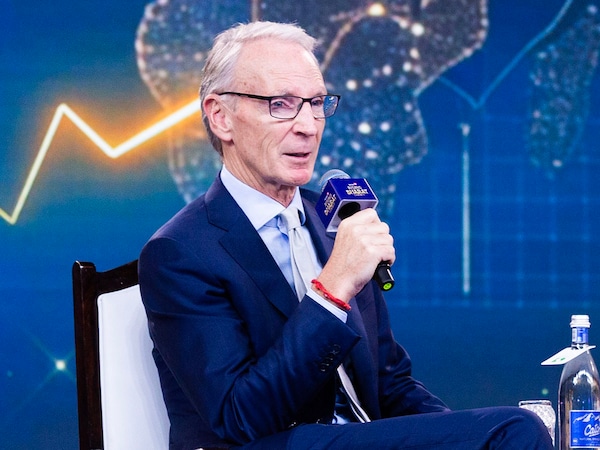
Digitalisation will play a central role in transforming gold ownership, investment and market infrastructure in the coming years, David Tait, chief executive officer of the World Gold Council (WGC), said on Friday.
Speaking at the Rising Bharat Summit 2026 in New Delhi, Tait said technology-driven changes could make gold more transparent, accessible and easier to use within financial systems. “Digitalisation is the future of gold,” he said, adding that efforts are underway to improve traceability and investor confidence through better data on sourcing and ownership.
The WGC is working on building systems that allow investors to track the origin of their gold and verify holdings, which he said would strengthen trust across the supply chain. He also outlined plans for a digital allocated gold market that would enable fractional legal ownership of physical gold and improve its usability as collateral in financial markets.
Tait said reducing historical frictions has been a key focus for the industry. “We have spent a lot of work trying to make gold less capital intensive, easier to hold, more divisible, more trusted and more transparent,” he said, adding that institutional adoption remains at an early stage in large markets such as India, China and Japan.
Tait further pointed out that regulatory changes and market development could mark a turning point in gold’s role in the financial system, particularly in large markets such as India.
On demand trends, Tait said India’s next phase of gold consumption is likely to be driven increasingly by institutional investors and financial-market infrastructure rather than households alone. Pension funds, insurance companies and other large pools of capital are expected to embed gold more deeply within portfolios over time, while younger investors are also gravitating towards financial forms of ownership such as gold-backed exchange-traded funds (ETFs).
India’s total gold demand stood at about 711 tonnes in 2025 despite elevated prices, supported by a 17 percent year-on-year increase in bar and coin investment demand even as jewellery consumption moderated, he said.
Tait said the current rally in gold prices is supported by structural forces rather than short-term market sentiment. “I know you would expect me to say gold is going up, given my position, but I think there are six or seven main reasons why gold will continue higher,” he said, citing geopolitics, interest rates, sustained central bank buying and what he described as a growing fear of runaway global debt. Central banks have collectively bought around 1,000 tonnes of gold annually over the past three years, with developing economies continuing to accumulate reserves as a hedge against currency volatility and geopolitical risks.
By way of example, he said recent swings in the United States government bond markets after major policy announcements show that investors are increasingly worried about how governments will manage their rising debt, not just about inflation.
According to Tait, gold prices would only come under real pressure if the US economy grew very rapidly, at around 6-7 per cent, while inflation stayed under control—which would help reduce government debt. However, he stated that such a scenario was unlikely.
Tait added that modern investment routes are likely to coexist with traditional demand in India rather than replace it, with ETFs currently offering the most practical pathway within the country’s regulatory framework.