Art isn’t about getting it right: Aneet Padda
With no formal training or industry backing, the 23-year-old actor made her own path in Bollywood with her recent success with Saiyaara
Last Updated: Jan 21, 2026, 12:26 IST5 min
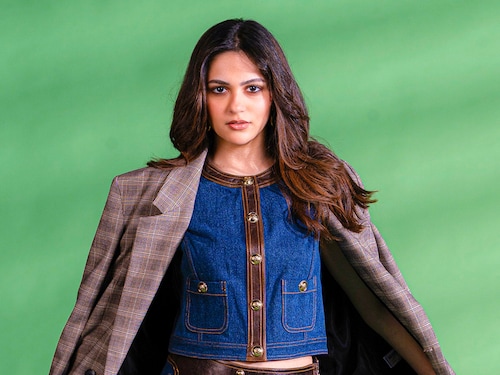
Aneet Padda represents a new generation of self-made actors making their own space in Bollywood. With no formal acting training and no industry backing, she broke through on her instinct and perseverance. After the breakout success of Saiyaara, the 23-year-old actor is gearing up for her next film, Shaktishalini. In this conversation, Padda reflects on her journey, her career and the personal growth that came with sudden visibility. Edited excerpts:
Q. Your performance in Saiyaara has been a defining moment in your career. How did the project change things for you—both in terms of opportunities and your own confidence as an actor?
The obvious thing is opportunity—when a film becomes a hit, doors open. Earlier, I would close my eyes and dream about things and yearn for them to happen. Now, everything seems much more possible, thanks to what the film has done.
But personally, the film changed me deeply. Because of the themes, the character I played, the friendships and relationships I built on set, and how collaborative the experience was, I really connected with myself after a long time. In your 20s, you’re trying to find your way, feeling lost and figuring things out. You can’t think your way out of things—you have to experience life to understand yourself.
After a point, it really didn’t matter what happened after the film. I already felt much more confident as an actor because I was given freedom on set—to explore and do what felt right. It didn’t feel like I was being directed to be something else; it felt like being asked to find the character within myself. That experience changed me the most.
Q. How does it feel to finally become one of the YRF heroines you always aspired to be?
It’s funny because you imagine it so vividly for so long that when it actually happens, you don’t know what to feel. When I got signed, my dad was with me, and he was completely quiet. Nobody in our family thought something like this could happen. It was his dream too—to become an actor. Seeing him so quiet and vulnerable was surprising. You always see your parents as strong, in control, figuring things out. In that moment, I realised even my dad is just a kid who had a dream.
Q. How has your family supported your journey?
My mom was very strict about putting myself out there. I was a very oblivious child—always daydreaming, lost in my own world. She wanted me to talk to people, to express myself.
She once pushed me to participate in a poetry competition. Instead of telling me how to perform, she explained the poem and asked me what I felt. That was when I understood emotion and expression. I won first prize, and looking back, that moment makes a lot of sense.
My dad shared his own journey of wanting to become an actor, which stayed with me. Even when my parents were worried, my dad always encouraged me to explore—whether it was travelling for competitions or opportunities. It was a perfect balance of parenting.
Q. What was the moment when you realised acting was something you wanted to pursue professionally?
After a school play, my principal told my drama teacher that I was very good and should pursue acting seriously. Hearing that made me think, maybe I can do this. I started watching films differently—imagining myself in roles, thinking about how I’d do them differently. That’s when it became serious.
Q. Coming back to Saiyaara, what about the character or the audience’s reception stays with you the most?
The character changed me. I immersed myself so deeply that I feel I became a better person. She was pure, honest, and kind, and playing her [Vaani] shifted my perspective on life.
The audience’s reception was overwhelming. For the first month, it didn’t even register. When people came up to us and said nice things, I would just start crying. The funny thing is that it became a running joke—if Aneet didn’t cry, it wasn’t a party. Even on the last day, I was sobbing, and everyone found it funny.
Q. You’ve been praised for your subtlety and authenticity in acting. How do you usually prepare for emotionally demanding roles?
Earlier, I was just winging it. I had no training—just me, my mirror, and sometimes recording myself. I would write small scenes and dialogues to practice.
Now I realise the real work happens before you reach the set. Once you’re there, you surrender. Earlier, I was anxious about getting everything right. What changed with Saiyara was understanding that art is subjective—there’s no right or wrong as long as there’s no false note.
I prepared, made notes, and read the script many times. But once on set, there was nothing in my mind. It was just being.
Q. Has any role taught you something unexpected as a person?
It has to be Saiyaara. Before that, I was juggling college, struggling, handling contracts and schedules myself at 18 or 19. I didn’t even realise how much pressure I was under.
This film allowed me to slow down and grow.
Q. In an industry where competition is intense, how do you stay grounded?
Noise doesn’t affect my craft because I go to my craft to escape the noise. Competition will always be there. As long as I’m holding myself accountable and doing my work honestly, I am at peace. This is an industry of art, and art is subjective. Success will fluctuate—that’s not something I worry about.
Q. What’s one very ordinary thing about you that would surprise people?
That people are not one thing. Actors get boxed in very quickly. I’m not just one version of myself. I’m a person before I’m an actor. People have layers, they grow and evolve, and it’s important not to internalise the limits others place on you.
Q. When you’re not on set or not studying, what comforts you?
I compose music, play the guitar, write short stories, sing and watch videos on music production. That is my creative escape.
Q. What’s the next for you?
Building credibility as an actor. Doing more work, making mistakes. It’s scary to show imperfections, but authenticity is essential. The next chapter is about giving my heart fully and giving the love back.
Q. When people look back at your journey, what do you want to be remembered for?
That she was honest. And that she was okay being human.
First Published: Jan 21, 2026, 12:23
Subscribe Now