Nations controlling chips, APIs have reverse leverage: Economic Survey
India must avoid becoming a “client state” as the global tech landscape splits
By Samreen Wani
Last Updated: Jan 29, 2026, 19:53 IST2 min
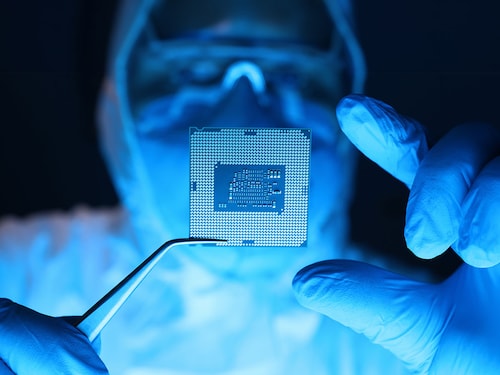
As global capital flows align with geopolitical fault lines, nations controlling critical supplies such as semiconductors and advanced materials possess “reverse leverage”, notes the Economic Survey 2025-26 tabled on Thursday.
India must avoid becoming a “client state” as the global tech landscape splits. The Survey notes that “India risks remaining a ‘service provider’ to the developed world, vulnerable to technology denial regimes and supply chain shocks”, Alternatively, it says, India can pursue dual objectives: Defensive sovereignty to prevent supply shocks, and offensive leverage by becoming indispensable in high-tech domains.
To achieve leverage and address such vulnerabilities, India is shifting its focus towards developing a comprehensive domestic semiconductor ecosystem.
The India Semiconductor Mission and Semicon India programme form the cornerstone of this strategy. India has launched an ambitious Rs76,000 crore Semiconductor Mission to build end-to-end domestic chip manufacturing capabilities as global supply chains face mounting geopolitical pressures.
Under this, the government has already approved 10 semiconductor manufacturing and packaging projects worth approximately Rs1.6 lakh crore across six states as of August 2025, according to the latest Economic Survey. Landmark projects under the Mission include Micron’s assembly facility, Tata Electronics’ fab, and compound semiconductor units, alongside 24 financial support projects and 100 chip design companies.
The government has also structured its support through four targeted schemes, each extending fiscal support of 50 percent of project cost or capital expenditure for semiconductor and display fabrication facilities, compound semiconductor units, and outsourced assembly and testing facilities. A Design-Linked Incentive scheme, meanwhile, encourages domestic chip design capabilities.
The Survey notes that the urgency behind this push became starkly evident during the Covid-19 pandemic, which exposed dangerous vulnerabilities in global semiconductor supply chains. Chip shortages impacted over 169 industries worldwide, causing price surges and production delays that was felt across sectors—from automobiles to consumer electronics.
Global leadership in chip design remains highly concentrated. The US, South Korea, Taiwan and Japan collectively account for 79.4 percent of global semiconductor integrated circuit design revenue. These nations maintain their edge through sustained R&D investments and extensive intellectual property portfolios built over decades.
As advanced economies accelerate semiconductor capacity investments and tighten export controls, access to chips has become a determinant of both economic competitiveness and national security.
It adds that state governments are also complementing the national framework with their own initiatives. Odisha, for instance, has launched a Semiconductor Manufacturing and Fabless Policy offering additional incentives and institutional support to attract investments.
India’s semiconductor push also includes the SPECS scheme offering 25 percent capital expenditure incentives, with 58 applications approved worth Rs22,081 crore.
Read Forbes India's complete Budget 2026-27 coverage here
First Published: Jan 29, 2026, 19:53
Subscribe Now