Been there, done that: Behind the IPO curtain
From Wakefit to Physics Wallah, startup CEOs speak about their journeys towards listing
Last Updated: Feb 27, 2026, 14:19 IST11 min
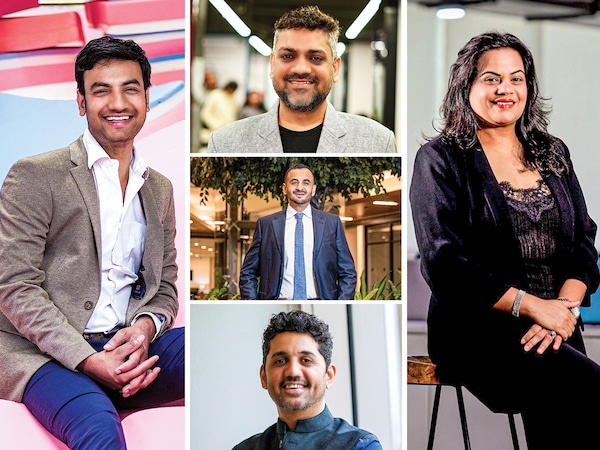

Ankit Garg
CEO and co-founder, Wakefit
Year of IPO: 2025
For years, Wakefit was the challenger that upended India’s legacy mattress industry with a direct-to-consumer (D2C) model and a sleep-tech narrative. Today, sitting on the other side of a successful IPO, the company has transitioned from a market disruptor to a public incumbent.
Ankit Garg, CEO and co-founder of Wakefit, says the decision to list on the markets wasn’t a sudden epiphany but a gradual evolution driven by a desire for structural maturity. “Listing felt like a natural progression and a way to institutionalise the company further,” he says. In fact, one of the primary drivers wasn’t capital, it was governance. The IPO process allowed Wakefit to overhaul its Board, bringing in independent directors and experienced operators. This shift provided the company with a diverse set of perspectives to challenge internal thinking—a move Garg identifies as a “meaningful motivator” for going public.
But moving from private conversations with VC partners to the scrutiny of the public markets required a new set of muscles. The cornerstones of this learning curve, Garg says, were engaging with a diverse group of stakeholders including bankers, analysts, and institutional investors, learning that a story only resonates across global markets if it is “simple, consistent, and rooted in reality” and maintaining operational focus while answering to a much wider audience.
The success of the listing wasn’t built during the roadshow, but in the 16 months of “groundwork” preceding it. Wakefit’s preparation focused on building a “vertically integrated” foundation—owning the manufacturing process and quality systems rather than just the brand name. This pre-listing hygiene meant that when the formal process began, the leadership team could move with a level of confidence that many “blitz-scaling” startups often lack.
“The IPO was treated as a milestone, not an endpoint. Internally, we’ve been clear that being listed doesn’t change our priorities; it simply raises the bar on how consistently we execute,” says Garg. The company is now doubling down on its omnichannel strategy and optimising manufacturing utilisation. While the core playbook remains intact, the lens has been refined to focus on long-term value creation and accountability to a new class of stakeholders: The retail investor.
As the company moves into its next phase, the goal is clear: Prove that a D2C disruptor can maintain its soul while embracing the rigours of an institutional incumbent.\
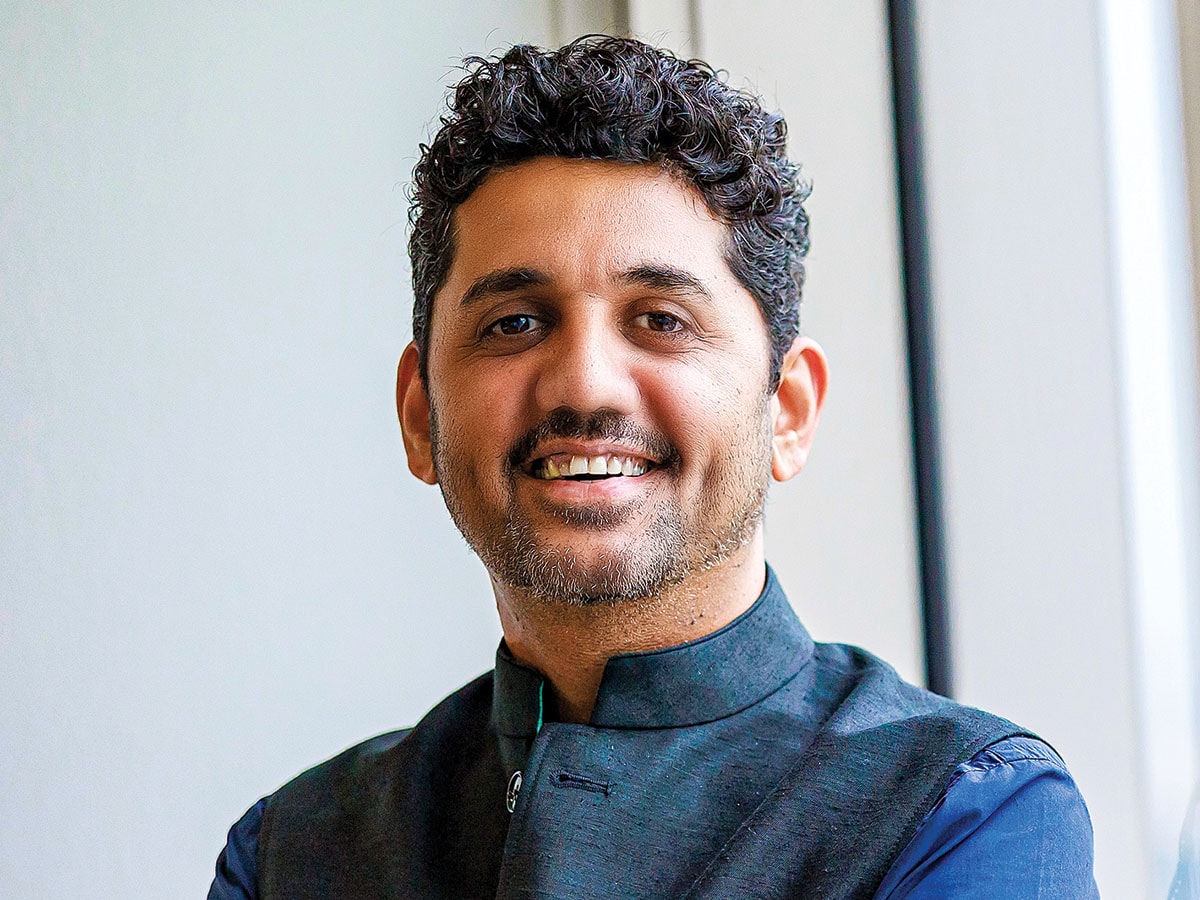
Amrish Rau
Managing director and CEO, Pine Labs
Year of IPO: 2025
While IPOs are often painted as the ultimate corporate victory lap, Amrish Rau, managing director and CEO of Pine Labs, strips away the romance. For him, the listing was an item on the checklist—a task to get out of the way so the real work could resume.
“From the outside, people feel there is a celebration. Funnily, I never felt any of those things,” Rau says. “I always felt like, okay, one task that is over, let’s get on with something else to do now.”
The Noida-headquartered merchant payments platform listed on the markets in November last year, following a robust Rs3,900 crore initial public offering. Priced at the Rs221 upper band, the Rs2,080 crore fresh issue funds Pine Labs’ aggressive expansion aimed at bolstering its omnichannel presence and penetrating high-growth markets across Southeast Asia and the Middle East.
But Pine Labs didn’t rush to public markets chasing valuations or riding a fintech wave. The decision, Rau insists, was “very organic”. They were instead driven by hard maths of the balance sheet; an Ebitda-positive position, stable revenue streams, and a forecasting framework that underpinned confidence in its forward-looking growth. Rau saw a strategic opening too as India’s public markets remain short on fintech representation. Rau says being a “meticulous company” that stayed on the right side of regulations was a strategic moat.
However, nearly a year was spent exclusively on refining governance and board structures before the first filing. But Pine Labs made no leadership changes for its IPO. A CFO transition shortly before listing was purely coincidental. In fact, Rau says he instructed his team to maintain their startup mentality, remain impatient with product development, and banned the phrase “now that we are a listed company...” from meetings.
Rau’s biggest IPO lesson? “Nothing is in your control.” Founders can manage investor outreach and articulate their business case, but book-building, pricing, and market reception operate beyond any CEO’s command. His advice: Treat it as a task to execute, not a milestone to celebrate.
For the next wave of Indian founders eyeing the bourses, Rau argues that the Indian public market has matured into a sophisticated base that mirrors global trends. “They are looking for businesses with a growth profile. And it’s not just profitability,” he says.
While robust unit economics are non-negotiable, he says, the market ultimately prizes high-velocity growth.
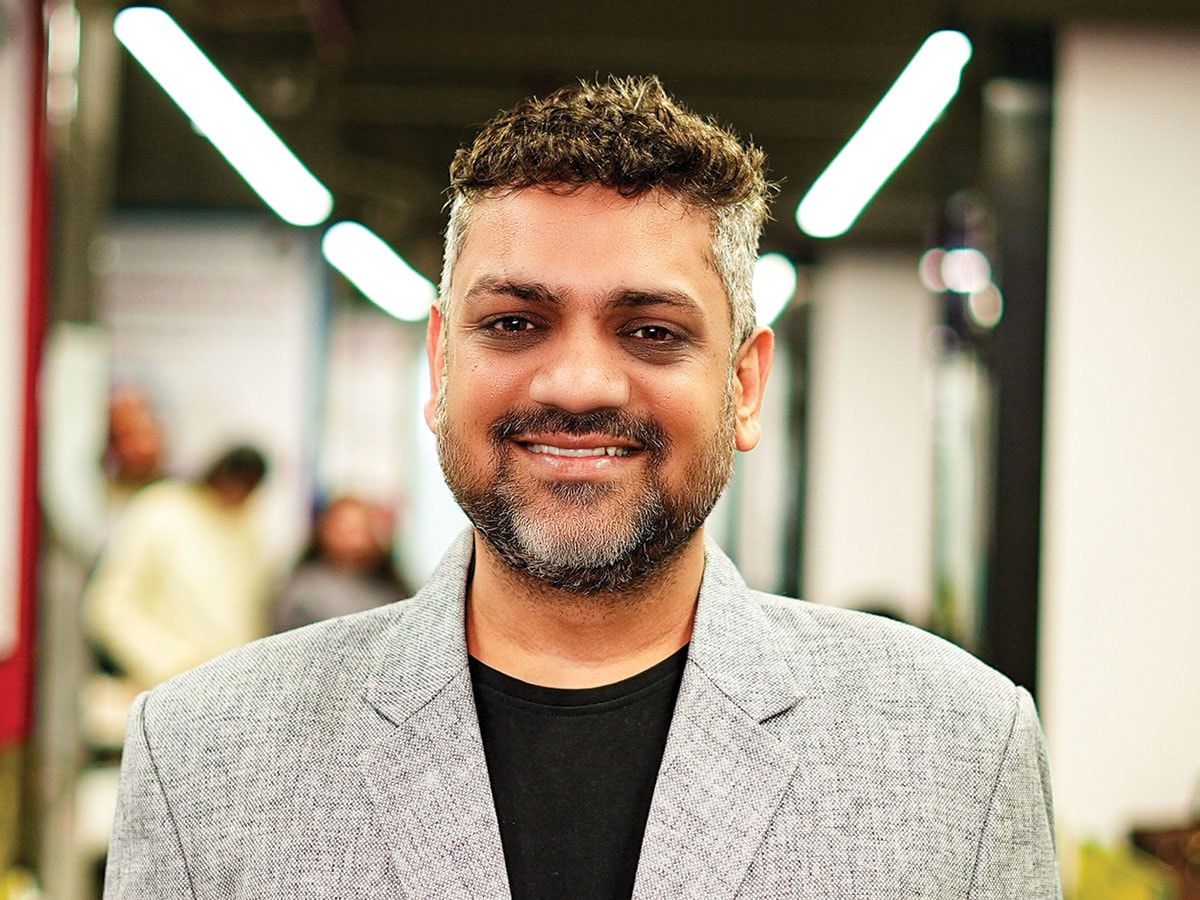
Prateek Maheshwari
Co-founder, Physics Wallah
Year of IPO: 2025
For Prateek Maheshwari, co-founder of edtech platform Physics Wallah, the decision to go public was the result of the quiet accumulation of proof points that the business had earned its place in India’s public markets.
“There wasn’t one specific ‘aha’ moment,” Maheshwari says, reflecting on the company’s IPO journey. “It was a gradual realisation as the company scaled and our impact deepened.” That impact tells a story far removed from typical startup metrics. Physics Wallah measures success differently: It’s in the families producing their first doctor or engineer, students from underserved communities cracking competitive exams that once seemed impossibly distant.
Physics Wallah transitioned from a bootstrapped YouTube sensation to a listed entity in November 2025. The edtech firm raised Rs3,480 crore through its IPO, comprising a Rs3,100 crore fresh issue and Rs380 crore offer for sale—priced at the upper end of Rs109 per share. The listing valued Physics Wallah at approximately Rs31,527 crore. IPO proceeds will fuel an ambitious offline expansion, with plans to establish 500 hyperlocal learning centres across India within three years.
The listing followed a financial turnaround for the startup. Following steep losses of Rs1,131 crore in FY24, driven primarily by non-cash charges, Physics Wallah trimmed net losses by nearly 80 percent to Rs243 crore in FY25 while operating revenue surged over 50 percent to Rs2,887 crore.
Maheshwari’s team flipped the script on IPO prep—they operated like a public company long before listing. “We didn’t prepare for the IPO as a one-time event,” he says. By the time listing conversations began, the infrastructure was already in place. The company simply operated with the transparency and rigour expected of public entities, making the actual transition “much smoother”, he adds.
For Maheshwari, going public was “never about an exit” but instead, it represented “creating a stronger, more accountable organisation for the long term.”
The IPO process forced even greater discipline around systems, governance structures, and long-term planning. Ask Maheshwari about regrets or missed opportunities, and his answer reveals telling priorities. He wouldn’t alter strategic choices or timing. Instead, he’d “double down even earlier on bringing more voices into the conversation, from students, parents, educators, and frontline teams”.
Physics Wallah reported a 70 percent jump in its profit to Rs69.7 crore in its first quarterly results post-IPO, a reversal from its Rs127 crore loss just three months earlier. Operating revenue climbed 26 percent driven primarily by coaching services.
The ed-tech firm has simultaneously approved Rs469.9 crore in subsidiary investments, primarily Rs399.9 crore into Penpencil Edu Services, alongside funding for NBFC Finz Finance and Dubai-based Knowledge Planet, leveraging its IPO proceeds.
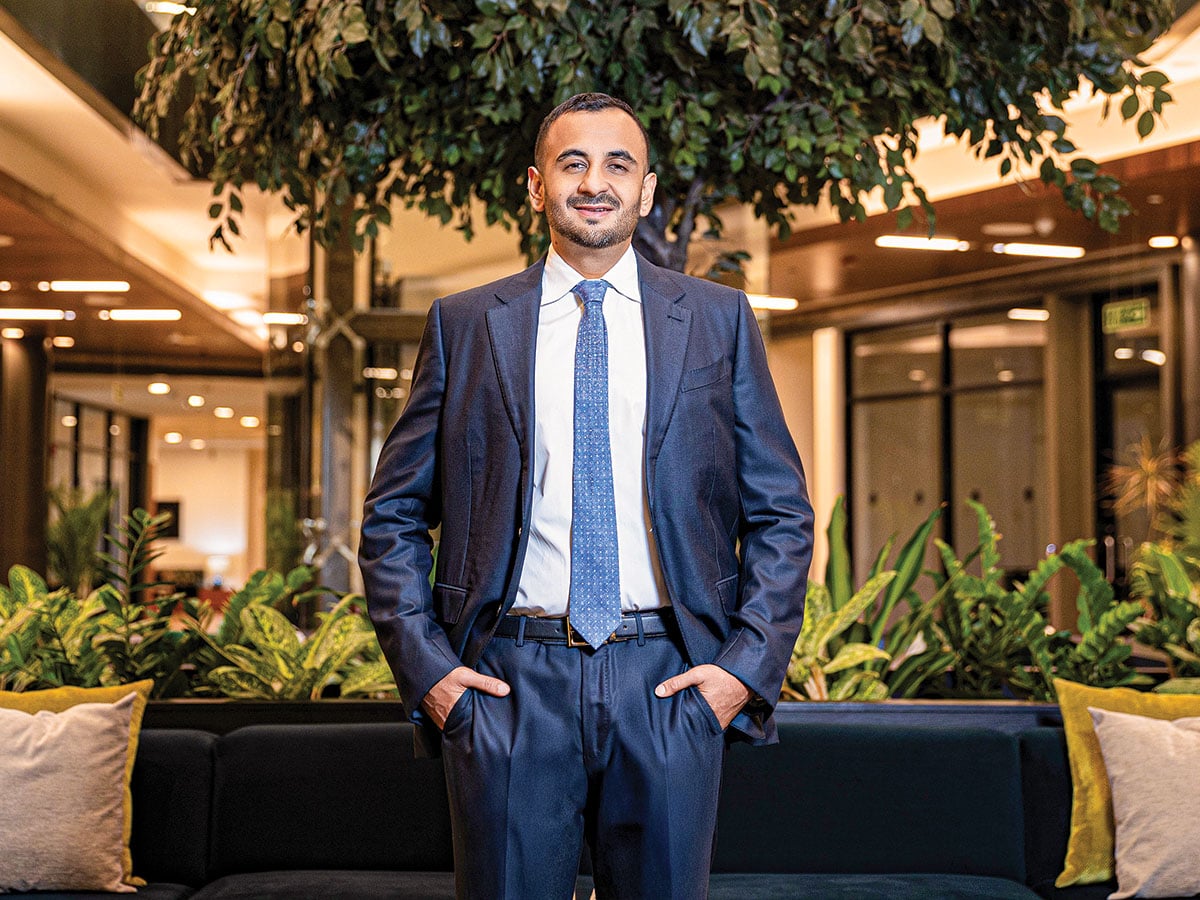
Karan Virwani
Managing director and CEO, WeWork
Year of IPO: 2025
While WeWork’s formal march to the October 2025 listing took a year, the internal transformation began about three years before that. Karan Virwani, the managing director and CEO of WeWork, says that “IPO readiness” was baked into the company’s DNA long before a prospectus was drafted.
Even as the IPO process was “highly controlled” and managed by a small group including merchant bankers, lawyers, and consultants, Virwani says one significant realisation through the process was that funds—and not the listing company—are the true customers of investment banks. “We are just a company that will come get listed, and then it’s the next company,” he adds, explaining how banks maintain ongoing relationships with institutional investors rather than one-time corporate clients.
Listen: WeWork goes bankrupt, but India’s coworking sector is at all-time high. Here’s why
Though the company endured an extended Sebi approval process with technical hurdles and a four-month-plus abeyance period, Virwani praised the regulator’s meticulous scrutiny of documents and disclosures as necessary protection for public investors.
The book-building process, however, presented its own challenges. Virwani says that banks allocate funds through a roster picking system, which sometimes results in companies “compromising” on anchor investors and pricing. “By that point, there’s no turning back, so you don’t really have much of a choice,” he adds. So, looking back, Virwani indicates he would have made different choices regarding the lead bank selection and would have addressed pricing decisions earlier in the process. “Hindsight is 2020,” he says, “We had to go through it to do it.”
WeWork India’s decision to pursue an IPO came after a difficult period for the flexible workspace sector. The global WeWork brand’s struggles and the COVID-19 pandemic created challenging conditions. However, two factors converged to create the right moment: A competitor’s successful listing after India’s elections in 2024, which demonstrated market appetite, and WeWork India reaching profitability and generating positive cash flow.
To prevent the commonly observed post-IPO slump, WeWork India focused on building a high-quality anchor book with deep institutional participation. The stock traded relatively flat in its opening week, sandwiched between listings from Tata and LG. But the company strategically scheduled earnings just 20 days after listing to demonstrate continued growth momentum.
Post-IPO, the company has added a new stakeholder group to manage—approximately 80,000 shareholders. This has required enhanced capabilities in public relations, shareholder reporting, and financial planning and analysis even as the core business operations remain unchanged.
Meghna Agarwal
Co-founder, IndiQube
Year of IPO: 2025
IndiQube’s journey to becoming a publicly listed company began as a casual boardroom conversation in June 2024 and culminated in a December filing.
Co-founder Meghna Agarwal says the company hadn’t been contemplating a public listing until an investor casually suggested it during a board meeting. “We were looking to raise some money, and he just mentioned, why don’t you go public? And I was like, are you sure?” Agarwal recalls.
Despite being 10 years old, IndiQube had effectively operated for only six to seven years due to the COVID-19 disruption. However, the investor’s rationale was compelling: The company had crossed Rs1,000 crore in revenue, achieved profitability, and the markets were buoyant.
With founders and investor WestBridge collectively holding over 85 percent equity, the decision was made swiftly. By December 2024, IndiQube had filed its red herring prospectus in a considerably short timeline.
The lack of planning, Agarwal says, did create significant challenges. One major hurdle involved accounting standards. She explained that while institutional investors understood the model, the accounting complexity could have initially been confusing to retail investors.
She did, however, identify investor engagement as crucial. With India’s mutual funds sitting on substantial liquidity, first-time meetings during roadshows proved insufficient. “One meeting doesn’t do justice,” she says, explaining that investors needed to understand the founders’ backgrounds, business model, and track record before evaluating numbers. “If you’ve engaged with those investors before, life becomes easy.”
Choosing and managing investment bankers was another critical lesson. Agarwal stresses on the importance of maintaining control rather than blindly following banker templates. She recounts how they insisted on booking taxis for an entire day of Singapore roadshow meetings, despite venues being right across the street from each other.
More significantly, Agarwal says she leveraged her network to secure investor meetings directly when bankers claimed her raise size—approximately Rs700 crore—was problematic for some funds. “Half the meetings, I could get done on my own,” she says, noting that bankers quickly adapted when they realised she would circumvent them to secure meetings anyway.
If given another opportunity, Agarwal says she would prioritise two changes: Better planning and earlier investor engagement. The company was fortunate that three major mutual funds backed them after single meetings, but relationship-building would have strengthened these partnerships.
But post listing, IndiQube’s business fundamentals remain unchanged. The company continues executing its three-to-four-year vision without modification. What has changed are administrative processes—board approvals, documentation, and compliance requirements that formalised previously ad-hoc decisions. Quarterly meetings transformed into earnings calls, though transparency had been standard practice. With founders and WestBridge retaining over 85 percent equity, the company avoids the dilution pressures typical of recent listings, allowing leadership to prioritise long-term stock momentum over short-term market volatility.
Instead, Agarwal focuses on educating the market about the flexible workspace sector. “People are still warming up to this industry,” Agarwal says, pointing at the global uncertainty from AI disruption, geopolitical tensions, and policy changes like Trump’s tariffs strengthen the flexible workspace model. Companies increasingly prefer partnering with platforms rather than investing in owned offices. But Agarwal remains confident about IndiQube’s trajectory. “If your numbers are good and you’re in the growth phase, eventually it’s a matter of time,” she adds. “I’m not worried at all.”
First Published: Feb 27, 2026, 14:19
Subscribe Now