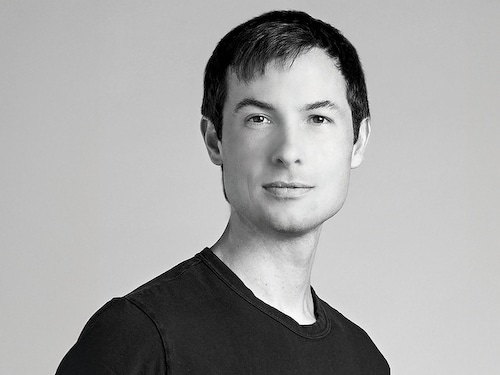
Reed Jobs was 12 when his father, Apple founder Steve Jobs, received a harrowing diagnosis: Pancreatic cancer. He died eight years later at age 56. That tragedy led the younger Jobs to become an investor in companies focussed on preventing people from dying of cancer, which kills more than 600,000 a year in the US alone, according to the American Cancer Society.
“We think it’s going to go from a death sentence to just a chronic lifelong disease,” Jobs tells Forbes. “I think it’s doable in the timeframe of my lifetime for most cancers.”
Jobs began investing in health companies at Emerson Collective, the Silicon Valley-based impact investment and philanthropy group founded by his mother, Laurene Powell Jobs, whose net worth Forbes estimates at $13.5 billion.
Then, in 2023, he spun out his own firm, called Yosemite for the national park in California where his parents got married, raising a first fund of $263 million. Yosemite is now invested in some 20 companies, including gene therapy firm Tune Therapeutics and AI drug development startup Chai Discovery.
Today, Yosemite says it has raised more than $200 million for a second fund that has a total target size of $350 million, with heavyweight investors, including California biotech giant Amgen; New York cancer research and treatment centre Memorial Sloan Kettering; the Massachusetts Institute of Technology; and John Doerr, who is chairman of Silicon Valley VC firm Kleiner Perkins but is investing in a personal capacity. Jobs, who holds the title “investor” at Yosemite, is also personally invested.
Yosemite, with headquarters in San Francisco, focuses on the whole gamut of cancers, from colon cancer, which is often caught early and is treatable, to pancreatic cancer, which is largely a death sentence. Jobs is looking at companies building a broad range of solutions. “There’s such variety that some low-mutation, aggressive cancers are still going to be a big problem probably 10 years from now,” he says. “But the vast majority we think are just going to be needing early detection, better targeted therapies and continuous monitoring. That’s going to continue to drive down mortality.”
The firm manages more than $1 billion in assets, including those it handles for endowments, hospitals and foundations, making it a minnow in a sea of VC giants.
But it’s rapidly become an important player in health care and especially oncology, a particularly complex area where investments can take many years to pay off.
“I think Reed is motivated by many, many different things from most normal VCs,” says John McHutchison, CEO of Tune Therapeutics, which is working on a therapy for hepatitis B, a viral infection that affects more than 250 million people worldwide, according to the World Health Organization, and is a leading cause of liver cancer.
“He wants to do big things and be impactful,” he adds. Tune, based in North Carolina, recently raised $175 million, and Jobs has been involved since his time at Emerson.
Like many people whose lives are upended by cancer, Jobs, now 34, couldn’t stop thinking about the disease after his father was diagnosed. He did summer internships in Stanford University’s cancer labs as a teenager and started college there as a pre-med student. But after his dad’s death, he needed a break, so he switched majors to history, eventually getting a master’s degree in the subject with a focus on nuclear weapons strategy.
But the potential for making a difference in cancer research and treatment drew him back. He joined Emerson at 24, taking charge of a new health care strategy with a focus on oncology that spanned both investing and philanthropy.
His goal was to do something about the so-called Valley of Death, the time period between when scientists make a discovery and when investors have seen enough clinical data to want to put money behind a breakthrough.
While Yosemite is a VC firm, it’s an unusual one. Jobs also gives no-strings-attached grants to scientists. That gives the firm an advantage when those researchers are ready to raise funds to commercialise their breakthrough discoveries. Plus, Jobs believes the combination of grants and investment is especially important at a time when the US government is cutting support for science.
“We have to step up, for our researchers and just for the state of science in America right now, which is in a tenuous position, and people like us have more of a responsibility to act than ever before,” Jobs says. “We feel a greater sense of urgency.”
Azalea Therapeutics, which was spun out of the lab run by Nobel Prize-winner Jennifer Doudna at the Universityof California, Berkeley, received some of those early-stage grants. Its research is focussed on a type of gene therapy in which doctors don’t need to remove a patient’s cells to reengineer them. Instead, that happens within the person’s body, what’s called “in vivo”. “What’s really unique about [Yosemite] is this link back to the academic labs,” says Azalea co-founder and CEO Jenny Hamilton. “Very early on they saw the promise that if this high-risk research worked, it could be transformative.” When Azalea launched officially this past November with $82 million in total funding, Yosemite was a key investor. Jobs is now a board observer.
Another investment typical of his approach is Chai Discovery, a buzzy San Francisco-based company founded in 2024 that’s using AI to design proteins that could create new drugs. That firm’s models are being used to tackle certain types of cancers and other diseases that were historically thought to be hard to treat, or even “undruggable”.
In December, the startup raised $130 million led by California-and Massachusetts-headquartered VC firm General Catalyst at a $1.3 billion valuation, and in January it announced a partnership with Indiana-based drug giant Eli Lilly to develop new medicines. “I think Chai Discovery is going to be one of the more important companies of this decade,” Jobs says.
New Jersey-based Merck’s blockbuster Keytruda drug, an early immunotherapy that treats lung cancer and melanoma, among others, has $30 billion in annual sales. Then there’s advanced treatments such as CAR-T cell therapy, a personalised form of immunotherapy that trains a person’s immune cells to recognise and destroy cancer. Now there’s a whole universe of immunotherapy and forms of gene therapy, opening up the potential for new companies based on cutting-edge scientific breakthroughs.
Rachna Khosla, senior vice president of business development at Amgen, tells Forbes by email its investment in Yosemite’s new fund—its first in the firm—was “a natural fit” because of the two companies’ shared commitment to fighting cancer. “Their hybrid model… supports breakthrough science at its earliest and most fragile stage,” she adds.
Jobs figures that the new fund will invest in some 25 companies. He says there are “several incubations that we’re getting launched right now”, including in radiopharmaceuticals, special targeted radioactive drugs that are seen increasingly as a key tool in fighting cancer. He also sees enormous potential in companies that are using AI in both drug discovery, like Chai, and to make health care operate more efficiently, such as California-based Sage Care, which is creating an AI-powered platform that streamlines triage and patient care.
Gene therapy is a special focus. “We believe that we’re actually in the springtime of gene therapy,” Jobs says, pointing to the range of therapies represented by Tune and Azalea. “And the companies that are just beginning to be in the clinic now are going to be the first of a whole new class.”
And finally, Jobs sees “unbelievable potential” for cancer vaccines, which could both protect someone from getting cancer in the first place, and, more immediately, help jumpstart the immune system of someone who already has it. “It’s another way to really go at cancer at the root, which I think we haven’t really gotten enough out of yet,” he says. “A lot of the mRNA [vaccine] research cuts [by the US government] have also affected research for potential cancer vaccines. I don’t know why anyone would want to cut that.”