Deepinder Goyal’s eternally hot takes
The Eternal founder keeps igniting debates—the gravity episode being the latest—he probably doesn’t plan
Last Updated: Jan 29, 2026, 15:52 IST2 min
It was the weekend after my birthday—technically still my birthday week, a fragile period in which one expects the universe to be kind—when Eternal founder Deepinder Goyal appeared on my screen, explaining that gravity is why we age. We had just finished working on a longevity issue, the kind that leaves you unusually sensitive to claims about the human body.
I did what journalists do when they sense incoming chaos but hope to avoid it: I sent the tweet to my editor, hoping he sees it as curiosity and not a pitch. The birthday gods obliged. Someone else, I was told, was already working on it. I closed the app, relieved, though fairly certain that this gravity would find a way to drag me back in soon enough.
The familiar cycle followed. Doctors warned. Influencers speculated. Critics questioned the science. That the device wasn’t even available for sale yet was largely ignored.
The conversation barely cooled before Goyal wandered into the gig-worker debate, that permanently live wire of the app economy. The founder presented some facts and hoped clarity will follow. It didn’t. The backlash arrived faster than late-night delivery. But Goyal stayed put.
By now, the pattern was familiar. Goyal has long done what he liked, and the internet has long responded as if it were a personal provocation.
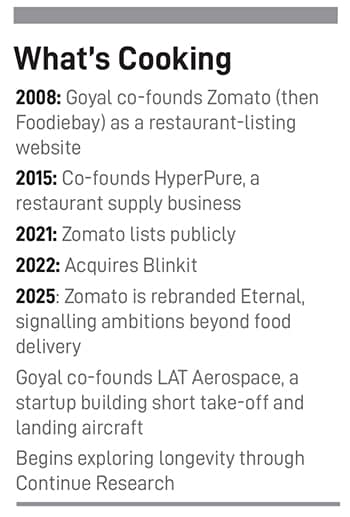
Earlier this year, he changed his company’s name from Zomato—one of India’s most emotionally recognisable brands—to Eternal. Social media reacted as though a childhood home had been redone in their absence. “How could you?” asked some.
That reaction, however, was not new. The year before that, he invited applications for a chief of staff role with a twist that sounded like satire until it wasn’t: The applicant would pay ₹20 lakh for the job instead of earning a salary. Outrage followed, and then an explanation.
Taken together, these episodes describe a founder who thinks out loud in a culture that prefers its business leaders cautious and scripted.
Eventually, after the temple-device discourse reached full boil, Goyal did what he often does. He tweeted again, gently reminding critics that the device wasn’t even on sale, that no public claims had been made, that the science would be shared when—and if—it was ready. Until then, he suggested, perhaps people could be curious. And they could even cheer Indian startups.
First Published: Jan 29, 2026, 15:56
Subscribe Now(This story appears in the Jan 23, 2026 issue of Forbes India. To visit our Archives, Click here.)