Seeing business at the coal face has stood me in good stead: Sanjiv Mehta
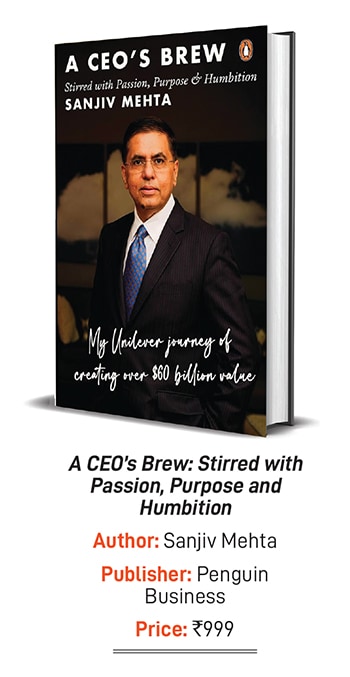
In this extract from his memoir A CEO’s Brew, former HUL Chairman Sanjiv Mehta talks about taking over the reins after returning to India after two decades
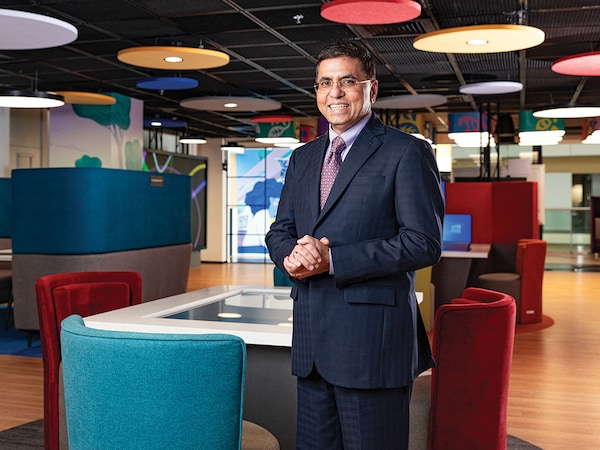
Sanjiv Mehta, executive chairman India, L Catterton.
Photo by Mexy Xavier
Advertisement
In a Nutshell
Sanjiv Mehta returns to Indian markets after 20 years abroad
He learned business on factory floors and in rural areas.
Mehta's detailed induction at HUL lasted several months
This was how I began my Indian odyssey. It was a homecoming in many ways, but my home country had undergone a massive overhaul in the time that I had spent outside. I started out by immersing myself totally into the market and the people who would be my partners in this new phase of my life.
The immersion process, be it a new organization or a new country, is multifaceted and often, tedious. But it is invaluable. Way back, in my early years at Union Carbide in Mumbai, I remember being completely overwhelmed when I was appointed as the finance head of the chemicals and plastics business. This business was home to India’s first naphtha cracker. I was twenty-six-year old at the time, and me being assigned to the role was a sign that I was being handpicked for bigger roles in the company, which at the time was among the top-ranked multinational companies in the country. But one management meeting down the hatch and then another one and a few conversations around the office later, I found I was completely out of my depth in the place. I was honoured to be chosen but I had to learn fast, if I had to do full justice to the task at hand.
All around me people were talking about the price of Brent Crude and whether they should be making ethylene out of naphtha or alcohol or whether they focus on the co-products or by-products. I was overwhelmed. Everything seemed alien and frighteningly obscure.
I then had walked up to my divisional president, a genial gentleman by the name of Subimal Bose and asked for a three-week leave from work. He eyed me quizzically and his first response was, ‘Are you getting married?’ I hastily disabused him of the notion and said that I would be spending the time at the factory. His face broke into an amused grin and he waved me off, thinking probably that this was one overenthusiastic rookie who would not last more than a day on the shopfloor. But I spent my entire holiday of three weeks going from one department to another, spending time with the shift engineers and operators to understand the business. I would go home for a few hours, shower, change and return to the factory. I was exhausted but at the end of three weeks, I knew everything there was to know about the business and the next time anyone mentioned olefins, I didn’t hide behind the files or a goofy grin.
Similarly, when I moved to sales in Union Carbide, I spent a week in the tribal Bastar district of Central India. I travelled with the local salesman in his van and spent many nights in small hotels or sprawled out on a bed under the open sky in the dhabas, or roadside restaurant-inns. This gave me good insight into rural marketing and distribution. It taught me to look for signs that one can easily miss when trying to understand a sharp movement in prices or a sudden drop in supplies. I saw how a change in the open market price in a nearby feeder market could disrupt rural distribution.
This practice of seeing business at the coal face has stood me in good stead throughout my working life. It had helped me in my first job, and it was going to be invaluable in my upcoming stint in one of the most dynamic markets of the world.
My preparation for the India stint had begun long before I landed in the country. Once my appointment was announced, I had sent a detailed questionnaire to the management committee members detailing what I wanted to know about the business.
From the marketers I was looking to get a good understanding of the market and consumers, the category evolution, segmentation, profiling of consumers, their habits and attitudes. I wanted to understand the growth opportunities, the triggers and barriers to exploiting the growth, the low hanging fruits and where do we have to seed in investments for future growth. On the brand side it was about understanding the history and evolution of our brands together with the inflexion points, the strategic pricing, brand health parameters, market share history, the battles we have won or lost and the lessons that emerged. Detailed value chain analysis to understand where the value was being created and who in the chain was appropriating it.
On the customer side, it was about understanding the major channels and their evolution, the shopper insights and our SWOTs for each channel. From the geographic lens it was understanding the size of our business and the per-capita turnover across geographies, the nascent spaces, the potential to grow and our plans to exploit this potential.
I also sought a detailed analysis on each of our major competitors, the disruptive innovations/activations introduced by them and whether we were anticipating any major attacks against us and if in affirmative then our defence plan against these attacks.
I had made it clear that I wanted to discuss each area with the role owner, how so ever lower down the hierarchy they maybe. Similar kind of asks were tailored to each function. I wanted to know everything about the country and the business that I was going to be looking after. Generally—and it is human nature—people showcase their best work. This can paint an unnecessarily rosy picture of the situation on the ground—it is a feel-good, but it can also become a hurdle in the path to improvement and growth. Worse still, it can blindside the newcomer. I wanted to see the good and the bad. In true HUL style, the team got ready to welcome me with over 7000 slides of induction pre-read.
My induction is never a day or a week-long affair. It is elaborate and immersive, and it lasts months. In the case of India, for HUL, it took up the better part of two quarters. I also spent time with my predecessor, Nitin Paranjpe, to get a broad feel about the business, understand his assessment about the top team and look at any commitments that he had made, which I was very clear that I would honour.