Farhan Akhtar and the big Boong theory
With a BAFTA win for Manipuri film Boong, the actor-filmmaker proves Indian producers can turn regional stories into global contenders
Last Updated: Mar 07, 2026, 09:49 IST2 min
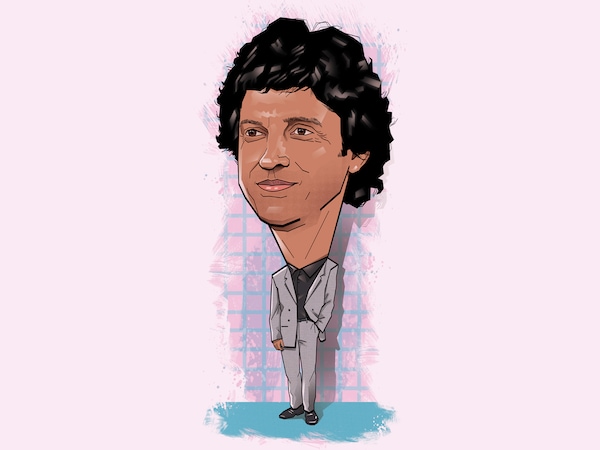
Farhan Akhtar is probably best known for Dil Chahta Hai, a film about male friendship he wrote when he was 25 that revolutionised urban storytelling in India, swapping traditional melodrama for a realistic, “cool” portrayal of 20-somethings.
But long before the cult of Akash, Sameer and Sid (the characters Aamir Khan, Saif Ali Khan and Akshaye Khanna played in the film), there was a different Akhtar. Publicly, he has often shared how he was a “lazy” teenager, only interested in watching films. The turning point came when he got an ultimatum from his mother, Honey Irani, to do something with his life or move out.
That pushed him to write Dil Chahta Hai and nudged him into a career defined by a refusal to stay in one lane. He moved from directing to producing under Excel Entertainment, from writing to acting, from ensemble dramas to the rock musical Rock On!!. He played athlete Milkha Singh in Bhaag Milkha Bhaag, took on a war drama, thrillers and streaming series, remaining Indian cinema’s most restless innovator.
And, in February, that instinct delivered a milestone. At the 79th British Academy of Film and Television Arts Awards (BAFTA), the Manipuri-language film Boong, backed by his production house, won Best Children’s and Family Film, beating global studio titles, including Zootopia 2 and Lilo & Stitch.
While several Indian films like The Lunchbox, Rang De Basanti and others have seen nominations, and Shekhar Kapur’s Elizabeth has won as a British film, Boong has created history. It is the first Indian film backed by an Indian producer to win a BAFTA.
The victory signals more than festival goodwill. Boong is a modest, regionally rooted coming-of-age story set in Manipur, far from Mumbai’s studio system. The win shows that capital and creative backing can now carry small-budget, non-Hindi films onto the world’s most visible stages.
“Our job is to tell stories, we can’t be deciding what will work, what will not work. Is it a good story? Yes. But is it going to be as wide [commercially] as some of these films? No. A story needs to be told, and it’ll find its own audience,” Ritesh Sidhwani, Akhtar’s partner at Excel, told Forbes India in a recent interview.
While Akhtar has always been a disrupter, the decision to back Boong and hand the Northeast a global microphone puts him in a different category. It extends his role from filmmaker to industry architect with global ambitions.
For the boy who once needed an ultimatum to start working, Akhtar is now the one setting the agenda for the entire industry.
First Published: Mar 07, 2026, 09:48
Subscribe Now(This story appears in the Mar 06, 2026 issue of Forbes India. To visit our Archives, Click here.)