When the world needed an office in India, Smartworks had the keys
Enabling the global workforce by building the infrastructure for the world’s most ambitious enterprises
Last Updated: Mar 06, 2026, 16:57 IST6 min
Neetish Sarda likely doesn't have a photo on his desk, but he should. It would depict a young man on a well-maintained Silicon Valley campus in the early 2010s, observing how American tech firms arranged their workspaces and feeling a distinct envy. This wasn't due to the monetary compensation or stock options but for amenities like the gym next to the cafeteria, breakout areas that served as brainstorming rooms, and an overall office design centered on the belief that employees who feel good will think better. He returned to India to find offices that, to put it kindly, belonged to a different universe.
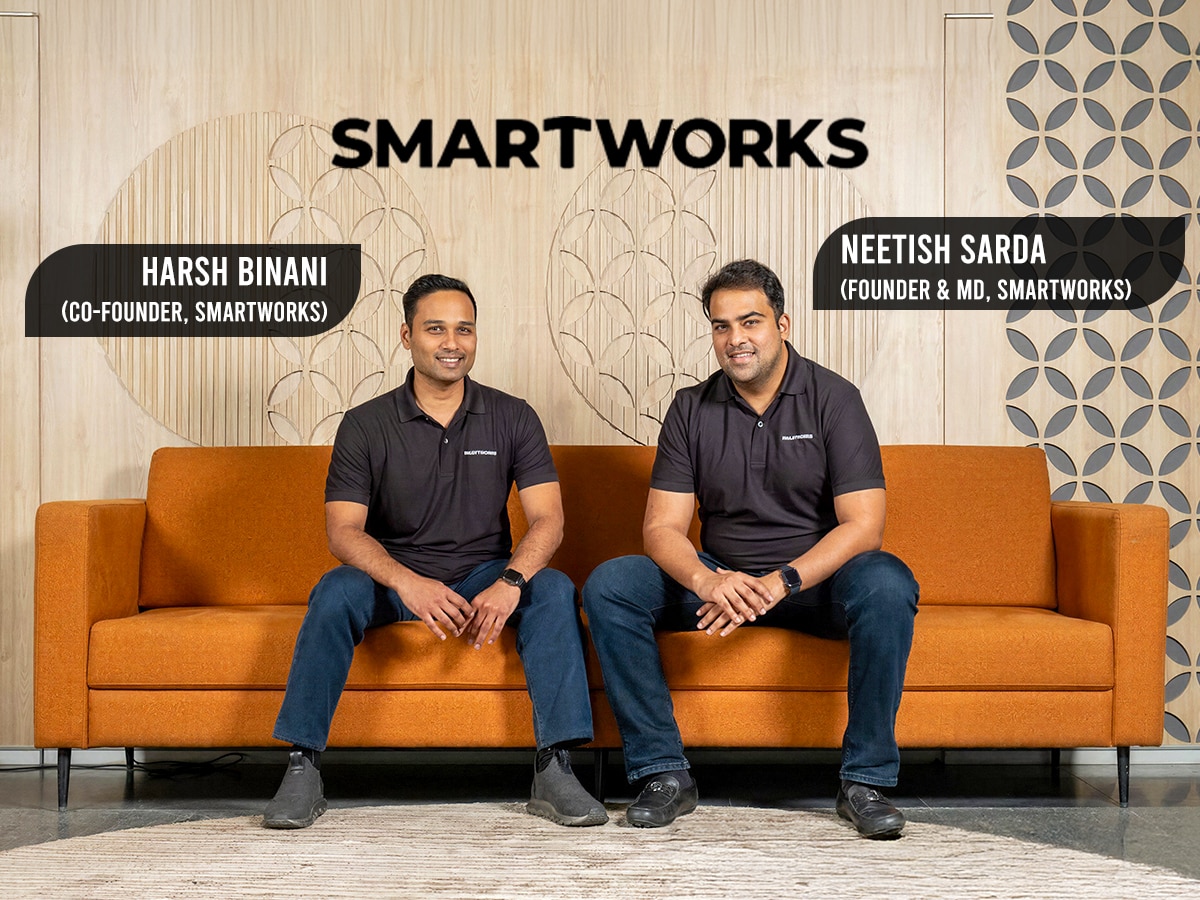
Founded by Sarda alongside co-founder Harsh Binani, the company entered what was then a buzzing co-working market. Every second startup seemed to be offering shared desks, strong Wi-Fi, and a foosball table. Sarda wanted no part of it. Where others chased freelancers and small teams, he saw that large enterprises and MNCs were the real force shaping commercial real estate, and that winning them meant building for long-term stability, not short-term fills. It was a deliberate bet, and one that no other provider in the space was making at the time. But pursuing enterprise clients demanded larger offices, which meant leasing entire buildings, and eventually led to creating something that didn't yet have a name in India's flex market: the managed campus, a holistic ecosystem that went well beyond the desk.
That journey from offices to campuses to a full-service platform was a gradual one. It was driven by a strong belief that now seems incredibly foresightful, even though at the time, it might have seemed a bit daring.
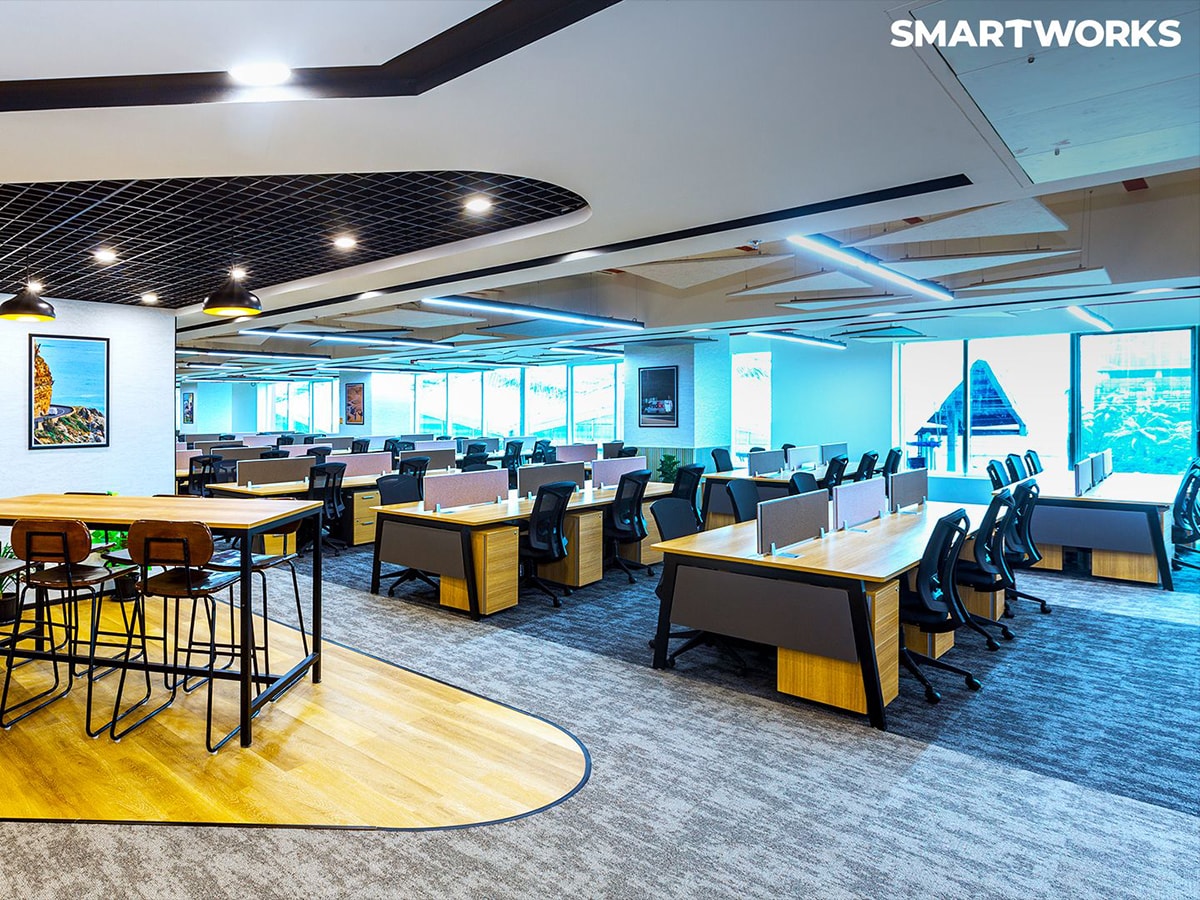
So Smartworks built campuses. Not one at a time, not tentatively, but with a conviction that now looks prescient and back then probably looked reckless. The model was deceptively simple in theory and brutally complex in execution. Lease large bare-shell properties in India's commercial corridors. Transform them into fully managed, tech-enabled office environments. Equip them with cafeterias, sports zones, gyms, creches, medical centers, and convenience stores. Wire the entire operation with proprietary technology that tracks how every square foot is being used, by whom, and when. Then hand the keys to an enterprise client and say, "Focus on your business; we'll handle the building."
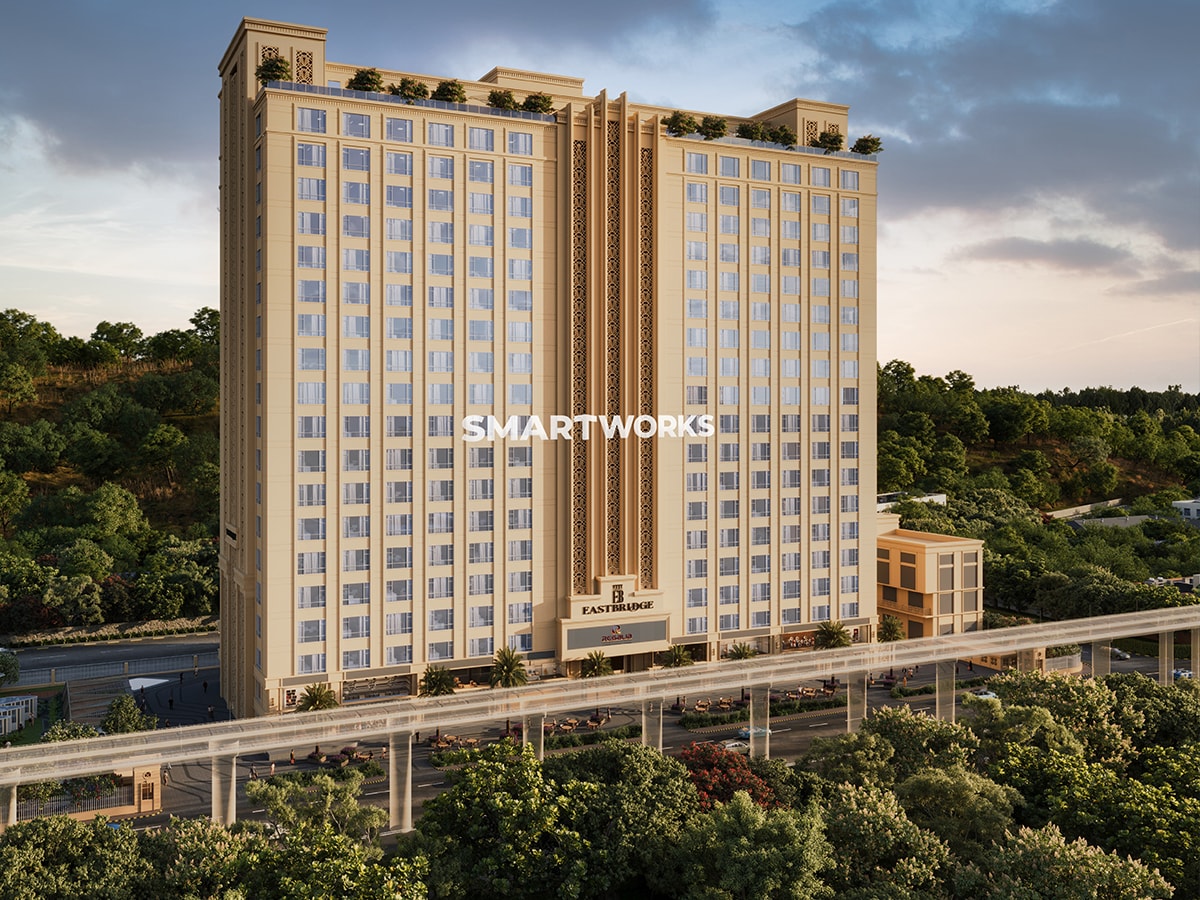
A decade later, the numbers tell you whether the bet paid off. As of December 2025, Smartworks manages ~ 15.3 million square feet across 63 centers in 15 cities, spanning India and Singapore, a footprint that continues to expand and one that makes it the largest flex provider in the country and the only homegrown player to have ventured beyond Indian shores. Revenue for Q3 FY26 stood at approximately Rs 472 crore, up 34 per cent year on year. Its largest center is now the roughly 815,000-square-foot Eastside campus in Vikhroli, Mumbai, developed by the Hiranandani Group, the largest space ever leased by a managed workspace provider, and a leap from the previous flagship, the 700,000-square-foot Vaishnavi Tech Park in Bengaluru, that captures the pace at which the company is adding campus-scale properties. That marquee developers like DLF, Raheja, and Panchshil have entrusted their buildings to the Smartworks model is itself a verdict on its credibility. More than 350,000 capacity seats and counting. Over 770 enterprise clients and growing. India's largest managed campus player, and still accelerating.
The company went public in July 2025, raising approximately Rs 583 crore through an IPO. The issue was subscribed 13.45 times over, backed by institutional names including Tata Mutual Fund, Baroda BNP, Aditya Birla Sunlife Insurance , and Axis AIF. Shares listed on July 17 at a 7 per cent premium. CARE Ratings subsequently upgraded the company by two notches to CARE A (Stable), pointing to improved scale, occupancy, and capital structure. For most founders, this would be the victory lap. Sarda treats it like a water break. "IPO had always been a comma for us," he has said. "It was never a full stop."
What comes next is grounded in a macro story so large it warrants its own paragraph. India took more than six decades after independence to accumulate its first billion square feet of commercial office space. The next billion is expected to arrive in 15 to 20 years. Read that again. The same volume of office infrastructure that took a newly independent nation an entire lifetime to construct will now be replicated in roughly a quarter of the time. Smartworks intends to be a defining player in that buildout, and internally, the ambition has no visible ceiling.
Smartworks is positioning itself to capture a meaningful share of that buildout, and its primary vehicle is the Global Capability Centre. GCCs, the R&D and innovation hubs that multinational corporations are now planting across Indian cities, have become the single most important force in Indian commercial real estate. More than 100,000 GCC seats are being added every year. And the nature of these centers has changed fundamentally. About 60 per cent of the GCCs now entering India are centers of excellence, driving product development and research for global parent companies. These are not the call centers of the 2000s. When the world wakes up in the morning, it increasingly finds that India has already done the thinking overnight.
For these GCCs, the value proposition Smartworks offers is almost unreasonably tidy. A multinational opening offices in Mumbai, Bengaluru, and Gurugram simultaneously wants its employees in all three cities to have the same experience from the moment they park their car to the moment they leave the gym. Smartworks delivers that consistency in 60 to 90 days, at costs it claims are 15 to 20 per cent lower than what an enterprise would spend doing it alone. No chasing landlords. No coordinating with five different fit-out firms. No compliance headaches across state lines.
Binani, who spent over six years in the US before returning to lead Smartworks' strategic expansion, frames the pitch in language borrowed from the tech world. "If you were to use cloud infrastructure, it's very scalable, it's standardized," he has noted. "That's the same sort of dialogue we're trying to usher in. Physical infrastructure is the entry point. But the user experience is more akin to a digital infrastructure." It is a clever reframing. What Smartworks is really selling is not office space. It is the idea that physical workspace can behave like software: plug in, scale up, replicate across geographies, and never worry about the backend.
The company has extended this logic through SmartVantage, a unified platform designed specifically for GCCs that bundles legal compliance, talent acquisition support, and facility management around the core workspace. The ambition is unmistakable. Smartworks does not want to be your office provider. It wants to be the operating layer through which your entire India presence runs.
The flex workspace market is growing but fragmented, and consolidation will favor operators with the deepest pockets and the most defensible client relationships. Smartworks believes its network effects, the fact that 770-plus enterprises already sit within its ecosystem, and that each new client makes the next deal easier, give it a structural advantage that smaller players cannot replicate. Sarda has spoken about the early years, about how much convincing it took to get large enterprises to entrust their office infrastructure to a managed campus platform. He states that the friction has almost disappeared, with each new client leading to the next. That is the sound of a flywheel spinning.
The pages slugged ‘Brand Connect’ are equivalent to advertisements and are not written and produced by Forbes India journalists.
First Published: Mar 06, 2026, 17:01
Subscribe Now