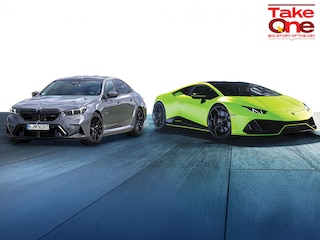
The exercise is revealing if you try it honestly. Close your eyes and imagine a supercar. The colour arrives first. Red, or something aggressively bright. Then comes the shape. A gas-guzzling machine designed less for Indian roads and more for racetracks, with ground clearance so low that it gives Indian speed breakers a whole new sense of self-importance. The engine lets out thunderous roars, the kind of sound that makes fellow drivers peer out of their windows.
A name drifts in soon after. Ferrari, perhaps, or Lamborghini, or Maserati—all Italian brands. What almost never appears is a Mercedes, a BMW or an Audi—German brands that are admired, respected, even coveted, but rarely fantasised about in the same way.
How did Italy come to dominate the idea of supercars, while Germany perfected luxury at scale?
For one, Italy is synonymous with craftsmanship. Its brands deliver drama, excess and a faint disregard for practicality. That makes them ideal for collectors and enthusiasts.
Germany, by contrast, champions engineering, its brands inspiring everyday confidence rather than worship. So, the German cars are positioned as performance luxury: Reliable, usable, “for the masses”—machines ideal for daily use.Also Read: 2026 is the year when we focus on India with direct presence: Ferrari CEOItaly’s motorsport history plays a role here too. Ferrari, famously, was never meant to be a car company at all—it was a highly successful side hustle designed to bankroll Enzo Ferrari’s real obsession: Racing. That single-minded devotion is as strong in fans, called the Tifosi, who continue to defend the team with religious fervour, despite Ferrari not winning a Constructors’ Championship since 2008.
Read More
Ferrari CEO Benedetto Vigna says the two countries look at industries differently. “Germany has fewer but much larger companies, while Italy has a greater number of smaller, more specialised companies.”
Staying small has perhaps helped Italian brands prioritise craftsmanship, individuality and design in ways that are harder to replicate at scale.
Culture played a big role too, says Aditya Khandelia, managing director and partner at Boston Consulting Group (BCG). “German brands have traditionally emphasised engineering, precision and performance. Italian brands have leaned more heavily on heritage, design and style,” he says. Italy, he adds, has always been associated with fashion and style, and that extends to car brands that originated there.
Khandelia also points to corporate strategy. In the automotive industry, many brands (of vastly different price points) sit under the same ownership—Lamborghini, Audi, Porsche and Volkswagen all exist within one portfolio. “But we often think of these as individual brands. Brand positioning is decided at the group level. To avoid overlap, each brand is deliberately given a distinct role,” according to the BCG executive.
In India, though, the distinction has been sharpened by something as unromantic as infrastructure.
Business and brand strategy specialist Harish Bijoor argues that roads dictate the fate of car brands, and car purchases, not the other way round.
Indian roads once demanded restraint and sturdiness, which favoured Indian cars. “But today’s roads are made for German brands. BMW and Mercedes-Benz, in particular, have entered the market in a big, big way. Tomorrow’s roads are for the Ferraris, the Lamborghinis and the Maseratis,” says the founder of Harish Bijoor Consults Inc.
The rich in India remain practical. Which is why Italian supercars, he says, are being bought in an anecdotal manner, for use on that one Sunday in the big city. “The Indian car was for yesterday and today. The German car is for today and tomorrow. And the Italian car brands are for day after tomorrow, if not tomorrow,” feels Bijoor.
With Ferrari planning a more direct push into India, Maserati opening its third showroom last year and Lamborghini exploring a fourth one, Italian firepower is indeed revving up to make a serious mark in India.