OpenAI’s ad turn: Can ChatGPT monetise without losing user trust?
Once sceptical of advertising, OpenAI’s move towards ads inside ChatGPT marks an inflection point for the AI industry—where soaring costs are colliding with users’ expectations of cheap or free access
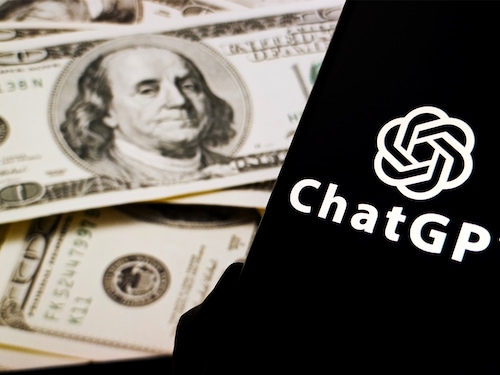
Advertising inside ChatGPT is expected to be fundamentally different from ads on traditional platforms because it sits inside a conversation, not alongside content. Photo by Shutterstock
Advertisement
For the first time since ChatGPT’s public launch, OpenAI is formally opening the door to advertising inside its flagship consumer product. In a blog post published on January 16, the company announced plans to begin testing ads in ChatGPT’s free and low cost ‘Go’ tiers in the US, framing advertising as a way to expand access to advanced artificial intelligence without pushing prices beyond reach.
The announcement marks a notable shift in tone from OpenAI’s leadership. As recently as May 2024, chief executive Sam Altman had voiced a clear aversion to advertising, calling it “aesthetic[ally]” unappealing and positioning it as a last ditch option rather than a preferred business model. Speaking at Harvard University, Altman argued that ads risk misaligning incentives between the company and its users, and said he would rather see people pay directly for a service that works in their interest.
Now, that reluctance has given way to pragmatism.
The move marks a critical inflection point—not just for OpenAI, but for the broader AI industry—where soaring compute and infrastructure costs are colliding with users’ expectations of cheap or free access.
While OpenAI insists that ads will be clearly separated from chatbot responses and will never influence answers, critics warn that introducing commercial messaging into a conversational interface risks blurring the line between assistance and persuasion in one of the world’s most trusted digital tools.
Advertising inside ChatGPT is expected to be fundamentally different from ads on traditional platforms because it sits inside a conversation, not alongside content. “In a conversational interface, users are asking for help and guidance, which creates a much higher bar for credibility. Any advertising here must behave less like promotion and more like transparent recommendation,” says Tushar Khakhar, first executive, AGENCY09.
That makes transparency central to how users perceive the product. “Initially, users are primed to believe the answers they receive. But soon, regulators will likely demand clarity that is explicit, unavoidable, and contextual,” says Harikrishnan Pillai, CEO and co founder of TheSmallBigIdea. More fundamentally, he adds, this shift forces a rethink of what advertising even means in an AI driven interface. “When a paid brand appears inside an AI generated explanation, the line between advertising, recommendation, and advice becomes blurry.”
This is not the first time technology platforms have wrestled with the challenge of separating content from commerce. Over the past decade, platforms such as Google, Facebook, and WhatsApp have all turned to advertising as one of the easiest ways to monetise massive user bases without charging subscriptions. In June 2025, WhatsApp announced it would begin inserting advertisements into its Status feature—the ephemeral feed where users share text, photos, and videos that disappear after 24 hours—introducing sponsored posts into an otherwise personal stream.
What sets ChatGPT apart from these platforms, however, is not scale, but depth. “Advertising on Search and Social promises scale because of the infinite real estate they can offer,” says Hitesh Rajwani, CEO of Social Samosa. “ChatGPT, on the other hand, runs on conversations. The real estate under each answer is inherently limited. There isn’t an infinite feed—there’s a finite moment of engagement.”
This difference reshapes how advertising value is defined. According to Rajwani, ChatGPT cannot sell reach in the traditional sense. Instead, it leans on “relevance and depth—the quality of the conversation users are already having. This also changes the way success is measured.” Conventional metrics such as reach, impressions, and clicks matter less here; what becomes more important is attention, dwell time, and whether an ad meaningfully extends the user’s line of inquiry.
“In principle, advertisements are meant to make users go wide and move them out of a platform,” Rajwani adds. “But advertising on ChatGPT has to do the opposite—it nudges users to go deeper and continue the conversation.” How brands adapt to that constraint, and whether users accept commercial prompts inside an interface built on trust, may ultimately determine whether this will be a viable model.