On separation
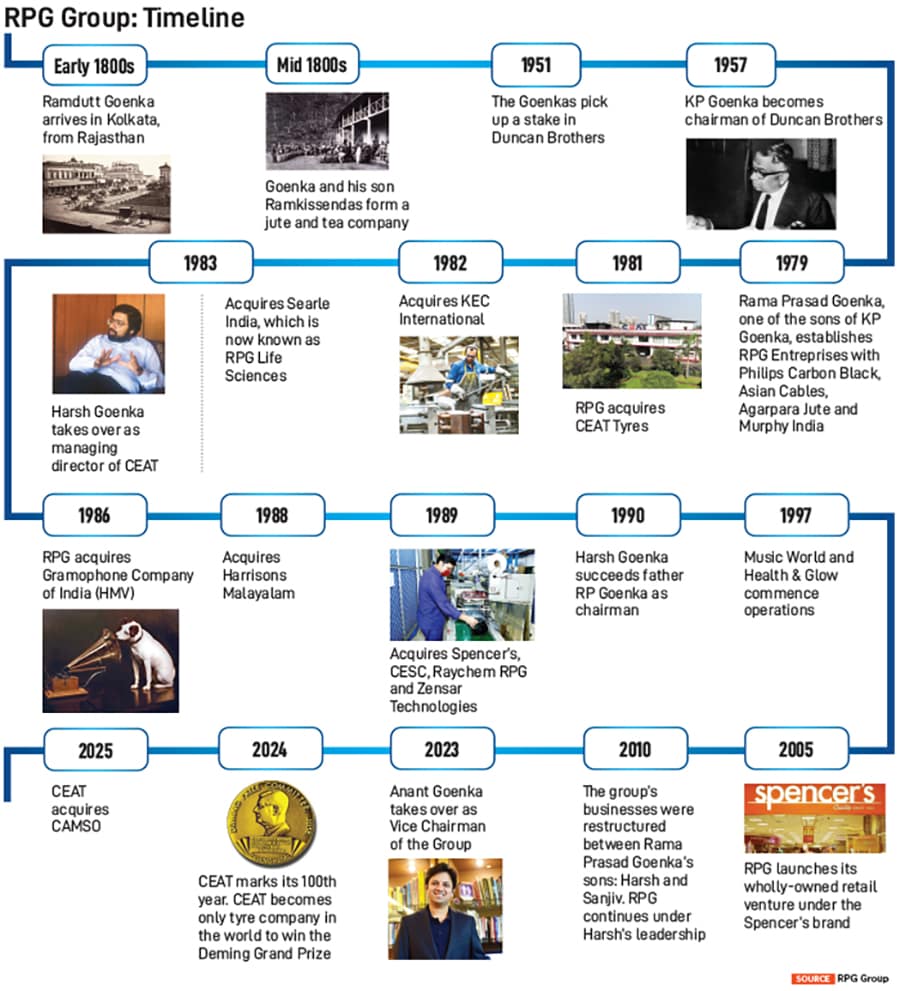
Fifteen years ago, the Goenka family patriarch thought it wise to split the RPG enterprise between his two sons, Harsh and Sanjiv, both with markedly different personalities. Goenka insists he knew nothing about it at all. There was neither a phone call nor a dramatic family meeting at dinner… in fact, a fax sent to Goenka, who was enjoying a holiday in a rather quiet village in Switzerland at that moment, informed him about his father’s decision.
![]()
Before Sanjiv proceeded to create a separate corporate identity for himself, they both made their disagreement with the separation clear. Ultimately, despite their objections, the brothers had to yield to their father’s decision. Had it not been for the strong business grounding between the brothers, Goenka was chairman and Sanjiv was vice chairman at that time, and the ‘great relationship’ between them, perhaps the future of the group would have taken a less prosperous route. “So, if the relations are very good, there is no mistrust, there is no rancour, it becomes easy.”
In an unsurprising tone of acceptance, Goenka proceeds to add, “it helps when your father does it and you trust your father’s judgement”.![]()
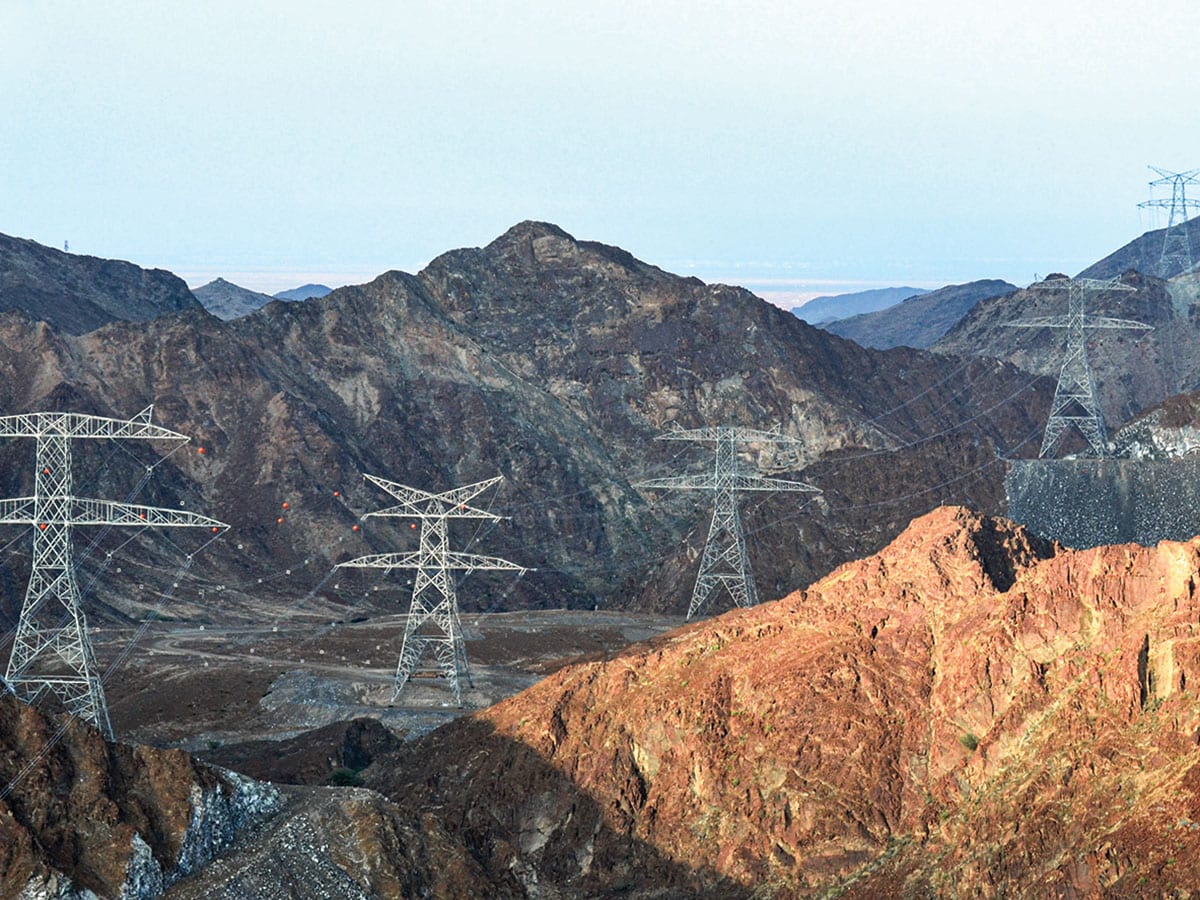
A project in Oman by KEC International, an RPG Group flagship company that does engineering, procurement, and construction work for key infrastructure developments
Photo Courtesy: RPG
On succession
Goenka is not in favour of airing any kind of laundry, dirty or otherwise, in public. For him, it is best if decisions of separation and succession in business are done when relations are cordial. And better still, when done behind closed doors.
It is only natural then that he admires the restraint shown by all parties involved in the separation of the Godrej group, which split one of India’s oldest conglomerates between two branches of the founding family.
The next generation of inheritors, unfortunately, fail to command a similar admiration. “If there is greed with ambition, succession is tumultuous.”
![]()
At this point, the eager outsider’s curiosity gets the better of us. Goenka has made headlines on this before, having criticised the next generation of family businesses for their indulgence in leisure at the expense of necessary labour. Their propensity to choose ‘three rounds of golf’ over the daily grunt of business work, their smart work over hard work mantra does not appeal to the RPG tycoon.
“And really, 70 percent of the people I know have taken a softer option of running a family office. And that’s a serious issue,” he says and takes a moment to clarify that he isn’t against people chasing their ‘mojo’ or doing their thing. But he is all about the ‘hustle’, a trait he particularly admires about the startup entrepreneurs from Tier II and III cities of India. He has been paying close attention to their discussions on changing fundamental business models, especially their strategy of favouring profits over future valuation, because he believes for any good and well-thought-out idea, “money is there for the asking if you have the hustle and hunger to succeed”.
Also Read: 2025 Forbes India Rich List: Mukesh Ambani richest Indian, but net worth drops by 12 percent
He likes to call himself ‘old school’ in that sense. Though against prescribing how many weekly hours one needs to clock to appear productive, he is unwavering in his belief that, for success, hard work will always be the magic ingredient. It is an advice he has passed down to the future generation of Goenkas as well, especially to his son Anant, who is set to take over as the FICCI president for this term. “So, I saw that my son had a proper education, and then he had experience outside the group before he grew and became the CEO.”
![]()
And here he speaks from experience. “I think if I had to look at it differently, I would have spent more time in the trenches,” he says of his days when he was given the reins of CEAT tyres and made the CEO at 24 at his father’s insistence. During this time, his business acumen was shaped by Dr Angelo Tealdo, who was managing CEAT at that time, and whom Goenka fondly calls his ‘guru’. The real challenge, though, was commanding respect from senior businessmen, many of whom were of his father’s age. But with a mentor to help channel him in the right direction, Goenka was “learning while managing, which was a little bit of a difficult journey, because I didn’t have the confidence. But one learnt”.
This, despite already having dealt with the systems and processes of the textile industry at the age of 20, when he worked as the CEO of a textile mill in Ahmedabad and a jute mill in Kolkata simultaneously.
Intrigued, we press him a little further on what his workday looks like now. He chuckles (“Don’t ask!”) and defers the question to his wife, Mala Goenka, the chief decision-maker for their home’s interior design. But doesn’t Goenka also have a penchant for art?![]()
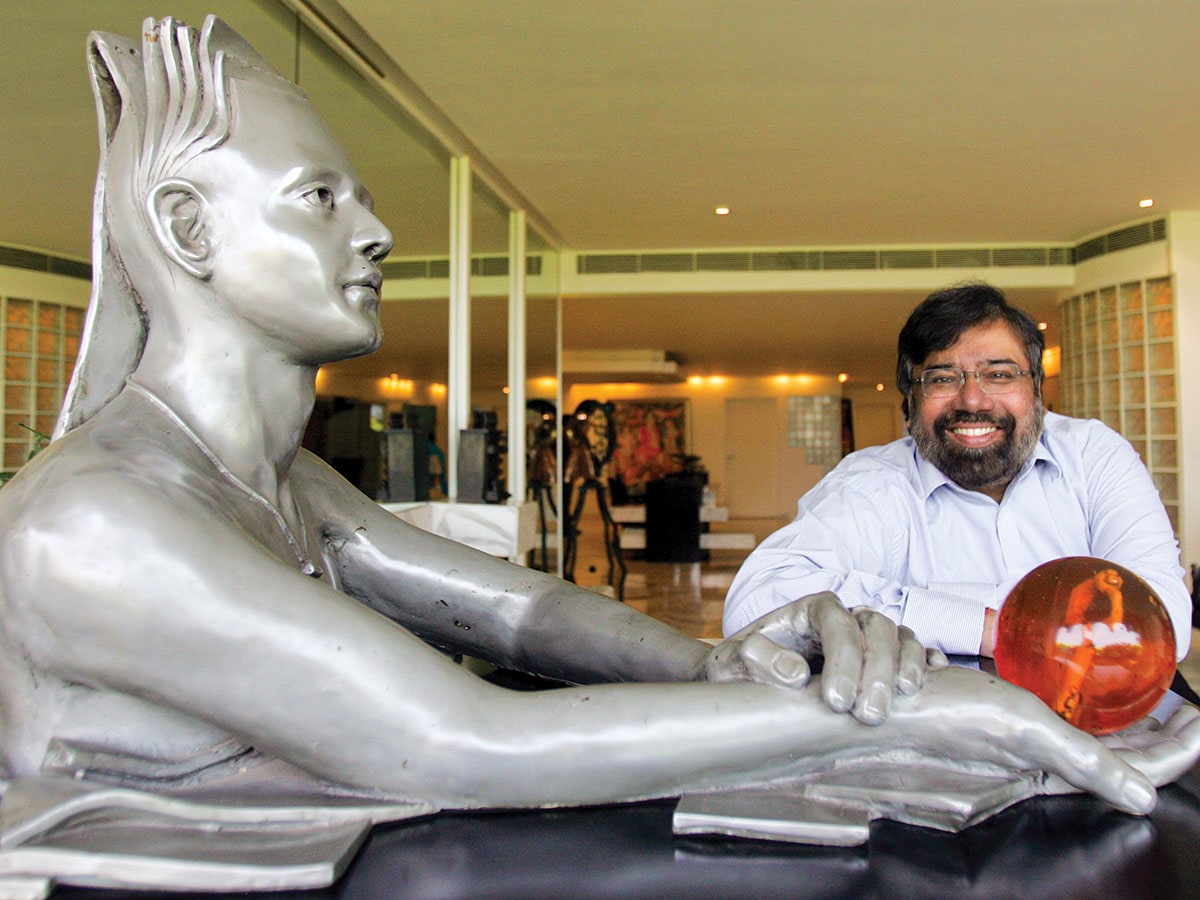
Harsh Goenka is a man of many interests, and has an enviable collection of art, sports memorabilia and autographs
Photo by: Kunal Patil / HT via Getty Images
On leisure
Goenka defines his relationship with art as one of the heart, and not of the mind; a passion that was born in Kolkata where his family had a fine collection of miniature paintings. He begins to explain how it was this treasury that drew scholars who enjoyed decoding the origin of the paintings to their home, as another variety of sandesh is served on our plate in a poetic nod to the moment.
As a youngster, who was tasked to photograph and catalogue the paintings, Goenka’s fondness for miniatures gradually began to fade away. “When I shifted to Mumbai, my dislike for miniature art moved into my love for contemporary art.” And now, after years of collecting art, he describes his existing collection as ‘large’ but one where the “quality could have been better”.
![]()
The appeal of an artwork often also depends on the collector’s current phase in life. “There was once [a time when] I liked paintings which were strong, fierce and violent. Now I like art which is quiet and peaceful,” he says. And though he insists that it is the work of art itself and not the artist that captures his interest, he includes the Spanish surrealist Salvador Dalí and Mexican portrait artist Frida Kahlo among his favourites. So, does he own one of their works?
“I do have a Dalí, but it’s an insignificant work. It’s the cheapest that I could afford to get,” he says. And as someone who believes that owning a work of Dalí, irrespective of its cost, is an attainment of luxury only few can casually mention in a conversation, we raise our eyebrows in disbelief at this specific point.
Complete list: India's 100 Richest 2025
But his interest doesn’t just stop at paintings; he is also an avid collector of sports memorabilia. Whether it’s the golf balls used by most of the American presidents—from Ronald Reagan to Donald Trump—or the Olympic-winning gun of sharpshooter Abhinav Bindra, the chairman has it all. But it’s his latest acquisition—a complete collection of autographed bats from every player on the World Cup-winning Indian women’s cricket team—that has him most excited.
When not dabbling in art, he attends courses to keep educating himself on new developments and emerging technologies every fortnight. In the last couple of days, for instance, he has completed a course on the economic challenges faced by businesses in Asia and Europe and attended a virtual presentation by global CEOs on the developments in artificial intelligence (AI). He also squeezes in time to write pieces for dailies occasionally—a habit he revived during the pandemic—and draft his ‘infamous’ threads on Twitter [now X]. One such thread detailing the divergence in growth trajectories between India and China despite starting at almost the same point in the 1990s had me curious.
![]()
He seems surprised that Forbes India has gone through his profile. With an insight that could only be gained from experience, he explains that the Indian practice of ‘undermining’ China could prove counterproductive in the long run. He argues that a vast section of society fails to recognise that the Chinese are far ahead of the Americans in many key areas. And in such a scenario, the only option ahead of India is to play to her strengths in manufacturing, digitalisation and demographics; and aggressively encourage sectors like semiconductors, AI and data centres.
“We don’t have conditions that are conducive for people to live, and we also have, therefore, an exodus of Indian businessmen to other countries,” he states. “We need to reverse the brain drain and incentivise brain gain.” He goes on to add that even as the government is doing its part, the situation ultimately hinges on ‘ease of doing business’. Besides this, businesses themselves need to be nimble and change the composition of their boards and include geopolitical experts on them to reflect the changing global financial and security dynamic.![]()
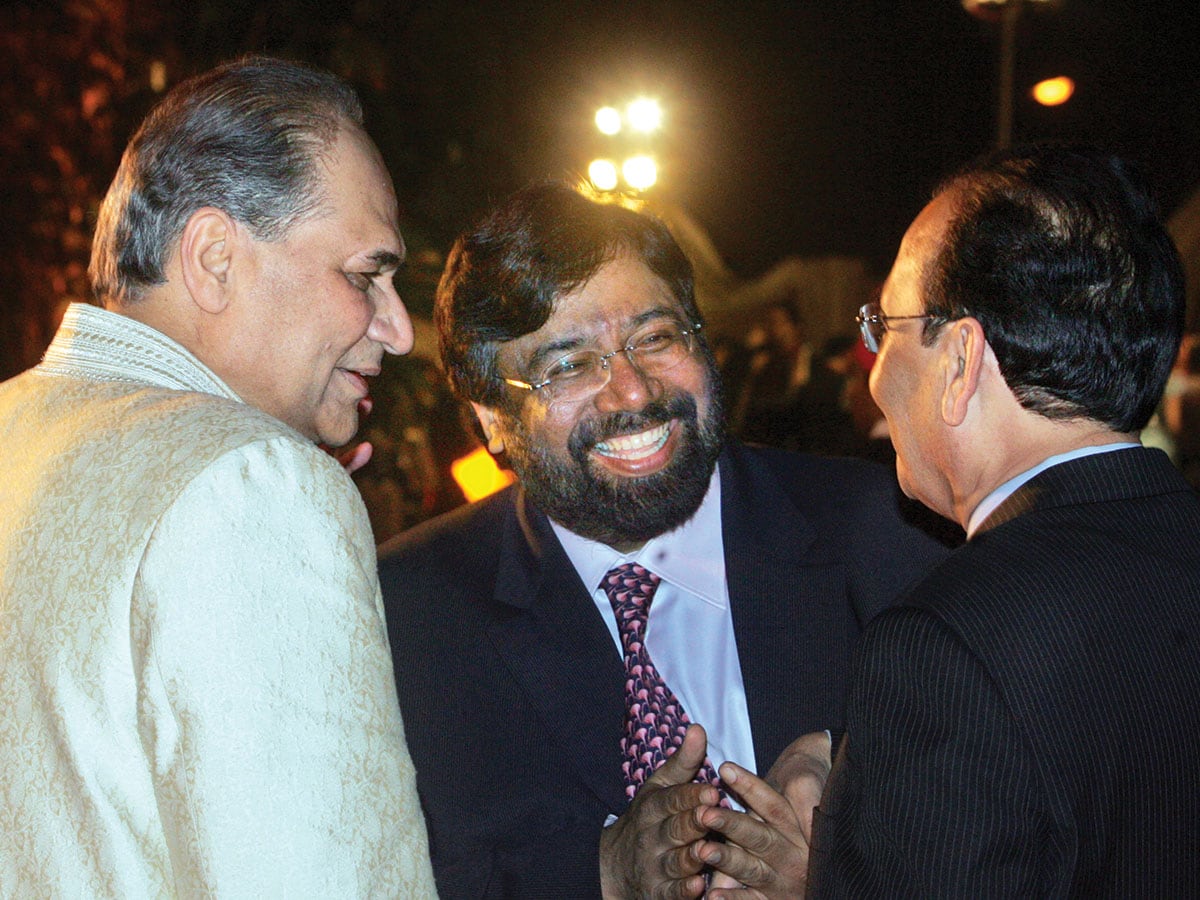
Harsh Goenka with the late Rahul Bajaj (left), whom he regards as one of his idols
Photo by: Kunal Patil / HT via Getty Images
On wealth
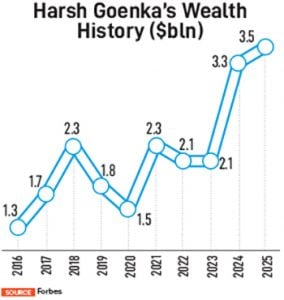
“A truly rich person is one who is very happy and who lives based on his moral conscience,” he answers without skipping a beat. Money does not equal wealth, says the businessman, as he enumerates his idols—fellow billionaires and philanthropists Azim Premji, the late Rahul Bajaj and the late Ratan Tata. “These are people whom I have idolised in my life because of the values that they have stood for. I don’t respect money. I respect values.”
![]()
And it is perhaps why he counts a ‘strong people orientation’ his most important legacy handed down from his father. One would expect the chair of a major business conglomerate to be completely consumed by financial decision-making, board meetings and networking events, but Goenka says he devotes more than half of his time to human resources. “Happiness is extremely core to our philosophy, and that’s what makes us unique.” Under Goenka, every company has a Happiness Council chaired by senior leadership to guide cultural and engagement initiatives. And happiness champions are recognised for spreading positivity and uplifting others
This is a likely characteristic of someone who believes that his decision-making has improved as he has matured as a businessman. “Wisdom comes not out of intelligence, but out of experience also.”