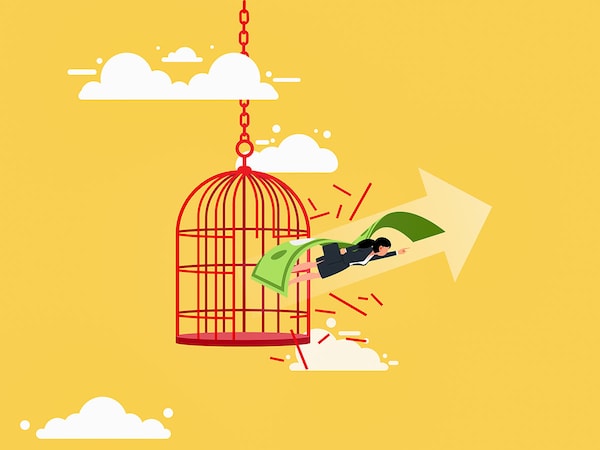
For India, aiming for a $7-trillion economy, 2026 represents a key inflection point. Women are no longer seen solely as welfare recipients but as central architects of the coming decade’s growth. Photo by Shutterstock
Advertisement
International Women’s Day 2026 marks a decisive turn in the global economic conversation. The United Nations’ 2026 theme, ‘Rights. Justice. Action’, along with the global campaign ‘Give to Gain’, signals a shift from viewing gender parity as a social obligation to recognising it as a macroeconomic imperative. For India, aiming for a $7-trillion economy, 2026 represents a key inflection point. Women are no longer seen solely as welfare recipients but as central architects of the coming decade’s growth.
From an economic standpoint, one of the most persistent inefficiencies in national accounting is the undervaluation of women’s labour in the ‘shadow economy’. Early 2026 PLFS data shows a promising rise in female labour force participation, nearing 35%. Yet the ‘uncounted multiplier’ remains substantial. Current GDP frameworks capture a woman’s contributions to the formal economy but ignore the invisible labour that sustains it. This omission is increasingly untenable.
The formalisation of the ‘care economy’ is advancing, driven by the recognition that childcare and eldercare function as essential economic infrastructure. Integrating care into the formal economy could unlock a gender dividend that significantly boosts GDP by 2030. The transition underway moves beyond rhetoric and positions ‘enterprise-led empowerment’ as a sound fiscal strategy.
This shift is evident in family-managed businesses. Historically, India’s MSME ecosystem operated under assumptions of male primogeniture, with women handling vital yet uncredited responsibilities. Today, their absence in decision-making is recognised as a business risk. Professionalisation in modern family enterprises is moving women into core roles with profit-and-loss responsibility. Market behaviour reflects this evolution: women-led firms demonstrate stronger capital efficiency, lower debt-to-equity ratios, and greater resilience during volatility.
Simultaneously, India’s Digital Public Infrastructure has matured. Access to credit through ONDC and the Account Aggregator framework has reduced traditional banking biases. A woman entrepreneur in a Tier-2 city can now rely on transaction data as a proxy for collateral, removing long-standing structural barriers. This ‘data-led agency’ represents one of the decade’s most transformative reforms.
Corporate leadership dynamics are shifting as well. Beyond compliance mandates, the KPMG–AIMA Women Leadership Report 2026 highlights the persistent ‘missing middle’—mid-career attrition that weakens leadership pipelines. The emerging response emphasises sponsorship over mentorship. Leaders are being assessed on the diversity of their succession pipelines, and Nifty 500 firms are moving toward a 30% representation of women in senior management as part of broader ESG-linked investment priorities. Gender imbalance is increasingly understood as a failure in human capital optimisation.
The 2026 theme ‘Give to Gain’ captures this broader economic message. Organisations that invest in flexible structures, equitable pay, and active sponsorship gain in innovation, resilience, and long-term value creation. The conversation has shifted firmly to the ROI—return on inclusion.
Challenges remain, and deep-rooted social norms continue to shape outcomes. Yet the signal of 2026 is clear: women’s participation is not a footnote in economic planning but a determining factor in India’s progress towards developed-economy status.
Prof. Tulsi Jayakumar, Professor of Economics and Policy and Executive Director of the Centre for Family Business and Entrepreneurship at SPJIMR