India's premium and luxury property segment boomed in 2024, even as prices soared. What's in store this year? Anuj Puri, chairman and founder of Anarock Group, writes
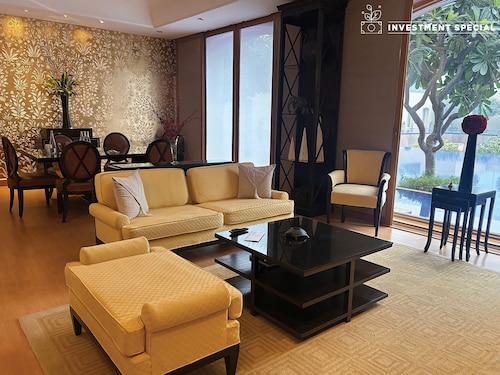
The demand for luxury (units priced above ₹1.5 crore) and ultra-luxury housing (units priced between ₹10 crore and ₹80 crore) grew significantly in 2024, most notably in MMR and NCR
Image: Shutterstock
Advertisement
Global Capability Centres—GCCs—currently account for over 36 percent of leasing activity in India and are the biggest occupier segment. GCC demand will grow in 2025. In fact, GCCs are expected to double by 2030, and this will spark off demand for another 80–100 million square feet of office space.
Flexible workspace players spoke for as much as 22 percent of the overall demand for office spaces in 2024. This stands to reason, since the flexi-workplace market is pegged to expand by as much as 137 percent by 2028, by when it will account for 126 million square feet of commercial real estate.
Sustainability is becoming a major ask in Indian commercial real estate, since an increasing number of both international and domestic tenants now expect to use nothing less than environmentally responsible office assets. A growing preference for a mix of core and flexible workspaces will further fuel this demand.
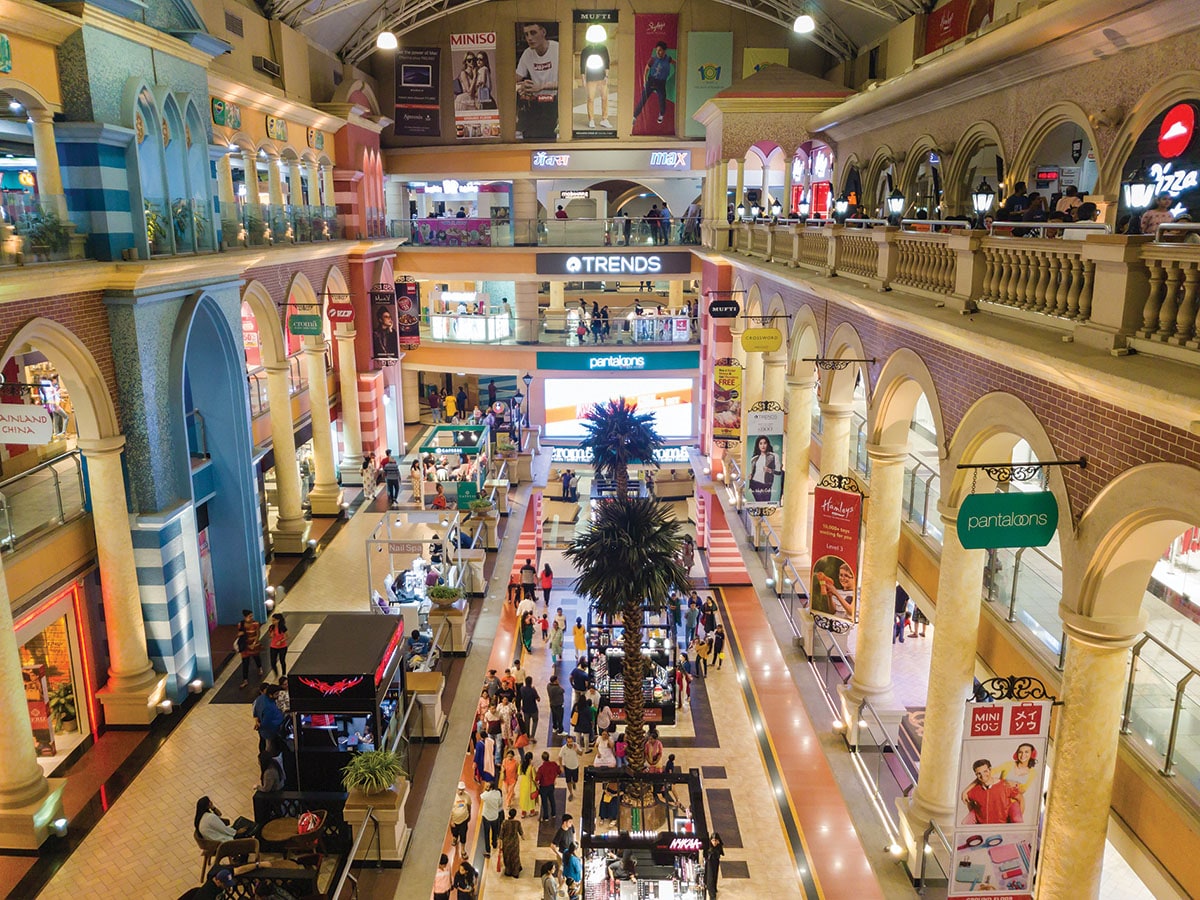
Retail leasing touched 5 million square feet from January to September 2024 in the top seven cities, driven by domestic retailers and international luxury brands. The fashion, F&B, and entertainment sectors accounted for two-thirds of leasing in 2024, led by Bengaluru and followed by Delhi-NCR and Mumbai.
Grade A malls in prime locations experienced markedly low vacancy rates of 1-7 percent, reflecting robust demand. The growth of retail rentals in cities such as Bengaluru, NCR, Chennai and Pune was between 2 and 5 percent because of increasing sales volumes and rental escalation clauses in leasing agreements. This is boosting the revenues of mall owners significantly.
Retail leasing touched 5 million square feet from January to September 2024 in the top seven cities, driven by domestic retailers and international luxury brandsImage: Shutterstock
Retailers are determinedly pursuing expansion into Tier II and III cities, eager to break into hitherto untapped or under-tapped consumer bases. Mall developers plan to infuse between 40 and 45 million square feet of organised retail space over the next 4–5 years.
India’s retail market is predicted to reach an overall market value of $2 trillion by 2032 from $690 billion in 2021. The organised retail sector is projected to grow at a CAGR of 25 percent due to the availability of quality new supply and the rising consumption.
REITs have come a long way in India with current REIT office stock estimated to be over 80 million square feet across major cities compared to 25 million sq feet five years ago. Interestingly, the REIT-ready office stock in the country is estimated to be over 500 million sq ft valued at approximately ₹6 lakh crore at a cap rate of 8-8.5 percent. Currently, occupancy levels of the three major office REITs are estimated to be approximately 84 percent.
The SEZ portfolio, however, is operating at a lower occupancy of 64 percent. This is likely to change in the near future as the government has allowed partial and floor-wise denotification of IT SEZs, making it an attractive proposition. Indian REITs and InvITs together have successfully raised investments worth ₹17,116 crore in FY24 compared to ₹1,166 crore in the previous fiscal year.
In 2025, the outlook for Indian REITs remains stable because office leasing picked up significantly across key cities in 2024, particularly by GCC operators. Moreover, many developers have multiple rent-yielding commercial portfolios and will look to tap into the opportunity for more REITable space.
The year 2024 saw the real estate market ramping up its position as one of the cornerstones of the nation’s economy. In housing, the strengthening luxury segment and notable inventory reduction showcase an aspirational middle class and the country’s growing base of HNIs. Commercial real estate has staged a remarkable revival from the pandemic lows, and the continued robustness of India’s retail real estate sector underscores a strong consumption story across the country.
This year remains promising for the Indian housing sector, especially for the premium and luxury housing segments. Commercial real estate absorption will remain healthy even as demand patterns evolve further as coworking and GCCs become the major catchwords. Retail real estate deployment and absorption will continue to prove that the brick-and-mortar story is far from over despite the popularity of e-commerce. Indians will not give up mall visits in favour of online shopping.
In short, the year ahead will see the Indian real estate market script the next chapter of the country’s urbanisation, workplaces, and lifestyle story. When we look back on 2024, we will remember a landmark year for the whole industry.
â— The author is chairman and founder of Anarock Group, an international property consultant