I was born crazy... it's okay: SpiceJet's Ajay Singh
Ajay Singh on stress as a stimulant, the die-hard optimist in him, why failures are a part of life, and more
By Rajiv Singh
Last Updated: Feb 26, 2025, 12:09 IST5 min
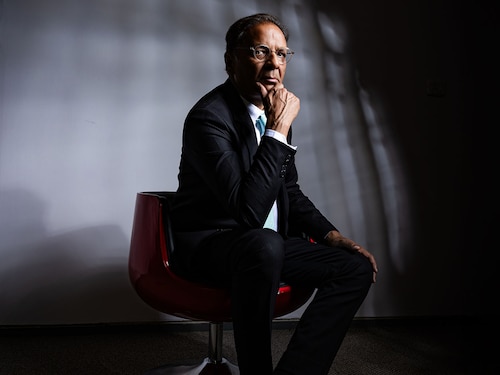
It’s fun when a maverick entrepreneur starts quizzing you. Reason? The interviewer gets a God-sent opportunity to start a free-wheeling conversation with the interviewee. It’s exciting when a founder puts you on the hot seat and checks your knowledge. Why? Simple. One gets a rare peep into the mystified personality of a founder who is often viewed from subjective lenses and usually has a cliched perception. It’s fascinating when a seasoned businessman talks about his vulnerabilities. Why? It shows that they too are human and can err.
So, this is what the last 25 minutes of more-than-an-hour-an-half-long interview with Ajay Singh look like. Sample some of the questions hurled by the chairman and managing director of SpiceJet. “What is the biggest downside of being like everyone?" asks the 59-year-old entrepreneur who landed at IIT-Delhi to study engineering but always had his heart yearning for literature and art. “Well, you look like everyone," I replied. The answer, however, doesn’t cut. The biggest downside, Singh explains, is that you won’t be seen as the odd one out. “But this is not okay with me. I can’t be a lookalike or me-too or a stereotypical person," he contends.
Now comes the second question. “What is the flipside of not taking risks?" he asks. “One remains safe," I reckon. The reply, again, fails to impress Singh who had an impressive academic record at school, but realised his ‘average’ standing when he confronted a bunch of ‘brighter’ and ‘smarter’ people at IIT. “If you don’t take risks, you don’t gain anything," he underlines.
A few minutes into our Q&A, Singh shoots the trickiest question. “What do you enjoy most in a ‘snakes & ladder’ game: Taking the ladder and reaching 99 or sliding down the snake to hit the bottom? The answer, I hastily jumped the gun, is a no-brainer. “It has to be a sudden ascent to 99," I smile. Singh too smiles, but for a different reason. “How will you gauge your resilience if you don’t restart from zero?" he asks. I stare blankly at him for a few seconds. “Aren’t these hot, red and spicy questions?" he laughs, alluding to the tagline of his airline which he started in 2005.
An interview with Singh, the founder of an airline that has survived multiple near-death moments and is now grappling with yet another existential crisis, has to be emotionally packed. Here are excerpts from a gripping interview:
Q. People call you crazy. Some even go to the extent of branding you a madman. Are you crazy?
Crazy (laughs)… I have been bombarded with this word since childhood. I have embraced this word. I never had an issue with what I am… and I am not bothered by what people think about me. An IITian not settling for a job indeed looked crazy. An MBA grad from Cornwell returning to India was nothing less than mad. And when I tried turning around DTC and Doordarshan, the world got to see my crazy side. There is a long streak of my ‘crazy’ deeds: From buying a defunct airline to selling tickets online when there was no concept of purchasing online to again buying the same debt-laden airline in 2015 to thinking of producing electric two- and four-wheelers when there were no EVs to making a comeback after every obituary. I was born crazy. It’s okay.
Q. You missed out on one more crazy deal: Naming the airline SpiceJet and opting for red colour…
Oh, yes. People freaked out with my colour selection. ‘Red is the colour of blood’, they said. They tried to make me understand that people might think that the airline is unsafe. I never understood their logic. To me, it was illogical. India was getting young, and the new generation wanted its own identity. The country is known for spices and red chillies happen to be our favourite. That’s why SpiceJet. We planned to bring 100 planes and decided to name every plane after the name of a spice. We made that 100 list.
Q. You did cross the 100-mark, but then you crashed to 17 last September…
We tried. We were honest in our attempt. There are things you can control and then there are things you can’t do much about. There were variables in the Boeing crash, Covid and other factors. But we kept trying. We didn’t give up. Failures are okay. They will happen. Life goes around in circles.
Q. So, what do you do when you hit the lowest point in the life circle?
Simple. I don’t give up. During all those low moments of SpiceJet, I came across so many people who loved our resilience. They loved our underdog tag. They appreciated our attempt to come back after every setback. There is something magical about SpiceJet. The resilience of the brand comes from me, its employees, every stakeholder and every backer. I always ensured that there was belief among people. The world moves because of belief. You need to give them trust… people were prepared to work without a salary as long as there was hope of a revival.
Now there is another comeback-in-progress and a new hope of coming out of the mess…
With every comeback, you hope that there won’t be the next setback and comeback. A low moment is always stressful, but some have better coping mechanisms. I can absorb stress better than others. Stress, most of the time, acts as a stimulant.
Q. Two decades in the business of aviation, and you are still nowhere close to the biggest player, IndiGo. Stressful?
I don’t want to take on anybody. I just want to do my part. We were never in the race to become No 1. We tried to learn from IndiGo and they too learnt from us. We should all learn from each other. It’s a massive market. So why compete? All of us can grow together.
Q. Hopefully, you won’t have a turbulent ride in this attempt…
I am a die-hard optimist. It’s inherent in me. I don’t see the flip side. Maybe because of this, I see the upside during the bad times. In business, you do need to spend some time considering the downside.
First Published: Feb 26, 2025, 12:09
Subscribe Now